



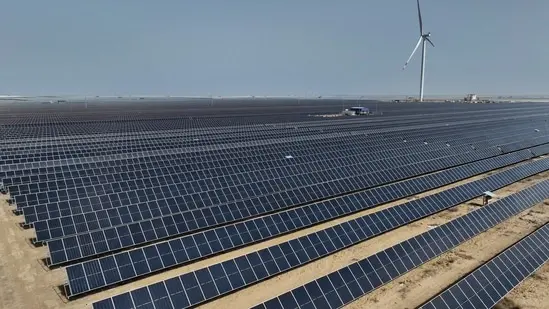
India has come a long way in expanding its renewable energy (RE) capacity. But this represents the easier part of the RE transition. The challenging part is now underway – integrating a bigger share of variable RE power into a grid built for stable, dispatchable supplies. Therefore, the next transition stage will focus on how effectively the grid absorbs, balances and dispatches power, not just the solar and wind capacity added.
In early 2026, India’s power sector recorded a major milestone, passing the 52% mark in meeting installed capacity for non-fossil fuels. However, the share of actual generation from RE sources reached almost 30% in FY2024-25. While this is good news, the higher generation brings a distinct set of operational challenges.
The first phase was easier because of the initial gains from rapid capacity addition, declining costs, policy support and strong market momentum. And now, as RE penetration increases, the system must manage intermittency, demand mismatch and balancing requirements.
To decode the dynamics of RE issues, some elaboration is required. The challenges of higher RE installed capacity include underutilised grid infrastructure, transmission congestion, storage and operational issues, among others. To begin with, generation capacity outpaces transmission or evacuation capacity. Consider Rajasthan. While it has 23 GW of commissioned RE capacity, it can evacuate only 18.9 GW. Consequently, more than 4,000 MW of commissioned capacity is stranded during peak hours. Further, high-capacity, double-circuit corridors built to evacuate about 6,000 MW are usually running at 600-1,000 MW.
Lack of storage represents another huge hurdle. By 2032, India will need around 411 GWh of energy storage capacity to sustain grid stability when there is no sunshine. However, current deployments of BESS (Battery Energy Storage Systems) and PHS (Pumped Hydro Storage) are extremely inadequate. Supply chain disruptions also hinder solar power and energy storage. The RE industry is highly vulnerable to global supply chain shocks since India depends heavily on imports of critical minerals (like lithium, cobalt and rare earths) as well as raw materials. These elements are needed to manufacture solar cells and batteries, leaving the sector vulnerable to global supply shocks.
Technology and infrastructure bottlenecks must also be addressed. Studies show India’s current grid lacks the capacity to house a higher share of intermittent renewables since this needs substantial investment in smart grids, energy storage and hydrogen systems to sustain reliability and grid stability. In spheres like hydropower and bioenergy, being a water-scarce nation, India requires sophisticated water management systems to manage the interplay of water and energy.
Financial hurdles, policy and investment issues add another level of uncertainty. Since electricity remains a concurrent subject in India, both the Centre and states deal with it as per their specific policies. This can impact the proper exploitation of RE potential. Moreover, while the energy mix covers solar, wind, biomass, hydrogen energy and hydroelectricity, most investments are made in solar.
Given these constraints, measures are necessary to promote large-scale integration of RE. For example, supply balancing can be done via flexible generation and ancillary services. The latter includes balancing of load generation during low grid frequency. Forecasting of both RE demand and generation should be done to balance power requirements. Based on accurate forecasting, systematic scheduling will be possible, ensuring better demand-side management.
As noted earlier, financial hurdles hamper the RE transition. While many companies are willing to manage the cost of renewables, the real barrier is the investments needed in transmitting and integrating huge quantities of solar and wind power in the years ahead. Although solar and wind are cheaper than most electricity sources, sustained investment is essential to modernise the grid while adding storage and transmission infrastructure to integrate RE sources.
Other measures are also imperative to transform the RE grid, such as implementing equitable curtailment. During peak congestion, power curtailments or shutdowns should be distributed across all generators proportionately. Presently, the system puts the entire burden on T-GNA (Temporary General Network Access) projects. To facilitate equitable commercial outcomes, this practice should be discontinued.
Similarly, capacity reallocations should be done dynamically. Unused/underutilised grid capacity must be reallocated through real-time, transparent protocols that ensure any safe evacuation space is not wasted. Likewise, there must be better coordination between CTUIL (Central Transmission Utility of India Ltd) and GRID-India, ensuring transmission corridors for predetermined capacities transform into actual, usable power evacuation.
These measures will make sure stranded assets worth billions then come into mainstream use. Instead of standalone capacity, the next growth push for renewable energy will emerge from hybrid projects, FDRE (Firm & Dispatchable RE), RTC (Round the Clock) and integrated RE solutions. Accordingly, India’s power transition will depend more on system integration, rather than just capacity addition.
(The views expressed are personal)
This article is authored by Ratul Puri, chairman, Hindustan Power.