




As the alarm goes off, you get up (albeit after snoozing a few times!) but do you actually pay attention to how you get up? The posture you maintain, whether you turn to the left, the right, or sit straight up. Early in the morning, generally no one will notice these small details because the morning routine is very automatic, akin to muscle memory. However, the way you get out of bed can actually affect your spine, lower back, neck and even your muscles and joints.
ALSO READ: Sleep doctor shares 2 rules to fix sleep routine and rest better: ‘When you go to bed at 10…’
So which is the correct way to get out of bed, and what common mistakes might you be making that could lead to back aches, stiffness, or muscle strain later in the day? Let's hear from an orthopedic expert on this matter and assess if your morning habit is healthy.
In an interview with HT Lifestyle, Dr Gaurav Singh Bhandari, director and unit head, orthopaedics and joint replacement, Dharamshila Narayana Super-speciality Hospital in Delhi, explained the correct way to get out of bed in the morning and spotlighted the common mistakes that may silently stress the spine, lower back, and muscles later in the day.
Which posture should you avoid?
“The ‘sit-up’ style exit might be the very reason you’re feeling those pesky morning back twinges,” Dr Bhandari said, raising concerns about the common habit of suddenly jerking awake and sitting straight up from bed.
Now that sit-up is ruled out, what are the other two options?
He further explained that many people focus on whether they should roll to the left or right while getting up, but the real issue is actually different. The main goal should be to minimise strain on the spine during those first few months after waking up.
The biggest mistake is immediately getting up from a flat, lying position. What does this movement do to your spine? The doctor expressed concern that this movement forces the spine into immediate flexion, putting a massive amount of unnecessary stress on the lower back before the muscles are even ‘awake’ enough to support the load. This can lead to stiffness, strain and dull ache later in the day.
Why should you pay attention to how you wake up?
On second thought, you may brush it off and feel like it is not that deep. But there is actually a valid reason why you wake up matters. We asked the doctor about this, and he explained what happened inside your body while you are sleeping.
“For several hours, your spine is in a completely unloaded, relaxed state; your intervertebral discs are actually hydrating and expanding. By morning, your muscles are relatively stiff and those hydrated discs make your spine temporarily less tolerant to sudden, jerky movements.”
Which is why you should avoid abruptly jerking yourself awake and sitting straight up as soon as the alarm goes off, since the spine and surrounding muscles are still adjusting after hours of rest.
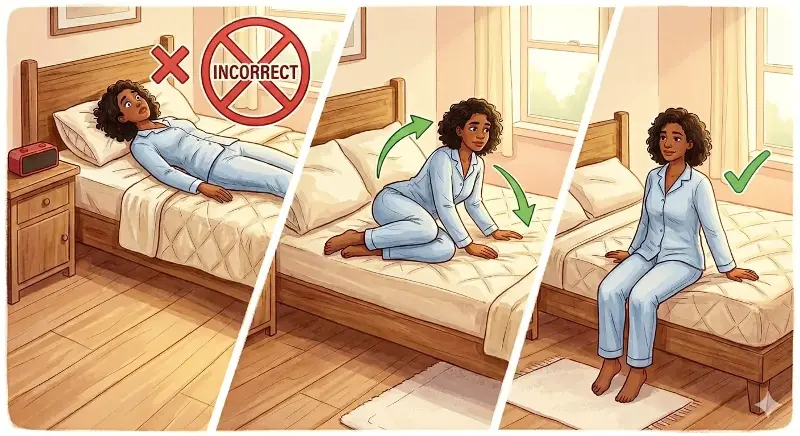
How to safely get up ?
Much to many people's surprise, there is no major difference between the left or right side. The doctor emphasised that the one thing you should absolutely avoid is the sudden ‘straight-up’ jolt from a lying on the back position.
Do you want a safe sequence for getting up? Dr Bhandari outlined the sequence in a simple guide:
1. Gentle roll:
- Gently roll onto whichever side feels most comfortable.
2. Knee bend:
- Bring your knees up slightly toward your chest.
3. Arm support:
- Instead of using your back muscles to pull you up, use your arms to push your upper body off the mattress in a controlled manner.
- This keeps your spine aligned rather than twisted.
4. Brief pause:
- Once you’re sitting on the edge of the bed, stay there for a few seconds.
- This allows your blood pressure and your spine to adjust to being upright.
5. Finish strong:
- When you are ready to stand, focus on using your leg muscles to drive the movement.
- Avoid the temptation to bend forward sharply to ‘hoist’ yourself up.
- By taking these extra ten seconds to move mindfully, you’re reducing spinal stress and setting yourself up for a much more mobile, pain-free day.
Note to readers: This article is for informational purposes only and not a substitute for professional medical advice. Always seek the advice of your doctor with any questions about a medical condition.