


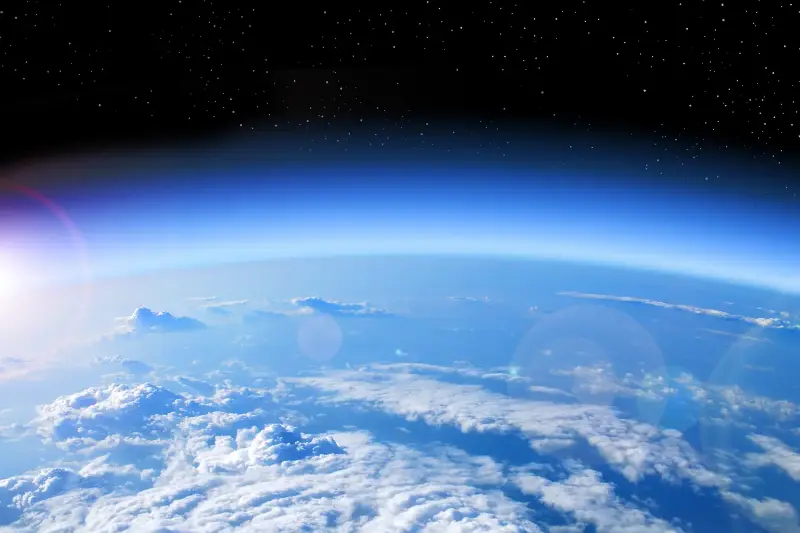
Earth is wrapped in an invisible protective system that does far more than provide air to breathe. The atmosphere is a layered shield of gases, each section shaped by changes in temperature, pressure, and composition. Together, these layers regulate climate, filter radiation, burn up incoming debris, and enable radio communication. Although humans live at the bottom of this vast envelope, its influence reaches from the ground to the edge of space.
The Troposphere: The Weather-Making Layer
The troposphere is the lowest atmospheric layer and the one humans know best. It begins at Earth’s surface and extends roughly 8 kilometers above the poles and up to 18 kilometers at the equator. Nearly 75% of the atmosphere’s total mass is found here, along with almost all water vapor, clouds, dust, and weather.
This is where dynamic daily weather happens:
-
Precipitation: Rain falls and snow forms as moisture accumulates.
-
Movement: Winds blow and atmospheric pressures shift continuously.
-
Convection: Warm air rises from Earth's sun-warmed surface, expands, and cools—forming clouds when water vapor condenses around tiny particles called aerosols.
Essential greenhouse gases like water vapor, carbon dioxide, and methane trap outgoing heat, keeping the planet warm enough for liquid water and thriving life. Furthermore, commercial jets often navigate near the top of this layer to maintain smooth, steady flights.
The Stratosphere: Home of the Ozone Shield
Above the troposphere lies the stratosphere, stretching from roughly 12 to 50 kilometers high. Unlike the layer below, the stratosphere becomes warmer with altitude due to ozone, a vital molecule made of three oxygen atoms.
The ozone layer acts as Earth’s natural sunscreen by absorbing most harmful solar ultraviolet (UV) radiation. Unchecked UV exposure can damage living cells, harm crops, and disrupt marine organisms.
During the late twentieth century, scientists discovered that global cooperation could repair environmental damage. The landmark 1987 Montreal Protocol united countries worldwide to protect this shield, demonstrating how positive, shared environmental stewardship produces powerful global results.
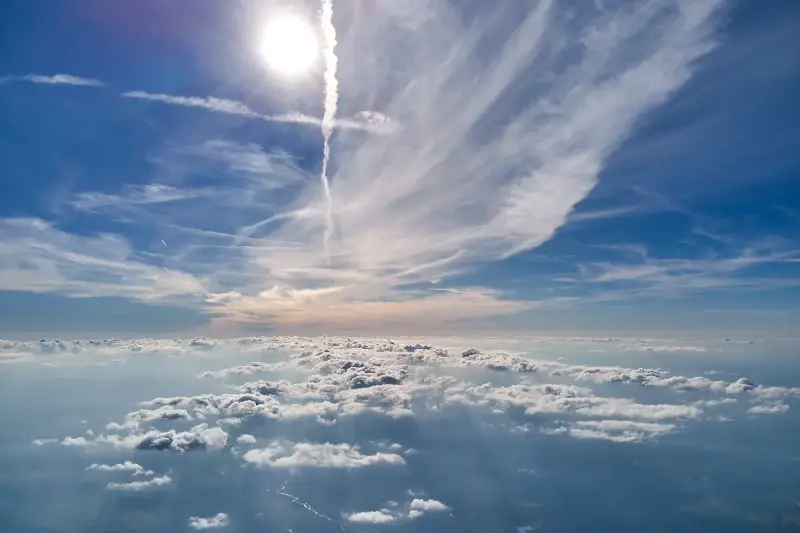
The Mesosphere: Earth’s Meteor Barrier
Extending from about 50 to 85 kilometers above the surface, the mesosphere serves as an extraordinary protective barrier. Most meteoroids entering Earth’s atmosphere burn up here due to high-speed friction and air compression, creating the glowing light trails known as shooting stars.
Key features of this fascinating region include:
-
Extreme Cold: It is the coldest atmospheric layer, with upper boundaries plunging below -90°C.
-
Noctilucent Clouds: In rare instances, delicate electric-blue clouds form near the polar regions after sunset.
-
Natural Shielding: Incoming space debris is broken down safely high above the ground.
The Thermosphere: Where Space Begins to Feel Close
Reaching from 85 kilometers to several hundred kilometers high, the thermosphere absorbs intense solar energy. Temperatures can exceed 1,500°C, yet because the air is extremely thin, energy transfers differently than at ground level.
This layer encompasses two breathtaking phenomena:
-
The Ionosphere: Solar energy creates electrically charged particles that reflect radio waves, enabling long-distance communication and navigation around the globe.
-
The Auroras: Charged solar particles guided by Earth’s magnetic field collide with atmospheric gases, releasing radiant green, red, purple, and blue lights across polar skies.
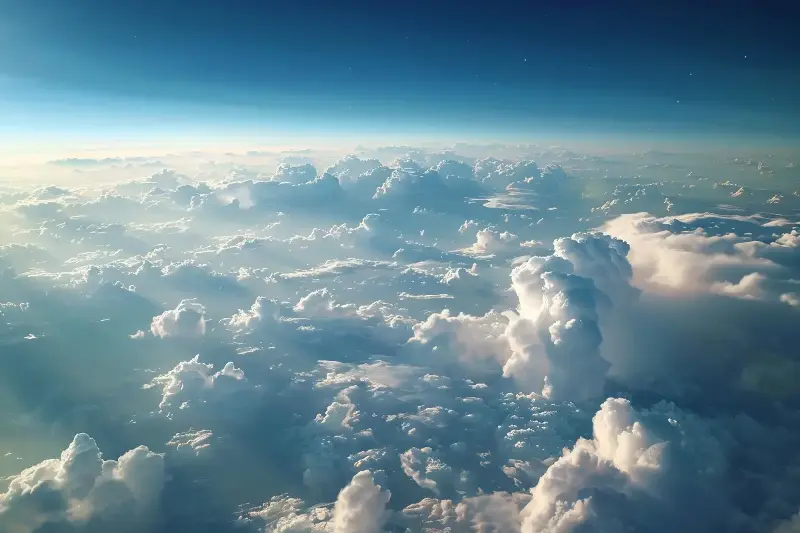
The Exosphere: The Fading Edge of the Atmosphere
The exosphere is the outermost layer, fading gradually into outer space. Here, gases like hydrogen and helium become incredibly sparse.
Many satellites orbit within this high realm. Understanding its subtle atmospheric drag is essential for space technology and orbital tracking.
From the weather-bearing troposphere to the distant exosphere, Earth's atmospheric layers work together as a unified system—moving heat, filtering radiation, and maintaining the bright, vibrant conditions that make life on Earth possible.