



In the modern office, the only thing more common than coffee cups and keyboards is the feeling of physical tension. Whether you are typing up deadlines or attending back-to-back virtual calls, most desk workers recognize the telltale signs: sore shoulders, a tight back, and a neck that feels like it has carried the weight of a week’s worries.
Recent studies show that the average office worker spends more than eight hours a day, five days a week, sitting—often in less-than-ideal postures. While ergonomic chairs and standing desks help, nothing compares to simple, effective stretching. These five targeted movements will not only relieve the aches that come from sitting, but also infuse your day with newfound energy and focus—no yoga mat required.
1. Neck And Shoulder Relief: The Seated Neck Stretch
The neck often bears the brunt of office tension, especially if you are peering at screens that are not at eye level. The seated neck stretch provides fast relief and actively helps prevent tech neck—the chronic strain caused by looking down at digital devices.
Follow these simple steps for quick relief:
- Sit up completely straight with both feet flat on the floor.
- Gently tilt your head to the right, bringing your right ear toward your right shoulder.
- Use your right hand to apply very gentle pressure, holding the position for 15 to 30 seconds.
- Return slowly to the center, and repeat the exact same motion on the left side.
Maintaining proper head alignment with your spine during computer work reduces the risk of tension headaches by as much as 50 percent. This stretch helps you effortlessly restore that natural alignment.

2. Hip And Lower Back Opener: The Seated Figure-Four Stretch
Lower body stiffness is often overlooked, but prolonged sitting tightens the hips and places immense stress on the lower back. The seated figure-four stretch offers instant, satisfying relief to these high-tension zones.
- While sitting comfortably, place your right ankle directly on top of your left knee, making a distinct figure four shape.
- Gently press down on your right knee and lean forward slightly from the hips.
- Hold this deep stretch for 15 to 30 seconds, breathing deeply, then repeat on the opposite side.
Tight hips can contribute significantly to chronic lower back pain and affect posture all the way up the spine. Keeping the hips flexible is crucial for overall comfort and long-term musculoskeletal health.
3. Upper Back Rejuvenation: The Seated Spinal Twist
Hunched shoulders and slouched posture compress the upper back, leading to pain and stiffness that nearly every office worker recognizes. The seated spinal twist revitalizes the spine and upper back, improving flexibility and promoting better posture.
- Sit comfortably on your chair and cross your right leg over your left.
- Twist your torso gently toward the right side.
- Use your left elbow to guide the movement against your knee, holding for 15 to 30 seconds while breathing deeply.
- Switch sides smoothly to ensure perfect muscular balance.
The human spine is uniquely designed for rotation, yet many of us restrict its movement during desk work. This simple twist reduces upper back pain and keeps your spine moving fluidly.

4. Wrist And Forearm Soother: The Desk Prayer Stretch
Computer users take note—the wrists and forearms are often completely forgotten in typical stretching routines. The desk prayer stretch directly combats the physical effects of repetitive typing and mouse use.
- While seated or standing, press your palms tightly together in front of your chest in a prayer position with your elbows touching.
- Gently lower your hands, keeping your palms completely together, until you feel a deep stretch in your wrists and forearms.
- Hold the position for 20 seconds and repeat the sequence twice.
The repetitive motion of typing can lead to long-term strain and discomfort. Integrating targeted wrist stretches reduces discomfort immediately and prevents chronic issues down the road. Plus, it serves as a highly relaxing, welcome pause in a fast-paced day.
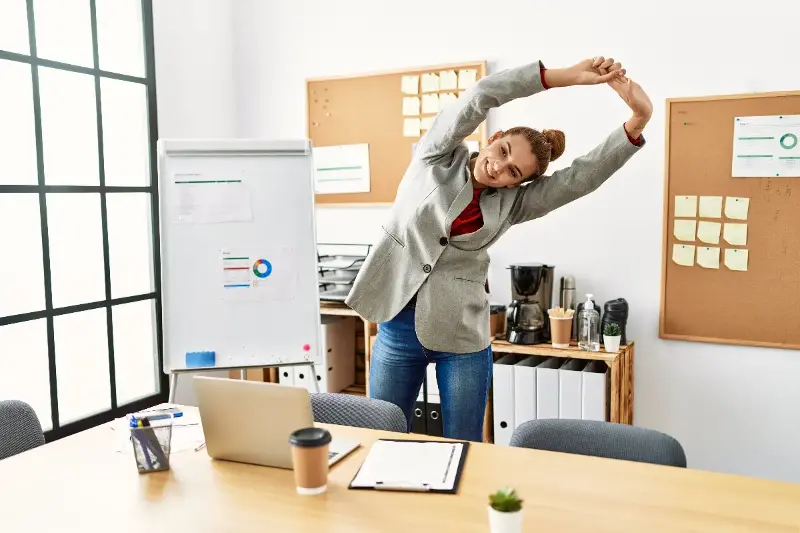
5. Energizing Full-Body Reset: The Standing Reach And Side Bend
When your whole body feels sluggish, nothing beats the standing reach and side bend for a quick, energizing reset to beat the afternoon slump.
- Stand up tall with your feet placed hip-width apart.
- Raise both arms directly overhead, interlacing your fingers if possible.
- Reach upward to elongate the spine, then gently bend to the right side and hold for 10 to 15 seconds.
- Return to the center position and repeat the stretch on the left side.
Breathing deeply while stretching increases oxygen flow to your brain, making you significantly more alert. This movement is perfect for shaking off fatigue and returning to your tasks with renewed focus.
Make Stretching A Habit For Lasting Benefits
Integrating these five simple stretches into your daily workday does not require extra time or specialized skills—just a basic willingness to pause, move, and listen to what your body needs. Setting a recurring digital reminder to stretch every hour can help build a consistent habit, and sharing these moves with your colleagues can create a much more health-conscious, energized work environment. Over time, you will notice a major reduction in aches, along with better posture, increased focus, and a lighter mood.