


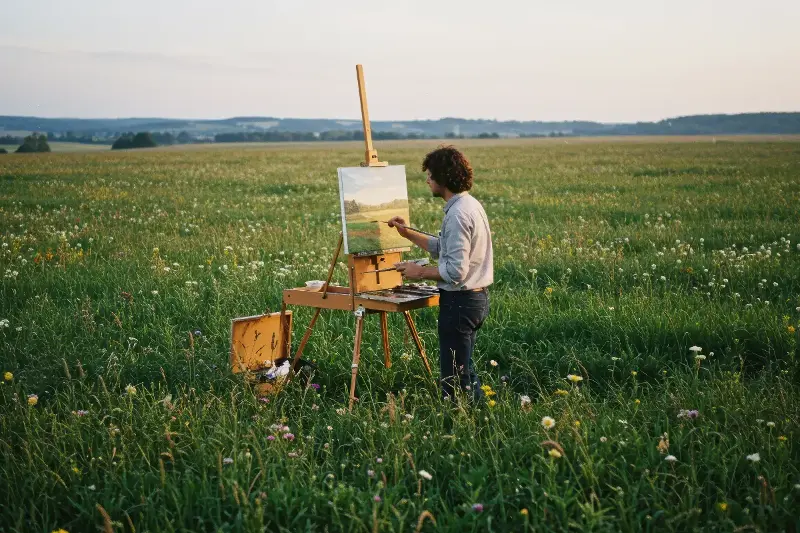
Plein air painting invites artists to leave the studio behind and step directly into nature. Originating from the French phrase meaning "in the open air," this vibrant tradition encourages artists to capture shifting light, dynamic weather, and authentic atmosphere as they unfold in real time.
Instead of relying on static studio photographs, outdoor painting creates an immediate connection between the artist and the environment. A quiet coastline, a busy city square, or a peaceful mountain trail becomes a temporary studio, offering an ever-changing subject where no two sessions are ever identical.
A Vibrant Tradition Shaped by Light
While artists have made outdoor sketches for centuries, plein air painting surged in popularity during the 19th century. The invention of portable metal paint tubes in the 1840s revolutionized the practice, replacing fragile animal bladders and allowing painters to carry prepared colors easily into the countryside.
Renowned Impressionist masters popularized the movement by working outdoors to capture fleeting moments of daylight:
- Claude Monet: Famous for painting repeated studies of haystacks and cathedrals to document changing sunlight.
- Pierre-Auguste Renoir: Celebrated for capturing dappled sunlight filtering through trees.
- Camille Pissarro and Berthe Morisot: Focused on recording everyday rural and urban landscapes with fresh, expressive brushwork.
Working in direct sunlight revealed that shadows are rarely plain grey or black. Instead, they reflect luminous shades of blue, violet, and green, creating a groundbreaking lesson in color theory that inspires artists today.
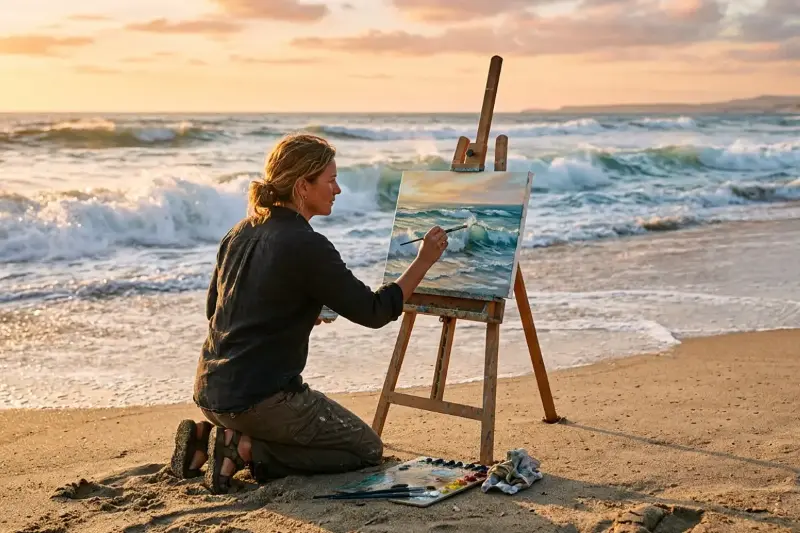
Why Nature Is the Ultimate Teacher
A camera captures a static image, but it cannot replace the rich visual information available outdoors. In person, an artist perceives true depth, vibrant color relationships, and subtle atmospheric shifts.
Because daylight changes rapidly—especially during the warm, low-angled golden hour near sunrise and sunset—plein air painting trains the eye to simplify complex scenes:
- Focusing on big shapes: Artists map major areas of light and shadow before adding intricate details.
- Working on compact surfaces: Small panels measuring roughly 20 by 25 centimeters allow painters to work quickly before the light changes.
- Understanding atmospheric perspective: Observing how distant mountains appear lighter, cooler, and softer due to moisture in the air.
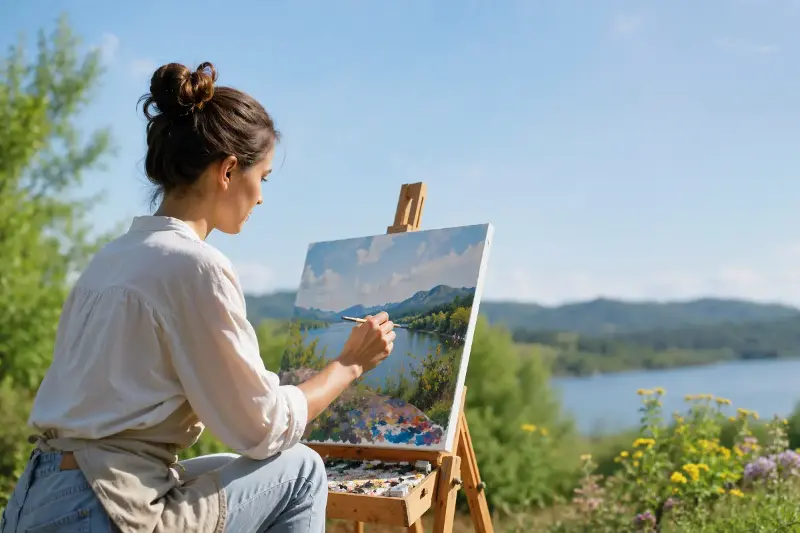
Essential Equipment for the Field
A successful plein air setup must balance portability with utility. Many artists rely on a pochade box—a lightweight, self-contained wooden case that holds paints, brushes, and panels while doubling as a sturdy tabletop easel.
Selecting the right medium depends on your personal working style:
- Oil paint: Remains wet long enough for smooth, rich blending outdoors.
- Acrylic paint: Dries rapidly and cleans up easily with water.
- Watercolors and pastels: Highly portable options ideal for quick, vibrant field studies.
Beyond art supplies, practical preparation is essential. A wide-brimmed hat, protective sunscreen, drinking water, and comfortable footwear ensure that outdoor sessions remain enjoyable and productive.
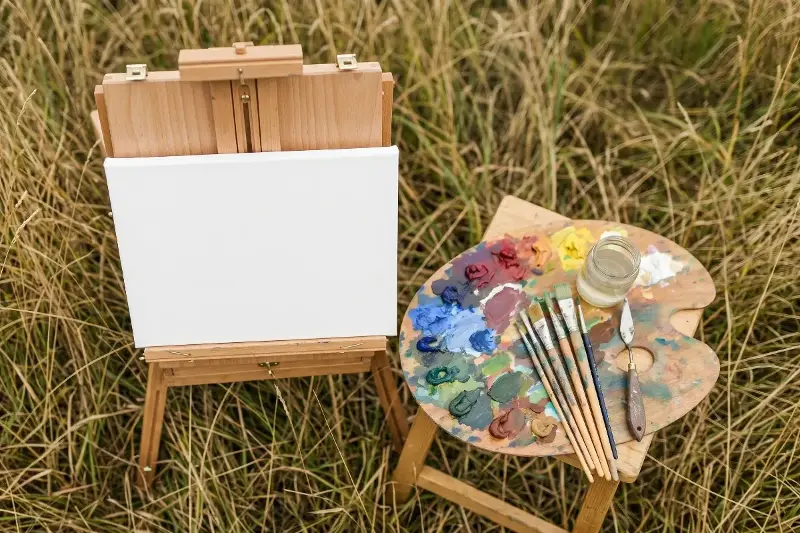
Overcoming Outdoor Challenges
Painting in the open air requires flexibility and resilience. Sudden gusts of wind, shifting shadows, and curious passers-by are all part of the experience. Working in the shade is often recommended, as direct sunlight on a canvas can make mixed colors appear deceptively dark once brought indoors.
Ultimately, plein air painting is less about creating a flawless masterpiece and more about immersing oneself in the moment. Every outdoor session builds visual confidence, sharpens observation skills, and yields a fresh, memorable connection with the natural world.