


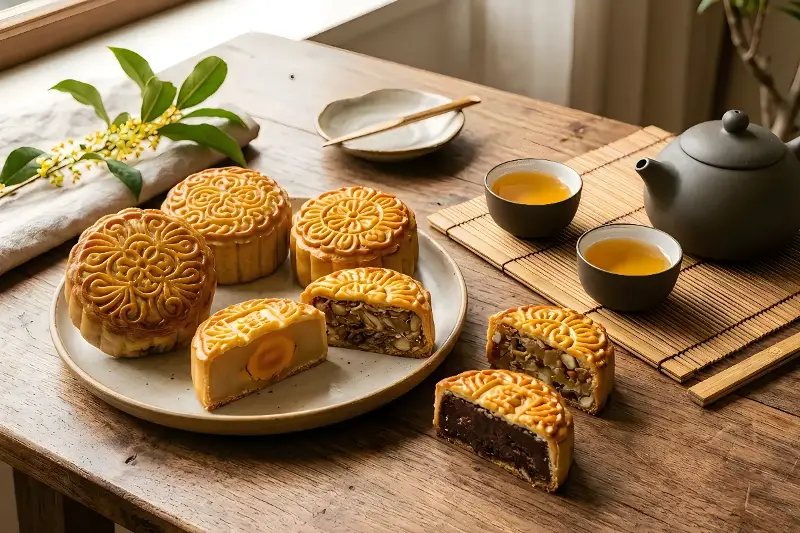
Mooncakes are far more than festive pastries. Their round shape, rich fillings, and decorative patterns carry centuries of stories about family reunions, seasonal gratitude, and changing culinary tastes. Today, they appear in elegant gift boxes across Asia and far beyond. Yet their journey began long before modern luxury packaging, rooted in a world of imperial courts, seasonal rituals, and regional baking traditions.
The best-known occasion for sharing these treats is the Mid-Autumn Festival, celebrated on the fifteenth day of the eighth lunar month. Families gather under the bright full moon to share tea and exchange mooncakes as timeless symbols of completeness and togetherness.
From Ancient Rituals to Imperial Courts
The history of mooncakes is delightfully layered. Pastries shaped like the moon existed in China long before the modern mooncake emerged:
- Tang Dynasty (618–907): Refined pastries gained immense popularity among aristocrats and the imperial court during seasonal moon-viewing celebrations.
- Song Dynasty (960–1279): Urban food markets flourished, making seasonal pastries widely accessible across city life.
- Ming Dynasty (1368–1644): Mooncakes became firmly connected with family gatherings, entering homes as warm expressions of goodwill.
The Artistry Behind a Masterpiece
A traditional mooncake is a compact masterpiece of texture and balance. The classic Cantonese-style version features a golden, soft crust made with wheat flour and sweet syrup, wrapping a dense, fragrant filling.
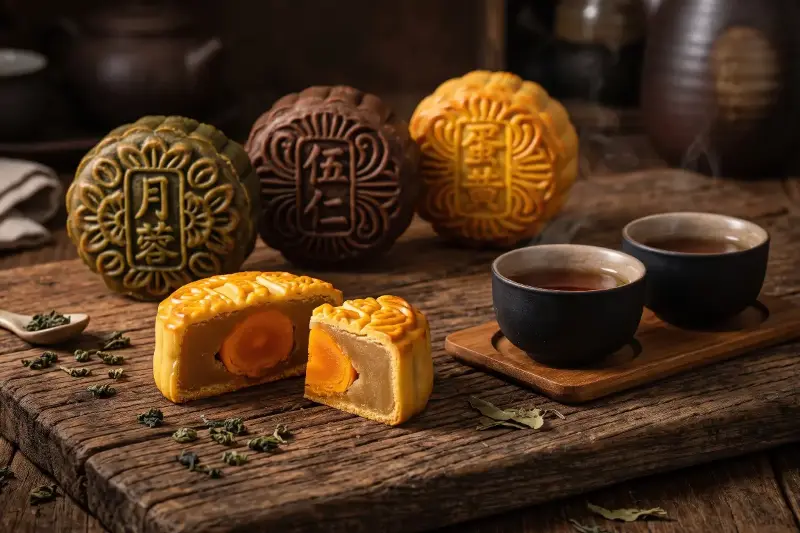
The iconic tops are created using carved wooden or intricate molds that imprint meaningful designs:
- Cultural Symbols: Patterns depicting blooming flowers, serene rabbits, or Chinese characters that wish for longevity, harmony, and prosperity.
- Classic Fillings: Smooth lotus seed paste, earthy red bean paste, fragrant black sesame, and mixed nuts.
- Golden Egg Yolks: Cured salted duck egg yolks placed at the center to represent the glowing full moon, adding a delicious savory balance to the sweet paste.
Distinct Regional Styles and Flavors
China’s rich culinary geography has birthed a fascinating array of regional mooncake varieties:
- Cantonese Style: Globally recognized for its glossy, tender crust and generous, sweet fillings.
- Suzhou Style: Famous for its flaky, multi-layered pastry filled with sweet rose or savory ingredients.
- Teochew Style: Features crispy, spiral pastry layers enclosing sweet taro or mung bean paste.
- Southeast Asian Innovations: Incorporates vibrant tropical flavors such as pandan, fragrant coconut, and durian.
Modern Snow Skin and Contemporary Delights
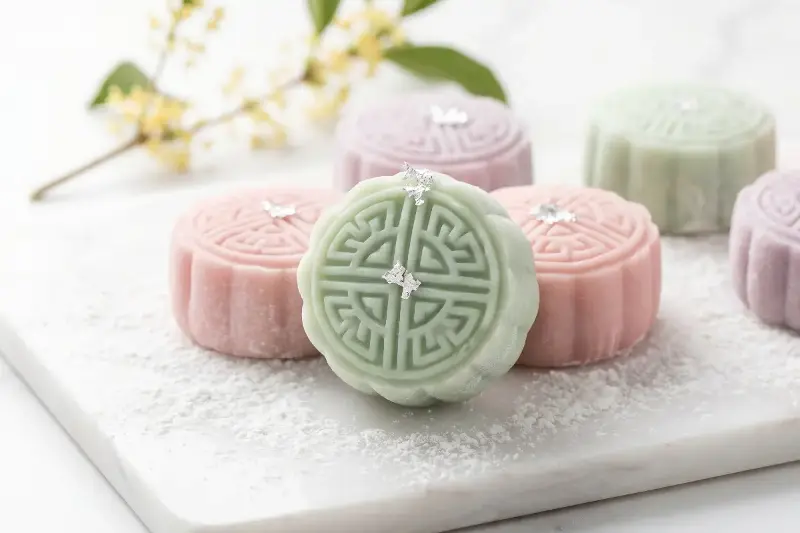
One of the most popular modern developments is the snow skin mooncake, introduced in Hong Kong. Unbaked and served chilled, its soft outer layer is crafted from glutinous rice flour, offering a chewy texture similar to mochi.
This innovation opened the door to exciting non-traditional fillings like custard, matcha green tea, chocolate, fruit purées, and ice cream. Today, luxury hotels and artisan bakeries release creative seasonal collections every autumn, making mooncake gifting a vibrant art form.
Despite these modern twists, the heart of the tradition remains simple. Enjoying a piece of mooncake alongside a cup of warm tea under the autumn night sky continues to bring families closer together!