


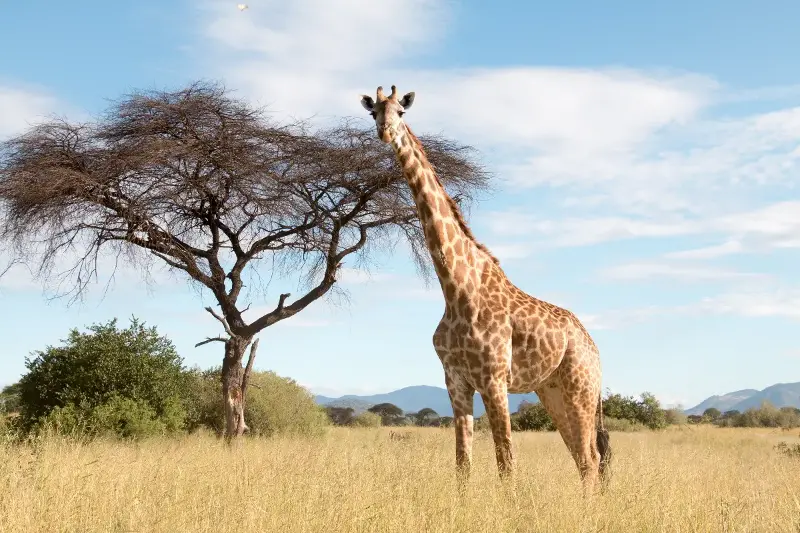
With its impossibly long, elegant neck stretching high above the African savannah, the giraffe is one of the animal kingdom’s most striking figures. Yet for centuries, this towering mammal’s unique anatomy has mystified scientists, artists, and nature lovers alike.
Why did evolution gift the giraffe with such an outlandish feature? Is it simply a quirk of natural selection, or is there a deeper blueprint guiding this unique design? Let’s look up to the giraffe’s enigmatic neck and explore the science, wonder, and biological brilliance behind one of nature’s most extraordinary silhouettes.
EVOLUTION’S TALL ORDER: WHY SO LONG?
The legendary giraffe neck, sometimes reaching up to six feet in length, is entirely unmatched among terrestrial mammals. Most people assume that the neck is purely an adaptation for reaching high foliage—specifically, tender acacia leaves that are out of reach for other herbivores. While this forms a big part of the story, the reality is far more layered.
Recent genetic studies reveal fascinating insights into their ancestral timeline:
- The Evolutionary Split: Giraffes and their shorter-necked relatives, like the okapi, diverged roughly 11.5 million years ago.
- Skeletal Secrets: The giraffe’s neck still contains only seven cervical bones, just like humans and most other mammals. Instead of growing more bones, each individual vertebra dramatically elongated over time.
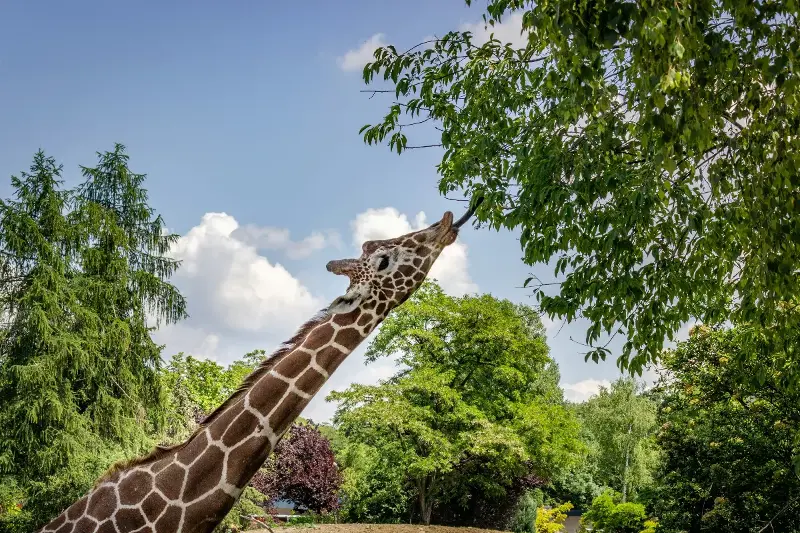
The "high browse" hypothesis remains a dominant theory. Having a long neck allows giraffes to exploit rich food sources that other herbivores cannot touch, providing a major competitive edge during the dry season when low-level food is scarce.
THE BATTLE OF THE NECKS: WEAPONS FOR DOMINANCE
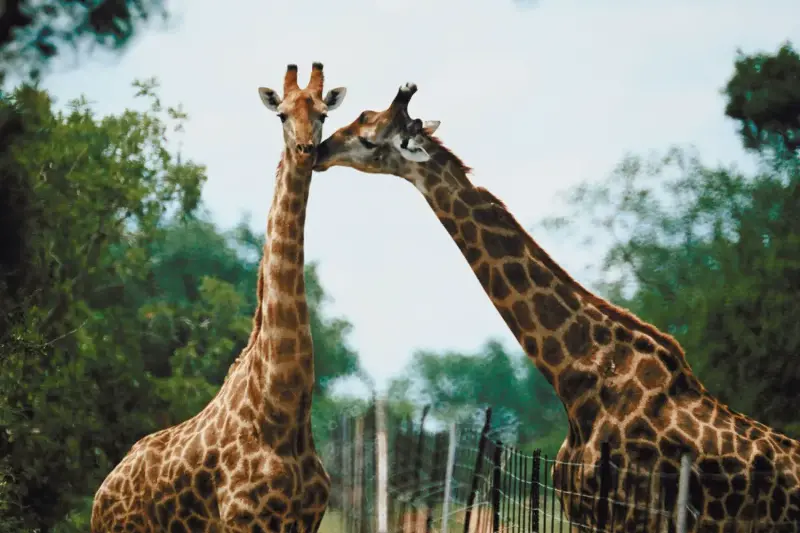
Adding a fascinating twist to the evolutionary tale is the "necks for mating" hypothesis. Giraffe males regularly engage in dramatic physical duels known as "necking."
During these face-offs, rivals swing their hefty heads like sledgehammers to assert dominance and claim territory. Research shows that males with longer, thicker necks and heavier skulls tend to triumph in these brawls, giving them a better chance to pass on their genes.
Consequently, some researchers believe that sexual selection—competition between males—played an equally vital role alongside feeding habits in driving this extreme growth. In this view, the neck acts as a powerful symbol of strength and genetic fitness, much like the heavy antlers of a majestic stag.
NATURE’S BLUEPRINT: ENGINEERING A GENIUS GIANT
Balancing a massive head atop a thin, towering column creates significant physiological challenges for blood circulation, breathing, and basic movement. To survive, evolution has equipped the giraffe with mind-boggling engineering solutions:
- A Massive Ticker: To pump blood two meters straight up to its brain, a giraffe sports an 11-kilogram heart capable of generating double the blood pressure of typical mammals.
- Pressure Control: Their arteries are reinforced with tight internal valves to prevent fainting when the animal bends down.
- The Miraculous Net: A unique network of elastic blood vessels in the brain, called the rete mirabile, cushions the brain from sudden pressure surges when swinging the head up and down.
Interestingly, despite its incredible length, the neck is actually too short to reach the ground directly. To drink water, giraffes must awkwardly splay their front legs wide apart—a vulnerable position that requires them to stay highly alert against predators.
MYSTICAL INSPIRATIONS AND CHILDHOOD WONDER
Beyond biology, the giraffe’s silhouette has enchanted human culture for millennia. In various African traditions, the giraffe is celebrated as a peaceful celestial messenger or a wise guardian capable of seeing far into the future.
Children and adults alike are inherently drawn to their graceful, slow-motion movements, often likening them to living skyscrapers. Around the world, these gentle giants consistently inspire budding careers in zoology, wildlife photography, and natural science.
SURVIVAL AT A HEIGHT: A MODERN CONSERVATION CHALLENGE
Today, the giraffe's neck is a symbol of both evolutionary marvels and urgent ecological conservation. Sadly, wild giraffe populations have declined by up to 40% over the past three decades due to habitat fragmentation and environmental shifts.
Awareness and protection efforts are expanding globally. Seeing a giraffe in the wild—watching this towering mammal browse the golden treetops or glide across the open plains—reminds us of the beautiful and extraordinary pathways evolution can take.