


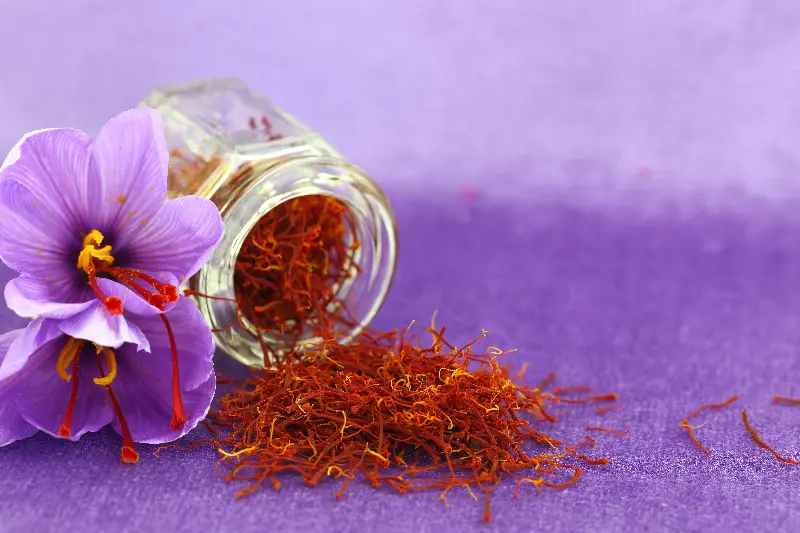
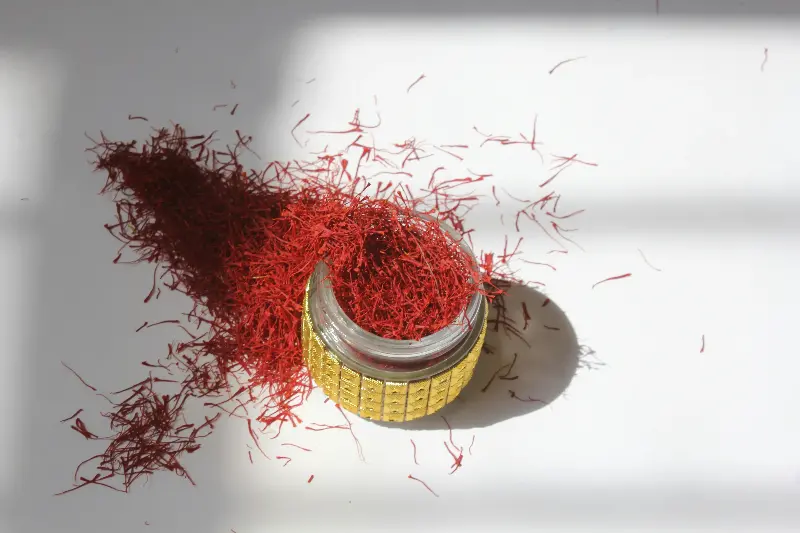
It all starts with a thread so fine you could mistake it for spun gold. Saffron has enchanted cooks, emperors, and healers for thousands of years. The allure of its deep orange-red threads and intoxicating aroma has woven the world’s most coveted stories across kitchens and cultures. Few ingredients in food history command as much reverence—and prices—as this tiny stigma from the Crocus sativus flower. Welcome to the saffron trail, where flavor, history, and luxury intertwine.
THE ANCIENT ROOTS OF SAFFRON
Saffron’s journey through history is bathed in legend and royal extravagance. Documented references trace its use back over 3,500 years to Bronze Age frescoes in Santorini, where saffron gatherers adorned palatial walls.
- Ancient Persians believed saffron threads brought joy, adorned loved ones, and colored grand feasts.
- Cleopatra is said to have soaked in saffron-infused baths to preserve her beauty.
- Greek physicians prescribed the spice as a potent treatment for various ailments.
Through the spice roads and ancient empires, saffron traveled from the Persian plateau to Mediterranean shores. By the Middle Ages, it was so valuable in Europe that it sparked criminal intrigue; records tell of thieves being executed for adulterating saffron, as entire towns thrived on its trade.
FIELDS OF GOLD: THE HARVESTING RITUAL
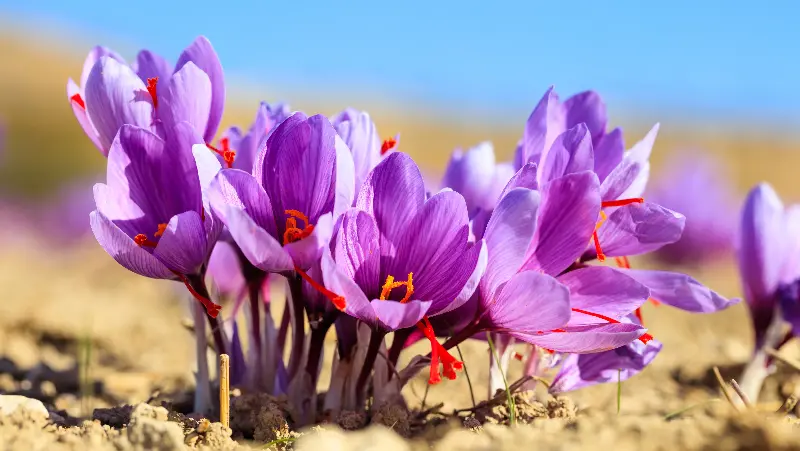
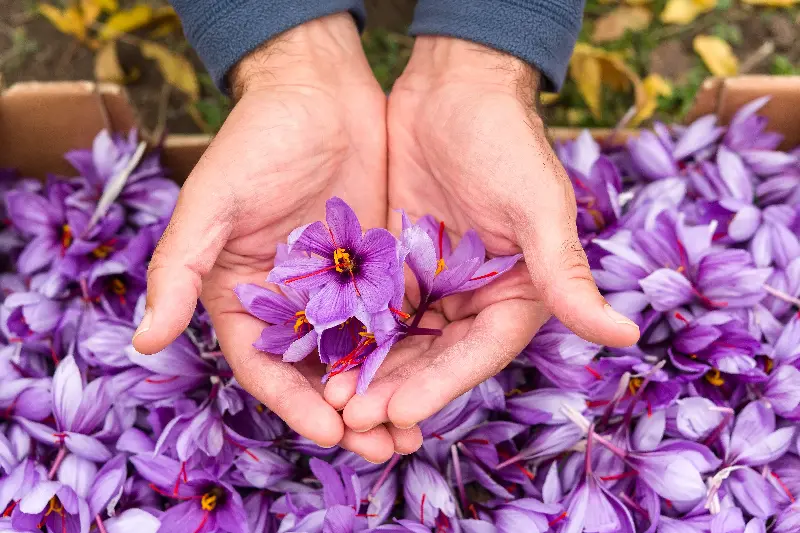
Part of saffron’s mesmerizing appeal lies in its labor-intensive production. Each purple crocus bloom yields only three delicate scarlet stigmas, which must be harvested by hand at dawn when their fragrance is at its peak.
The sheer volume required is staggering:
- Thousands of flowers are needed for just a single ounce of finished saffron.
- Estimates suggest it takes approximately 75,000 blossoms to produce a single pound.
- Iran currently claims over 90% of today’s global saffron production.
Harvest time is a race against the sun. With petals open for only a few days each season, entire families and villages gather in a ritual that is equal parts celebration and meticulous craft. It’s not just a crop; it’s a living heritage.
THE AROMA OF LUXURY: SAFFRON’S PLACE AT THE TABLE
Why does this spice inspire such fervor? It begins with the active compound safranal, which delivers an unmistakable, honeyed, hay-like aroma. Color is also part of the magic; the water-soluble pigment crocin infuses foods with a golden hue fit for royalty.
Chefs prize saffron for its ability to imbuing recipes with luxury. Iconic dishes that shimmer with saffron’s warm glow include:
- Spanish Paella: The heart of Mediterranean coastal cuisine.
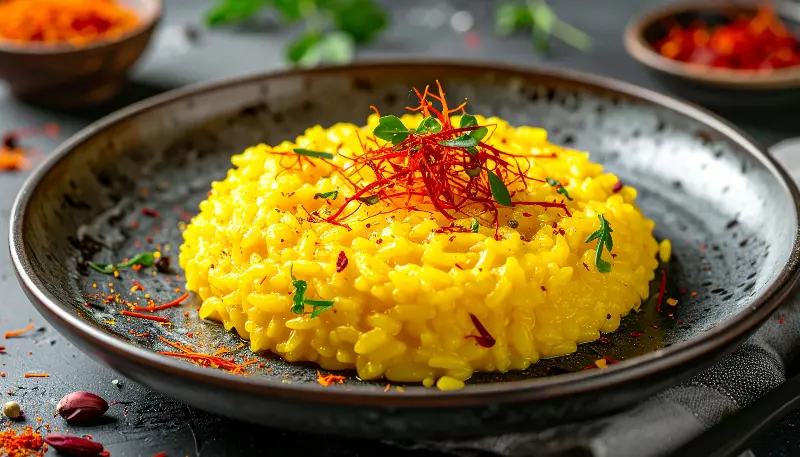
- Risotto alla Milanese: An Italian classic defined by its golden tint.
- Persian Tahdig: The prized, crispy rice crust of Iran.
- Indian Biryanis: Elaborate, aromatic rice dishes often served at weddings.
In Morocco, it perfumes tagines and honey-sweet pastries, while in France, it serves as the soul of bouillabaisse. Around the world, saffron’s presence signals an event of special importance.
THE PRICE OF SPLENDOR: WHY IS SAFFRON SO EXPENSIVE?
Saffron’s sky-high price tag comes down to its scarcity and the human touch embedded in every step. Nearly all harvesting and processing is still performed by hand, from plucking fragile stigmas to drying them with perfect precision.
Because of this, saffron is the most expensive spice on Earth:
- Retail Price: On average, high-quality saffron retails for $5,000 to $10,000 per pound.
- Authenticity: Counterfeiters often mimic the spice using dyed corn silk or chili threads, but genuine saffron remains unmistakable in its complex flavor profile.
For food lovers, saffron is a special treasure. A little goes a long way; only a few threads can perfume an entire dish, and its shelf life extends for years if stored away from light and moisture.
CULTURAL SYMBOL AND MODERN INSPIRATION
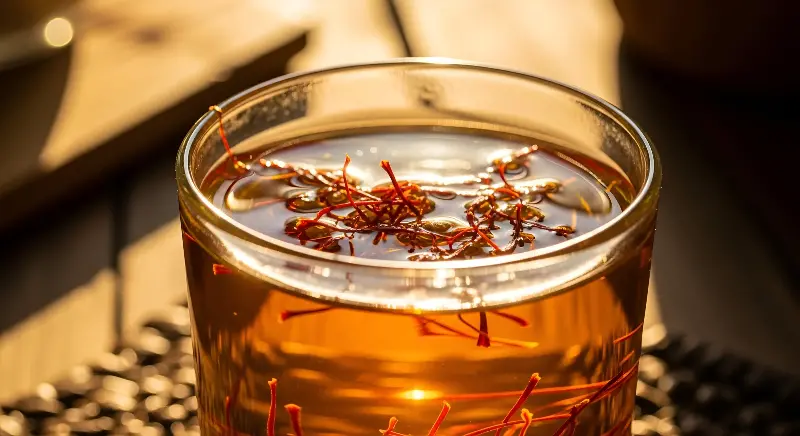
Beyond the kitchen, saffron is woven into poems, ceremonies, and rituals. In Kashmir, locals add saffron to kahwa, a spiced green tea savored in winter. European monasteries once relied on saffron for medicinal elixirs and sacred dyes.
Modern culinary experts continue to push boundaries with the spice, unlocking creative pairings with seafood, citrus, and even high-end cocktails. Avant-garde restaurants now use saffron to craft vibrant syrups, frothy creams, and golden-tinted desserts that captivate the senses.
A TASTE OF THE WORLD’S OLDEST LUXURY
In every thread, saffron carries a legacy spanning continents and centuries. It is the guest of honor at life’s milestones—a pinch of history in every fragrant cup or golden spoonful. As you stir those fiery-red threads into your next masterpiece, savor not just their flavor, but the love, patience, and tradition at their core. The saffron trail is an adventure that turns every meal into a celebration.