


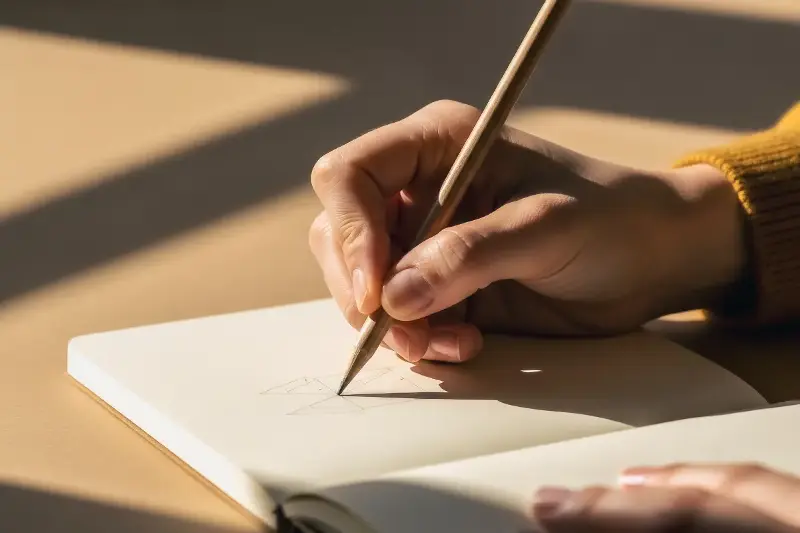
A quick sketch may look like a small thing, but it can give your brain a surprisingly powerful memory advantage. Research in cognitive psychology reveals that people often remember information they draw far better than information they simply write down or read repeatedly. In fact, experimental studies show drawing can produce recall rates nearly double those of simple repetitive writing.
The best news? Artistic talent is completely unnecessary. A rough stick figure, a simple symbol, or a basic outline is all it takes. The cognitive benefit stems from the mental effort required to translate an idea into an image—not from creating a masterpiece.
Why Drawing Strengthens Memory
When you draw a concept, your brain engages in much more than passive copying. It must identify core meaning, visualize form, coordinate physical movement, and attach personal context. This creates a multi-layered process known as elaborate encoding.
-
Multi-Sensory Processing: Instead of interacting with a word purely through text, you process it visually, physically, and semantically simultaneously.
-
Multiple Retrieval Pathways: Linking a word to an image creates broader neural networks. If the word escapes you later, the mental image often triggers the memory.
-
Deep Interpretation: A landmark 2016 study by researchers at the University of Waterloo demonstrated that participants remembered nearly twice as many drawn words as written ones, even when given only a few seconds per sketch.

Simple Visuals Beat Perfect Artwork
Elaborate artwork is not required—and spending too long perfecting a picture can actually reduce the practical efficiency of this study technique.
A simple sketch works because it forces you to actively interpret information. If you need to remember that the hippocampus forms new memories, sketching a tiny brain with a camera icon inside creates an instant anchor. The goal is to make an image that carries immediate personal meaning:
-
Abstract Concepts: Ideas like motivation or supply chain lack a single physical form. Creating visual metaphors—like a person balancing boxes—demands deeper reflection that cements the idea.
-
Personal Utility: A quick, meaningful doodle connects directly to your thought process, making it far more memorable than a polished textbook illustration.
Applying the Drawing Effect Daily
Incorporating visual notes into your routine requires very little extra time and adapts easily to work, study, and daily organization.
-
Active Note-Taking: During lectures or meetings, pause after key points to draw a small symbol representing the core takeaway.
-
Vocabulary & History: Sketch small scenes or objects next to foreign words, historical events, or scientific processes rather than relying solely on text definitions.
-
Visual To-Do Lists: Replace long blocks of text with simple icons—a running shoe for exercise, a small envelope for emails, or a simple house for household errands.
-
Retrieval Practice: After reading a chapter, close the book and sketch what you remember. This tests your understanding and reveals immediate knowledge gaps.

A Mindful Tool for Focus and Engagement
Beyond memory retention, drawing makes learning feel calmer and more engaging. The physical movement of making deliberate marks on paper acts as an anchor for your attention, keeping your mind connected to the task at hand.
This low-pressure habit reduces mental clutter, making heavy information far more accessible for students, professionals, and lifelong learners alike. The next time you need to retain vital information, skip the highlighter—take a few seconds to turn that concept into a simple visual trace.