


Madagascar, the world’s fourth-largest island, sits like a lonely ship adrift in the Indian Ocean. Cut off from mainland Africa for over 80 million years, this vast landmass has played host to an epic, real-world natural experiment.
Nowhere else on Earth does such a bizarre and wonderful collection of animals and plants thrive side by side, shaped almost entirely by the forces of isolation and survival. If you have ever wondered why wildlife in Madagascar is so utterly unique, the answers lie deep in its extraordinary geological past and its resilient natural ecosystems.
A GEOLOGICAL TALE: THE UNRIVALED POWER OF ISOLATION
Some 160 million years ago, Madagascar broke away from the giant supercontinent known as Gondwana. Over millions of years, first Africa and then India drifted away, leaving Madagascar completely marooned 400 kilometers off the African continent. In scientific circles, Madagascar is often described as a natural laboratory of evolution because its creatures have been developing in splendid isolation for tens of millions of years.
This profound geographical separation yields incredible biological results:
- Unmatched Endemism: Nearly 90% of the island’s plant and animal species are found nowhere else on Earth.
- Predator-Free Evolution: For eras, native creatures evolved without major mainland predators, competitors, or outside pathogens.
- Primate Domination: Madagascar has no native monkeys; instead, primates that arrived millions of years ago blossomed into nearly 100 distinct species of lemurs.
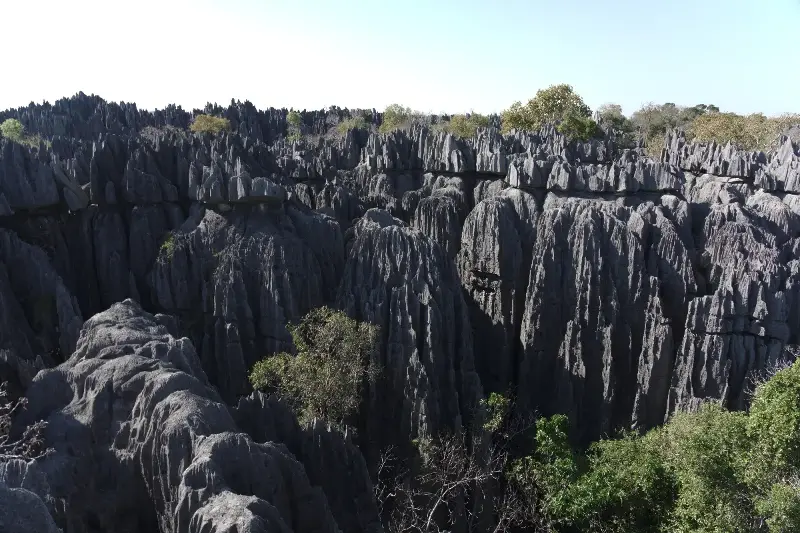
When you walk through Madagascar’s spiny forests or rain-soaked jungles, you are stepping into a pristine world unchanged by outside continental influences.
LEMURS: THE CHARISMATIC POSTER CHILDREN OF MALAGASY WILDLIFE
When most people picture Madagascar, lemurs inevitably spring to mind. These unusual primates are the ultimate example of evolutionary luck and tenacity. Scientists believe the ancestors of lemurs originally arrived from mainland Africa by rafting across the Mozambique Channel, likely clinging to large mats of floating vegetation during intense storms.
Once they stepped ashore, they discovered an untouched landscape perfectly suited for adaptation. Over millions of years, evolutionary forces created a dizzying array of specialized species:
- The Mouse Lemur: Among the absolute smallest primates in the entire world.
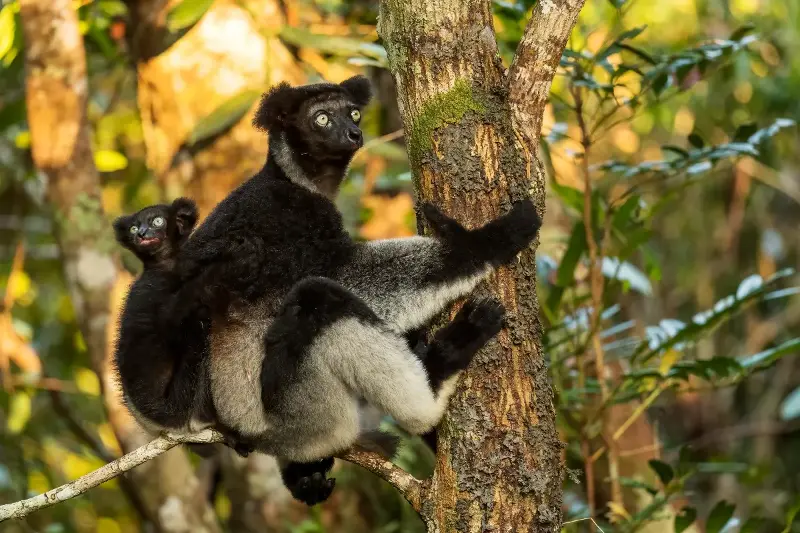
- The Indri: A large, canopy-dwelling lemur known for its hauntingly loud, echoing vocal calls.
- The Aye-Aye: A nocturnal primate that uses an extraordinarily elongated middle finger to tap on trees and pluck grubs from beneath the bark.
Each species filled a highly specific ecological niche, proving that isolation breeds incredible creativity.
A SANCTUARY OF PECULIAR AND UNUSUAL LIFE FORMS
Lemurs are just the tip of Madagascar’s biological iceberg. The island has an almost unbelievable cast of peculiar characters. Take the chameleons: about two-thirds of the world’s chameleon species live right here, including miniature varieties that are scarcely longer than your thumb.
The bizarre resident lineup also includes:
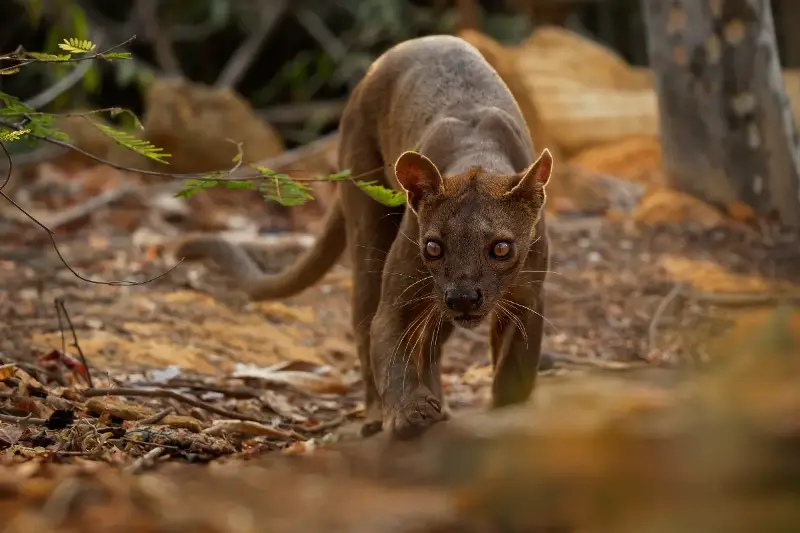
- The Fossa: A sleek, cat-like apex predator that is actually closely related to the mongoose family.
- Leaf-Tailed Geckos: Masters of camouflage that completely vanish when pressing flat against mossy tree bark.
- Tomato Frogs: Brightly colored amphibians that secrete a sticky, defensive mucus when threatened by an enemy.
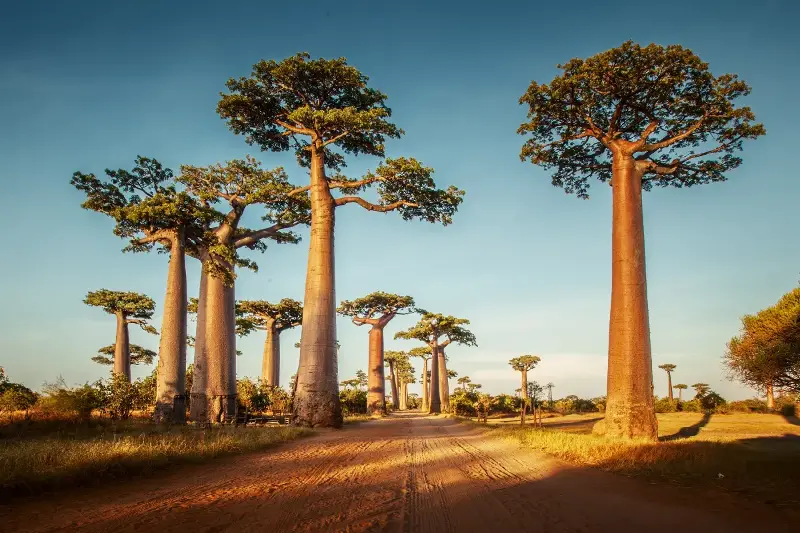
Even the plant life defies conventional nature. The iconic baobab trees, frequently called upside-down trees, dot the western landscape with their massive, water-storing trunks and surreal, branch-like root crowns. The southern spiny forests burst with unique succulents, while the eastern rainforests shelter rare orchids found nowhere else on the planet.
CREATIVE SURVIVAL AND FRAGILE FUTURES
Being cut off from the rest of the world does not just breed oddities; it forces creative survival. Madagascar’s wildlife has learned to thrive on extreme environmental unpredictability. Rainfall can be dramatically seasonal, requiring species like the panther chameleon to shift colors to match shifting foliage or regulate body temperature.
Despite these brilliant adaptations, Madagascar’s extraordinary heritage is incredibly fragile. Deforestation and climate shifts threaten much of its wildlife. Thankfully, global conservationists are racing to save the island’s unique inhabitants through community-based programs and sustainable ecotourism. Madagascar remains a living testament to the creative power of isolation, offering a rare glimpse into earth's history and the relentless will to survive.