


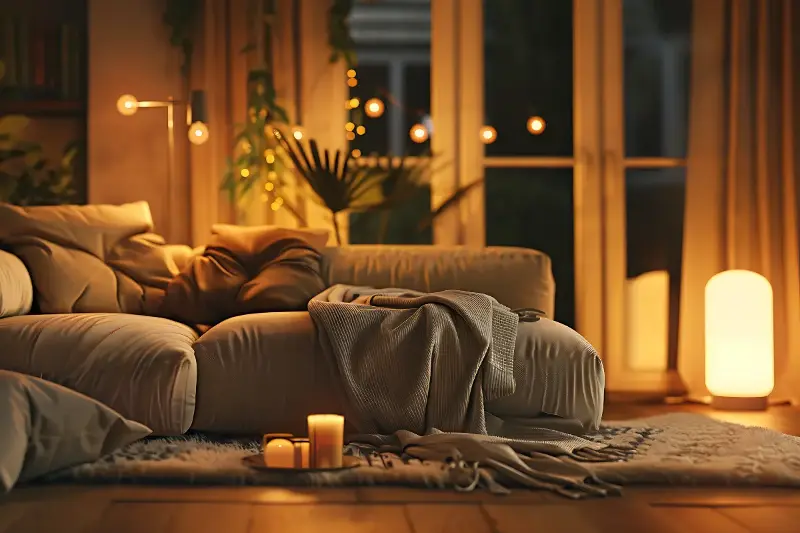
Soft yellow lighting has a quiet ability to transform how a home feels. A room fitted with bright, cool white bulbs can look efficient, but it often feels flat or overly clinical. Swap that light for a warmer glow, and the exact same space instantly becomes calmer, softer, and more inviting. This is why boutique hotels and cozy cafés rely on warm-toned lighting: it helps people relax, linger, and settle in.
The effect goes far beyond simple decoration. Light directly influences how colors, textures, and faces appear. Warm yellow illumination brings out the richness of natural timber, woven fabrics, terracotta, brass, and autumn-toned accents, turning an ordinary evening at home into a deeply restful experience.
Why Warm Light Feels Comforting
Soft yellow light closely mirrors the natural hues of firelight and the late-afternoon sun. For centuries, people gathered around warm hearths after dark. Modern lighting echoes that familiar, safe atmosphere without requiring an open flame.
-
Understanding Kelvin: Light color temperature is measured in Kelvin. Lower figures create warmer tones, while higher figures appear cooler and bluer.
-
The Ideal Range: A bulb around 2,700 Kelvin provides a classic warm white glow perfect for living rooms, bedrooms, and hallways. For an ultra-soft, candle-like effect, choose 2,200 to 2,400 Kelvin.
-
Task vs. Ambient: Cool lighting above 4,000 Kelvin feels crisp and daylight-like—ideal for utility spaces or detailed kitchen preparation, but far too harsh for evening relaxation.
Warm light naturally softens visual contrast across a room. The secret to great home lighting lies in balance: functional light where you work, and gentle illumination where you rest.
Layering Light for a Lived-In Look
The coziest homes rarely rely on a single central ceiling fixture. Overly bright overhead lights cast harsh downward shadows and make living areas feel formal. Instead, layer multiple light sources at varying heights to add visual depth:
-
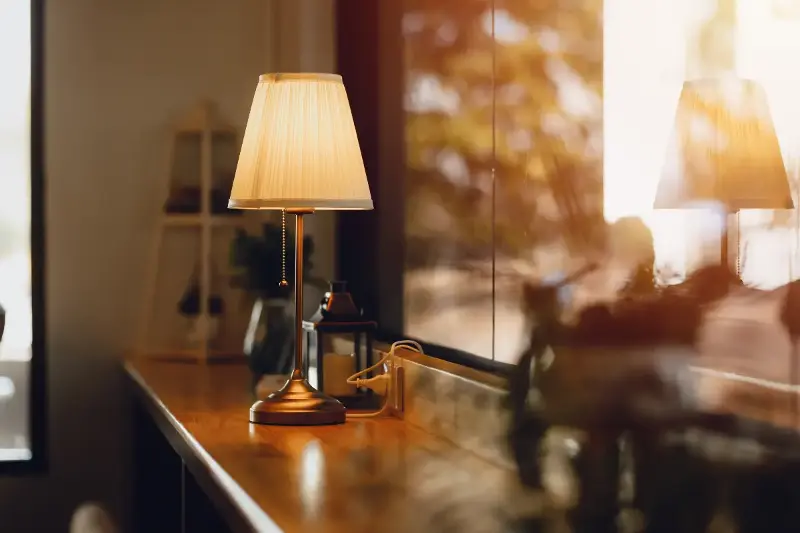
Living Rooms: Place a tall floor lamp beside a reading chair, a table lamp on a sideboard, and a subtle wall sconce in a dark corner.
-
Bedrooms: Use bedside lamps that direct pools of light downward, or add a concealed LED strip behind a headboard for a hotel-inspired glow.
-
Dining Spaces: Position a pendant fixture roughly 75 to 90 centimeters above the dining table fitted with a dimmable warm bulb to adjust the mood effortlessly.
Choosing Bulbs That Flatter Your Space
Brightness and color accuracy matter just as much as color temperature. Light output is measured in lumens, while color fidelity is measured by the Color Rendering Index (CRI).
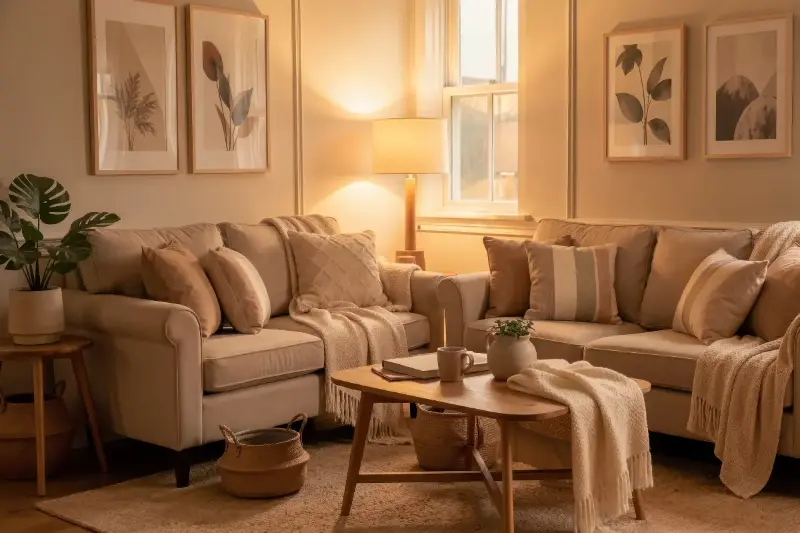
For table lamps meant purely for ambiance, 200 to 450 lumens is usually plenty. Reading lamps require 450 to 800 lumens directed right at your book. Always select bulbs with a CRI of 90 or higher so that indoor plants, wood grains, and natural skin tones retain their true richness rather than appearing dull or murky.
Visible bulb designs also shape the mood. Clear, filament-style LED bulbs suit exposed fixtures and vintage pendants. Opal or frosted glass bulbs diffuse harsh glare in smaller rooms, while amber-tinted glass creates an exceptionally cozy, romantic atmosphere.

Using Warm Lighting in Every Room
While the living room is the easiest place to embrace soft lighting, every corner of your home benefits from thoughtful warmth:
-
Hallways: A warm lamp on a console table creates a comforting, hospitable first impression the moment you step through the door.
-
Kitchens: Blend practical, bright under-cabinet task lighting for food preparation with warm pendant lights over islands or dining corners.
-
Bathrooms: Warm lighting around mirrors and shelving creates a tranquil, spa-like feel for evening wind-downs.
Soft yellow lighting is one of the most accessible interior upgrades available. With a few carefully selected bulbs, dimmers, and lamps, familiar rooms become gentler, richer, and genuinely welcoming spaces to settle into.