


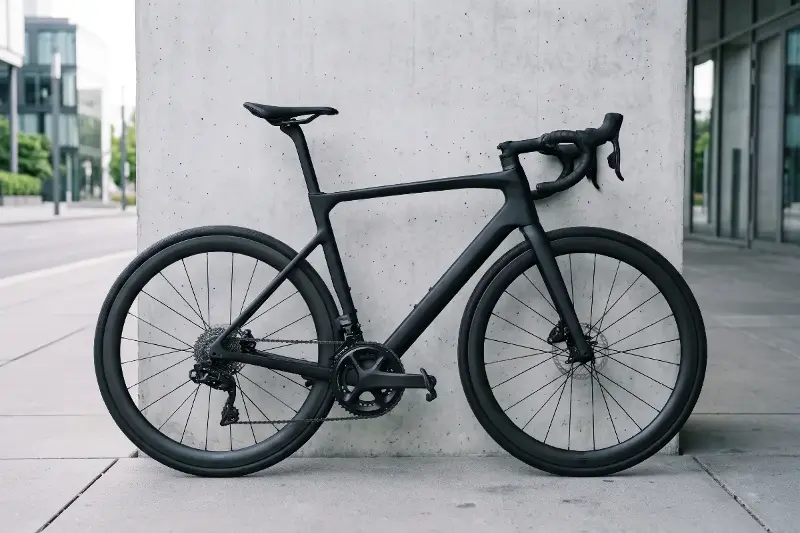
Modern road bikes are no longer defined by one simple goal: being as light as possible. The fastest machines now combine low mass, slippery aerodynamics, efficient power transfer, and confident handling into a single cohesive package. That balance matters because cyclists face changing conditions on every route, from steep climbs and rough lanes to exposed descents and fast group rides.
The result is a new generation of high-performance bicycles that weigh close to the minimum permitted in elite cycling while saving valuable energy against the wind. For everyday riders, this technology makes a bike feel more responsive, comfortable, and enjoyable on every ride.
The Pursuit of Low Weight
Weight matters most when gravity becomes the main obstacle. On a long climb, every extra kilogram requires more energy to move uphill. This is why premium road bikes are commonly built around carbon fiber frames, which offer an exceptional strength-to-weight ratio.
Carbon fiber frames offer distinct engineering advantages:
- Targeted Reinforcement: Designers place extra material around high-stress areas like the bottom bracket, head tube, and rear axle.
- Tuned Compliance: Unnecessary material is removed from low-stress sections to reduce weight without sacrificing strength.
- Precision Construction: Frame sections are individually tuned for the perfect mix of stiffness, comfort, and agility.
A top-level carbon frame can weigh under 800 grams, while a complete race-ready bike may sit right at 6.8 kilograms. The best designs aim for stiffness where riders produce power and controlled flex where the road sends vibrations upward.
Aerodynamics Beyond the Wind Tunnel
At speeds above roughly 20 kilometers per hour, air resistance becomes the single largest force a cyclist must overcome. This is why even climbing-focused road bikes borrow aerodynamic shapes from dedicated time-trial machines.
Instead of completely round tubes, modern designs feature truncated airfoil profiles. These flat-backed shapes guide air smoothly around the bike while remaining lightweight, compliant, and practical.
Key aerodynamic improvements include:
- Narrower Seat Stays: Reduce drag while allowing vertical flex to soften road chatter.
- Sculpted Forks: Direct airflow efficiently around the front wheel to eliminate turbulence.
- Fluid Dynamics Modeling: Advanced software simulates hundreds of tiny design tweaks before physical prototypes are built.
Because the cyclist creates far more aerodynamic drag than the frame itself, a fast bike is most effective when it supports an efficient, sustainable riding position.

Wheels, Tires, and Rolling Speed
Wheels are among the most influential upgrades on a performance bike because they simultaneously affect weight, aerodynamics, and handling. Deep-section carbon rims between 35 and 50 millimeters offer meaningful aerodynamic benefits without becoming difficult to manage in gusty crosswinds.
Wider internal rim widths also support broader tires, which has completely transformed road riding:
- Wider Profiles: Moving to 28 to 32 millimeter tires allows for lower, more comfortable air pressures.
- Faster Rolling: Modern wide tires deform smoothly over rough surfaces, maintaining speed better than old-fashioned narrow tires.
- Vibration Reduction: Muting road buzz reduces rider fatigue, helping preserve energy over long distances.
Power Transfer and Precision Shifting
A high-performance bike converts effort into forward motion with minimal energy loss. The bottom bracket and chainstays are designed to resist twisting under hard pedaling, giving the bike an immediate, energetic response when accelerating out of corners or launching up a hill.
Electronic shifting has also become standard on premium bicycles, offering instant gear changes at the push of a button. Wireless controls keep the handlebar area clean, while wide-range cassettes ensure cyclists have low enough gears for steep ascents and high enough gears for rapid, exciting descents.
Purposeful Integration
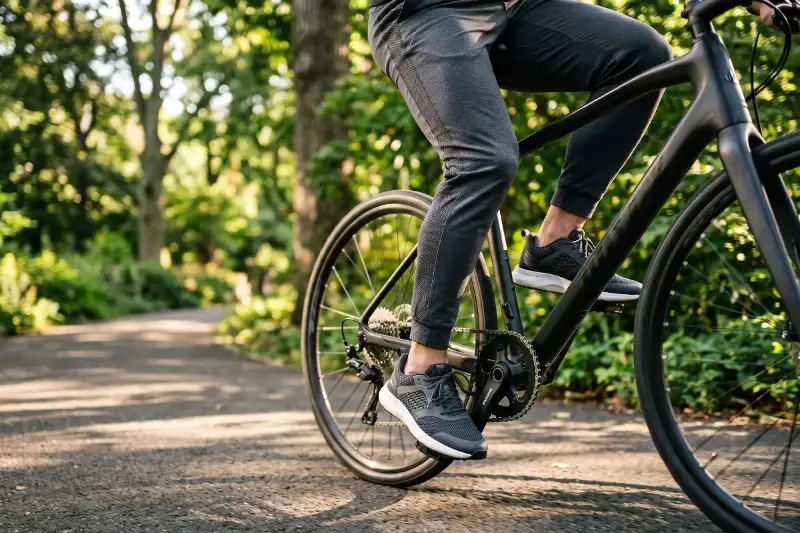
Hidden cables, integrated handlebars, and sleek frame shapes give modern bikes a clean appearance while shielding components from dirt and weather. However, practical design remains essential. A well-designed bike still allows easy adjustments to stem length, handlebar height, and saddle position.
The real achievement of cutting-edge road bikes is not simply that they are feather-light—it is that they use advanced materials and engineering to turn more of your effort into pure, enjoyable speed.