


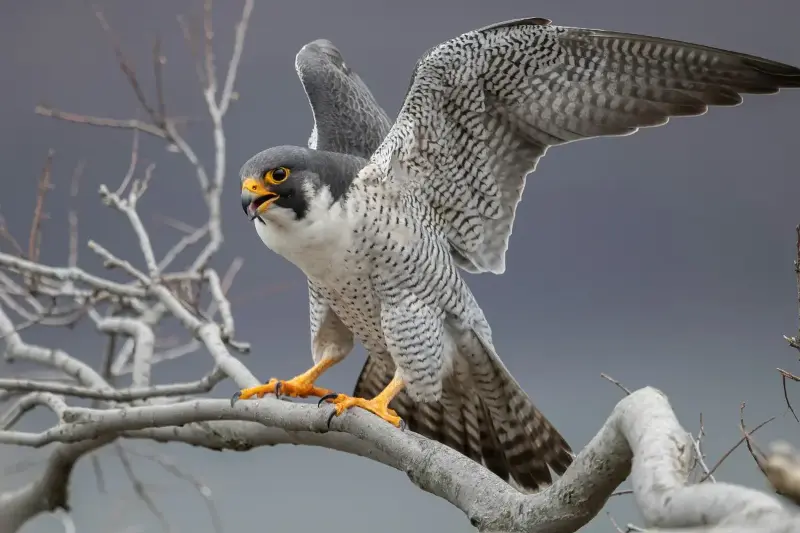
When it comes to wild animals that push the boundaries of what is physically possible, few soar as high—both literally and figuratively—as the peregrine falcon. Universally recognized as the fastest animal on the planet, the peregrine’s life is a dazzling blend of aerial acrobatics, lightning-fast reflexes, and gravity-defying dives.
Beyond the record-breaking numbers, these birds of prey offer a fascinating glimpse into the marvels of evolution and the drama of survival at breathtaking speeds.
Unrivaled Speed: The Science of a Record-Breaking Dive
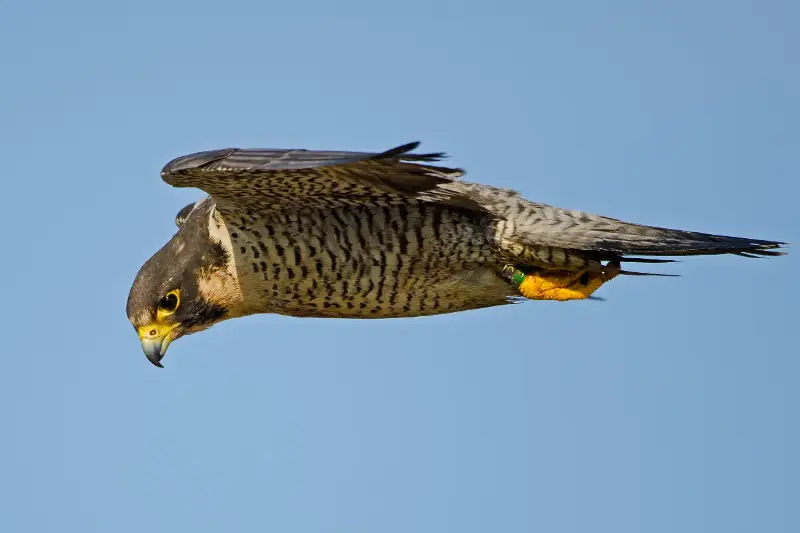
Picture a bird, not much larger than a crow, rising high above a city skyline or a mountain ledge. Suddenly, it folds its sleek wings close to its body and launches itself toward earth. This is the peregrine falcon engaging in its signature stoop—the specialized hunting dive that has made it world-famous.
During this plummeting maneuver, peregrines achieve astonishing velocities:
- Top Speeds: Clocked at over 240 miles per hour (about 386 kilometers per hour).
- The Comparison: That is faster than a Formula 1 racing car at peak performance, and roughly triple the takeoff speed of a commercial passenger jet.
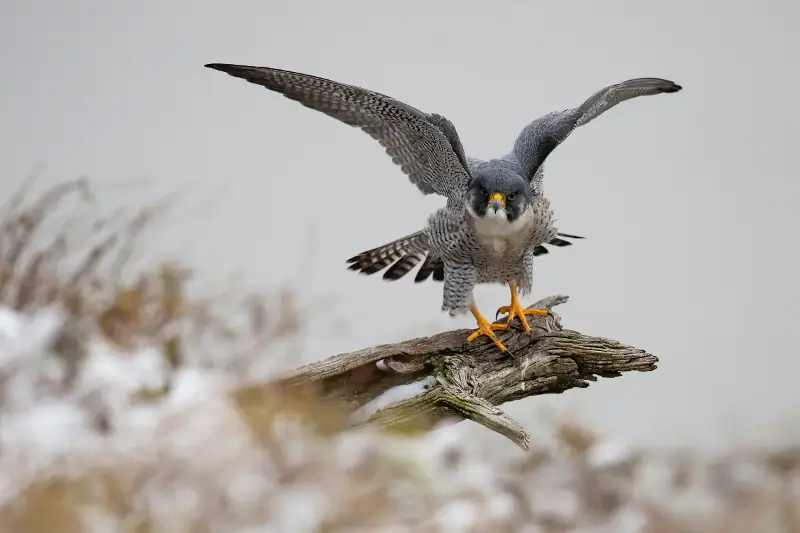
What is the secret behind these high-speed dives? Peregrines possess a highly aerodynamic, teardrop body shape, exceptionally strong chest muscles, and stiff, dense feathers that withstand the punishing forces of rushing air.
Furthermore, nasal baffles—specialized cone-shaped bone structures inside their nostrils—slow down the pressure of incoming air, allowing the falcon to breathe easily even at breakneck velocities.
Lightning Reflexes: How Peregrines Outsmart Prey
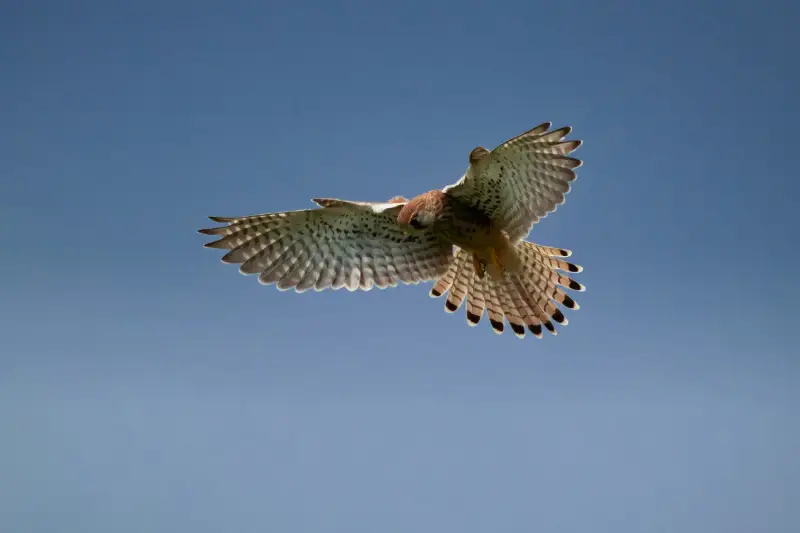
Of course, speed means nothing without control. Moving too fast can cause a bird to miss its mark entirely. To balance this velocity, the peregrine falcon relies on razor-sharp reflexes and arguably the sharpest vision in the animal kingdom.
Thanks to an incredibly high density of photoreceptor cells and two specialized foveae (the part of the eye responsible for acute detail), a peregrine can spot potential prey from more than a mile away.
As the falcon enters its deep stoop, calculating the ideal angle and timing is a split-second operation:
- In-Flight Adjustments: At nearly 240 miles per hour, tiny adjustments—like angling a wing or twisting a tail feather—alter the trajectory instantly.
- The Strike: The falcon closes in with unerring accuracy, extending its clenched feet bristling with sharp talons forward to deliver a precise, high-impact blow.
Urban Adapters: Racing Gravity Across City Skies
Though majestic cliffs and remote river canyons were once their exclusive domains, peregrine falcons have successfully colonized a modern landscape: the urban skyscraper. High-rise buildings perfectly mimic the birds’ natural cliffside nesting sites, while city avian populations offer a convenient, never-ending food supply.
Today, peregrines are a thriving sight in major global metropolises from New York to London. Their high-speed aerial chases provide an incredible urban spectacle, causing office workers and daily commuters to gaze skyward in amazement.
For scientists, this migration offers a unique opportunity. Modern tracking technology and high-speed cameras now capture crisp footage of these mid-air maneuvers, providing data that continues to fascinate ornithologists worldwide.
The Physics of Flight: Harnessing Gravity
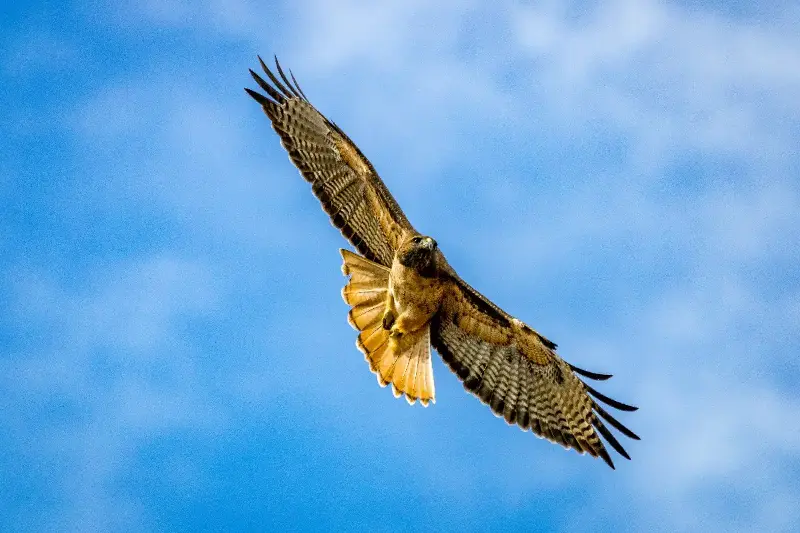
If you are wondering how the peregrine falcon manages these extreme physical feats, the answer lies in pure physics. When the falcon enters its dive, gravity accelerates its descent, while its smooth profile reduces air resistance to reach terminal velocity at a staggering pace.
Interestingly, this daredevil ability is a mix of evolution and education:
- The Learning Curve: Young peregrine fledglings must learn to dive through trial and error.
- Practice Runs: They start practicing stoops from much lower heights, gradually building the confidence and instinctive muscle memory required for full-throttle adult chases.
Record Holders: Shaping the Human Imagination
The peregrine’s prowess has profoundly influenced human culture and modern engineering. These disciplined birds have been cherished companions in the ancient art of falconry for over 3,000 years. In the modern era, their specialized anatomy and fluid aerodynamics have directly inspired advanced aircraft design and cutting-edge sports science.
Most importantly, the falcon represents one of the greatest wildlife conservation victories in history. After dangerous pesticides brought them to the brink of extinction in the 20th century, dedicated international protection efforts sparked a near-miraculous population recovery.
Today, the peregrine falcon stands as a breathtaking symbol of resilience—a creature that stares down gravity, rewrites the rules of speed, and brings thrilling natural drama to our everyday skies.