


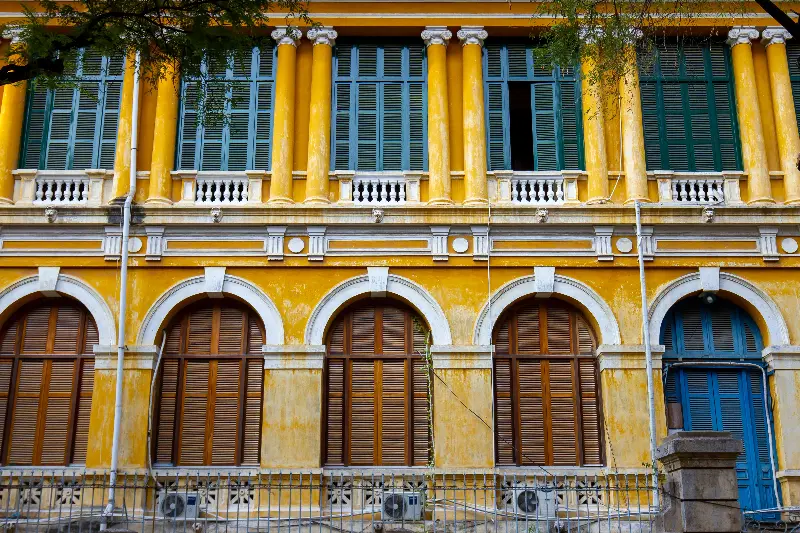
Indochine architecture stands as a romantic testament to a unique period in history when the artistic sensibilities of the East and the West merged into something entirely new. Walking through the streets of cities like Hanoi, Ho Chi Minh City, or Phnom Penh, one cannot help but feel the nostalgia radiating from the ochre walls and green shutters of these historic buildings.
This style is not merely a relic of the past; it is a living aesthetic that continues to inspire modern interior designers and architects across Southeast Asia. By blending the sturdy, formal lines of French Neoclassicism with the organic, climate-responsive techniques of local traditions, Indochine architecture created a visual language that feels both grand and incredibly grounded in its environment.
The story of this movement began in the late 19th century. Initially, French architects tried to replicate the heavy stone structures of Paris, but they quickly realized European designs were ill-suited for the sweltering heat and heavy monsoons of the tropics. They had to adapt, incorporating local materials and ingenious cooling methods. This evolution turned a colonial imposition into a sophisticated fusion—a conversation between cultures that resulted in a timeless elegance.
THE SIGNATURE ELEMENTS OF INDOCHINE DESIGN
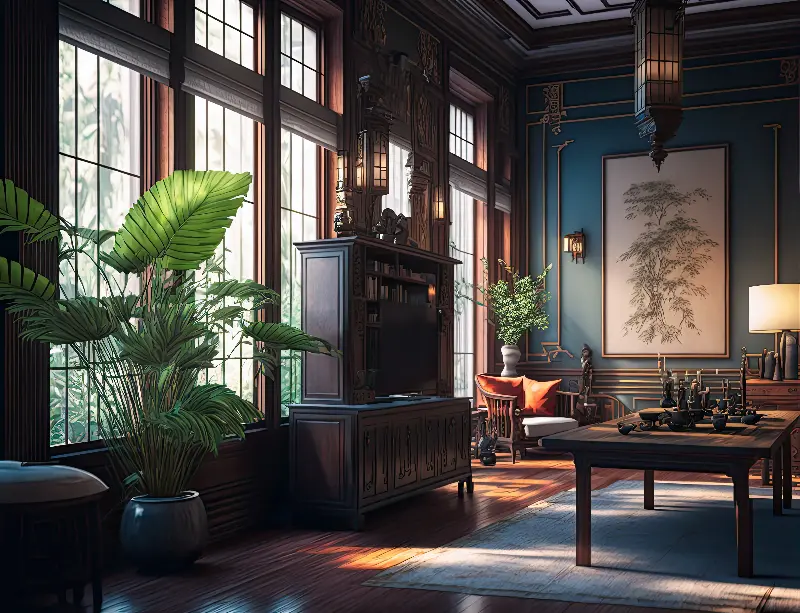
To truly understand the appeal of Indochine architecture, one must look at the specific features that define its silhouette. These elements were designed to balance aesthetic grandeur with functional necessity:
- High Ceilings and Expansive Windows: Essential for encouraging natural ventilation in a pre-air conditioning era.
- Deep Verandas: These long hallways act as thermal buffers against the sun’s intensity.
- Pitched Roofs: Utilizing traditional Vietnamese or Khmer temple shapes, often decorated with intricate tile work.
- Ochre Walls: The iconic pale yellow hue that reflects sunlight while providing a distinct historical character.
Materiality plays a massive role in creating that signature atmosphere. You will see a heavy use of tropical hardwoods, such as teak or rosewood, which offer a warm contrast to the lighter masonry. These woods are often carved into delicate screens or shutters that allow light to filter through in beautiful patterns.
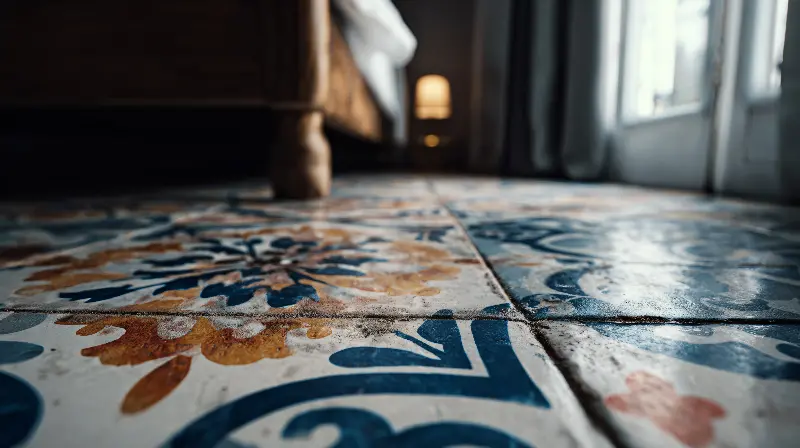
One of the most beloved features remains the encaustic cement tiles. These colorful, patterned floor tiles often depict geometric shapes or floral motifs, turning every floor into a vibrant piece of art that remains cool underfoot even during the hottest afternoons.
COLOR PALETTES THAT DEFINE AN ERA
The color scheme of Indochine architecture is perhaps its most recognizable trait. The palette is dominated by neutral and earthy tones that reflect the natural landscape of Southeast Asia.
- Exteriors: Pale yellows, creams, and whites are used to reflect sunlight.
- Accents: Deep greens of shutters and doors mimic the lush tropical foliage.
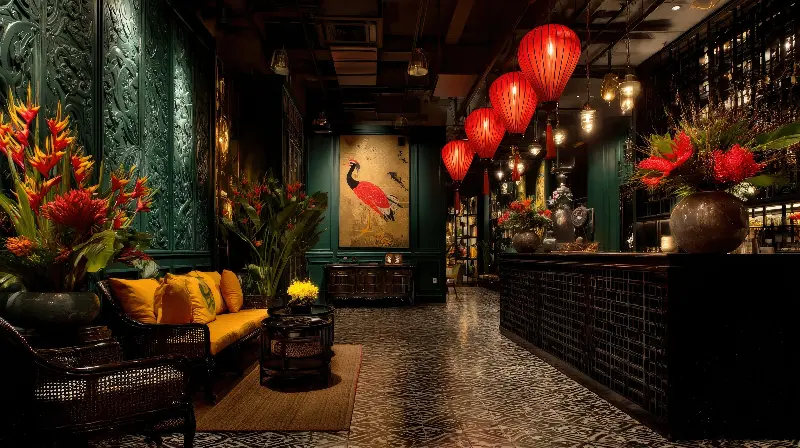
- Interiors: Warmer, more regal tones like terracotta, burnt orange, and mustard yellow create a sophisticated environment.
These colors are often punctuated by the dark, rich tones of polished wood furniture. The contrast between a bright, airy room and heavy, dark furniture is a hallmark of the Indochine look. Furthermore, the use of gold or brass accents adds a touch of Western luxury without overwhelming the Eastern simplicity of the space.
THE MARRIAGE OF FUNCTION AND CULTURAL MOTIFS
Beyond the structural bones, the decorative motifs tell a story of cultural exchange. Architects frequently borrowed symbols from local folklore and religions to decorate facades:
- The Lotus Flower: Representing purity in Buddhist tradition.
- Mythical Creatures: Stylized dragons or phoenixes integrated with Western wrought iron.
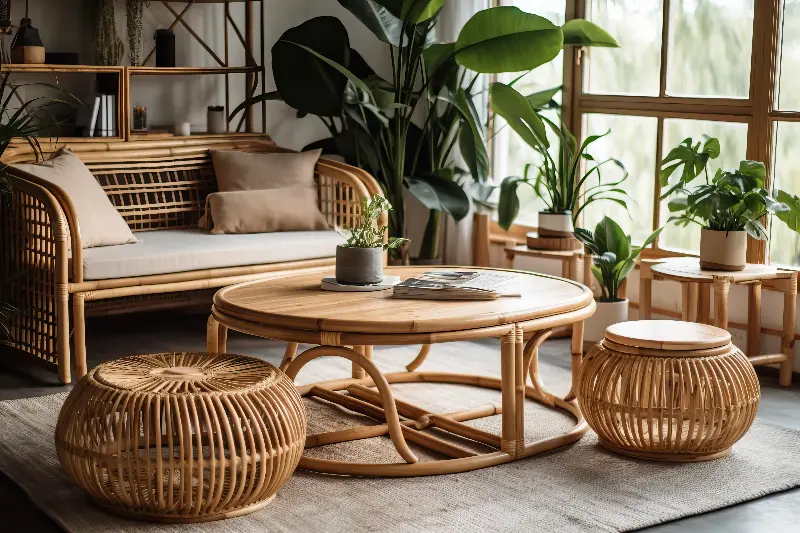
- Rattan and Bamboo: Used in furniture to provide lightness and breathability.
- Ping Feng (Wooden Screens): These serve to divide spaces while allowing air to flow freely.
This layering of symbols creates a rich visual narrative that honors local identity while embracing modern construction techniques of the time. Every aesthetic choice was also a practical solution to the challenges of the tropical environment.
THE MODERN REVIVAL: A RETURN TO "SLOW LIVING"
Today, we are witnessing a significant resurgence of Indochine style, particularly in boutique hotels and luxury resorts. Modern homeowners are increasingly drawn to the "old world" soul of this architecture, seeking a break from the coldness of minimalist modernism.
Architects are now updating the style with contemporary comforts, using large glass panes alongside traditional shutters or integrating smart home technology into classically designed cabinets. This evolution proves that the Indochine aesthetic is a flexible framework that celebrates the beauty of diversity.
The enduring legacy of Indochine architecture lies in its ability to evoke a specific mood of romance and tranquility. It reminds us that when two different worlds meet, they don't have to clash; instead, they can create something far more beautiful and resilient than either could have achieved alone.