


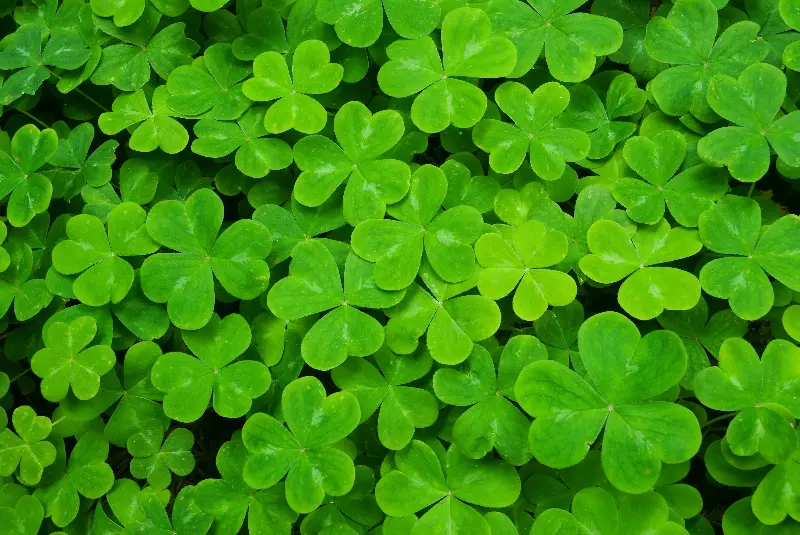
The shamrock is much more than a simple, three-leafed plant nestled among the green fields of Ireland. Today, it captivates people across the globe as a definitive symbol of Irish identity, luck, and celebration. But how did this humble sprig of clover travel from misty Irish meadows to the hearts of millions? The journey of the shamrock is a tale threaded with ancient myths, historical transformations, and vibrant traditions that continue to connect generations across the diaspora.
EARLY ROOTS: A SYMBOL BORN FROM NATURE AND MYTH
Long before the shamrock became the global emblem of St. Patrick's Day, it held a sacred place in Celtic culture. The Celts, who inhabited Ireland thousands of years ago, were deeply connected to the natural world and viewed the environment through a spiritual lens. For them, the number three carried profound mystical significance, representing various triads such as:
- The Realms: Earth, sky, and sea.
- The Cycle of Existence: Life, death, and rebirth.
- The Totality of Time: Past, present, and future.
The three-part leaves of the shamrock mirrored these sacred triplets. Ancient druids—the high priests of the Celts—are said to have cherished the shamrock as a protective charm against evil spirits. While archaeological proof is scarce, the enduring association between the shamrock and good fortune stems directly from these primordial beliefs.
ST. PATRICK AND THE CHRISTIAN CONNECTION
The legend of St. Patrick, Ireland’s patron saint, transformed the shamrock from a pagan charm into a powerful religious icon. According to folklore, St. Patrick used the plant as a visual aid while spreading Christianity during the 5th century. By plucking a shamrock from the ground, he could easily explain the Holy Trinity—the Father, the Son, and the Holy Spirit—making a complex theological doctrine accessible to the local population.
By the 17th century, the tradition of "drowning the shamrock" began to take hold. Irish people started wearing the sprigs on their lapels on March 17th, not only as a religious tribute but as an act of cultural pride during eras when Irish expression was often suppressed by outside rule.
REBELLION, RESISTANCE, AND NATIONAL PRIDE
The 18th and 19th centuries marked a turbulent chapter in the Irish story. During the 1798 Irish Rebellion, the shamrock was adopted by the United Irishmen as an emblem of independence. It began appearing on:
- Military banners carried into battle.
- Regimental uniforms of volunteer militias.
- Nationalist coins and political pamphlets.
During this period, the shamrock blossomed into a symbol of nationalist sentiment. Wearing the "green" became a silent, yet powerful, statement of solidarity—a way to signal one's heritage and political stance in the face of cultural oppression.
THE SHAMROCK GOES GLOBAL
Irish emigration, accelerated by the Great Famine in the mid-19th century, carried the shamrock far beyond Ireland’s rocky shores. Whether in the bustling streets of New York, the goldfields of Australia, or the townships of Canada, immigrants clung to the shamrock as a living reminder of home.
Consequently, St. Patrick’s Day transformed from a modest religious feast into a massive global festival. The shamrock took center stage in parades and fashion, eventually adopted by people of all backgrounds. Today, the vibrant green trefoil symbolizes joy, unity, and a shared sense of belonging wherever the holiday is celebrated.

SCIENCE MEETS SYMBOLISM: IS IT REALLY A CLOVER?
Botanically speaking, the identity of the "true" shamrock is still a matter of friendly debate among experts. While the word seamróg simply means "young clover," various species vie for the title:
- Trifolium dubium: The lesser trefoil, often cited by botanists as the most "authentic" Irish shamrock.
- Trifolium repens: The common white clover found in many lawns.
- Oxalis acetosella: Wood sorrel, which features similar heart-shaped leaves.
It is also important to distinguish the shamrock from the four-leaf clover. While the four-leafed variant is a rare biological mutation considered a lucky find, the classic three-leafed shamrock remains the actual bearer of Irish tradition and historical meaning.
A LIVING LEGEND IN MODERN CULTURE
In the 21st century, the shamrock is no mere relic; it remains a vital part of Ireland’s international brand. It is prominently displayed by:
- National Sports Teams: Including the Irish Rugby Football Union.
- State Agencies: Symbolizing government authority and heritage.
- Global Corporations: Most notably on the tailfins of Aer Lingus aircraft.
Each March, a unique diplomatic tradition continues: the Irish Taoiseach (Prime Minister) presents a crystal bowl of fresh shamrocks to the President of the United States. This gesture highlights Ireland’s enduring influence on the world stage and the deep ties between the two nations.
The journey of the shamrock from wild fields to the world’s heart is a testament to resilience and renewal. It bridges the ancient with the modern and the local with the global. When you see a shamrock today, remember you are looking at a living legend that has survived centuries of change to remain a universal beacon of hope.