


Among the swirling tapestry of life in the tropics, there’s a humble insect community whose achievements would put even the most diligent human farmers to shame. Leafcutter ants, found across Central and South America, are not just another small cog in the biodiversity wheel; they are ecological engineers and agricultural pioneers with a fascinating story to tell.
Nature’s Pioneers of Fungus Farming
Leafcutter ants have mastered an art humans only discovered thousands of years after these tiny insects had perfected it—agriculture. These remarkable ants don’t eat the leaves they tirelessly carry back to their colonies. Instead, they use them to cultivate a specialized fungus, their real food source. The leaves become mulch, and the fungus is carefully tended in sprawling underground gardens, some of which can be meters wide and home to millions of ants.
This mutualistic relationship between ant and fungus is highly specialized. The fungus species cannot live without the ants, and vice versa. Each ant “garden” is started by a queen who brings a small piece of the parent colony’s fungus when she founds a new colony. This living inheritance ensures the next generation of ants can continue the farming tradition.
Complex Societies with Specialized Roles
Leafcutter ant colonies are some of the most complex insect societies known to science, with populations reaching up to ten million individuals. Each ant has a role determined by its size and caste. The largest workers, called soldiers, protect the colony from predators and rivals. Medium-sized workers, the foragers, march in endless columns to harvest leaves. Tiny workers, meanwhile, spend their days deep in the nest, tending the fungus, grooming it, and even using their mandibles as miniature scissors to cut leaves into the perfect substrate.
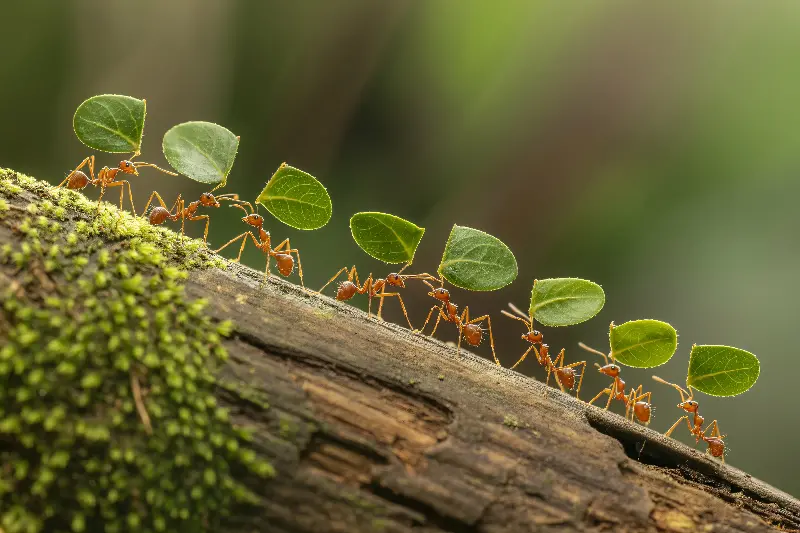
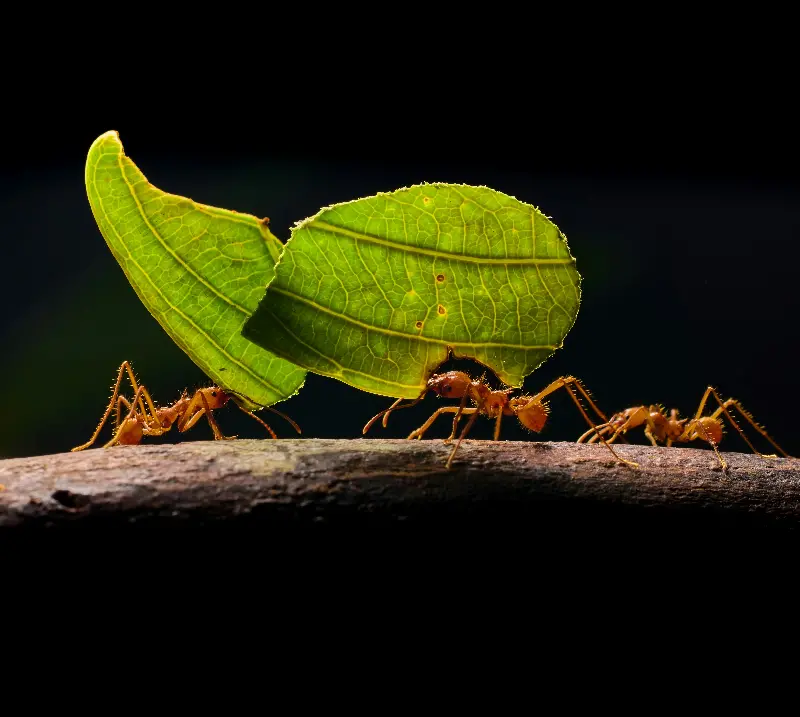
The foraging lines of leafcutter ants are a marvel to behold. Ants march steadily along trails up trees, clip out surprisingly large leaf fragments—often several times their body size—and return in single file. These trails can stretch up to 30 meters across the jungle floor, forming green highways that glimmer in the sunlight.
Miniature Environmental Engineers
While their gardening skills grab the headlines, leafcutter ants are also prolific ecosystem engineers. By moving tons of soil and vegetation, they help aerate the earth and facilitate nutrient cycling. Their underground chambers are so vast and complex that abandoned nests often become hotspots of plant growth, rich in nutrients.
Beyond their own agricultural pursuits, leafcutter ants influence the surrounding ecosystem in subtle yet profound ways. They are a major food source for predators ranging from birds to armadillos. Some plant species have even evolved specifically to attract or repel these ants, a testimony to their ecological impact.
A War Against Fungi’s Enemies
Tending a fungus garden is a bit more challenging than it might sound. Leafcutter ants are constantly at war against invading molds and bacteria that threaten their cherished crop. To protect their fungus, the ants employ a mix of behaviors that would make any gardener proud. They meticulously clean each leaf fragment before it enters the garden, remove contaminated material, and even use their own antimicrobial secretions as a natural pesticide.
Adding another layer of sophistication, leafcutter ants have formed a partnership with bacteria that live on their bodies, particularly on their legs and chests. These bacteria produce antibiotics that target the parasitic molds, giving the ants yet another weapon in their farming arsenal. Modern scientists are so intrigued by this natural pharmacy that they are studying leafcutter ants for hints at promising new antibiotics for human medicine.

Insect Behavior at Its Most Advanced
Few insect societies rival the division of labor and social organization of leafcutter ant colonies. Communication is key to their success. Using pheromones—chemical signals left as trails—ants can coordinate vast foraging operations, warn others about dangers, or call for reinforcements. Some leafcutter ants even “stridulate,” making tiny squeaks by rubbing parts of their bodies together, a sound that encourages hesitant ants carrying heavy loads.
Leafcutter ant queens are among nature’s most resilient monarchs. After their nuptial flight, a young queen lands, burrows underground, and starts her own fungus farm. She can live and lay eggs for up to 20 years, ruling over millions of descendants and ensuring the fate of her fungal garden.
A Window Into a Hidden World
The story of the leafcutter ants is one of tiny steps and monumental achievements. These insects have created a sustainable, highly productive farming system that predates human agriculture by millions of years. Their underground cities and agricultural prowess make them one of the best examples of animal societies building and shaping the environments around them, influencing everything from soil structure to forest composition.
Next time you spot a moving column of green across the forest floor, pause and reflect: beneath your feet, civilizations rise and fall, and the tiny leafcutter ants are the unsung heroes of the insect world’s ancient agricultural revolution.