


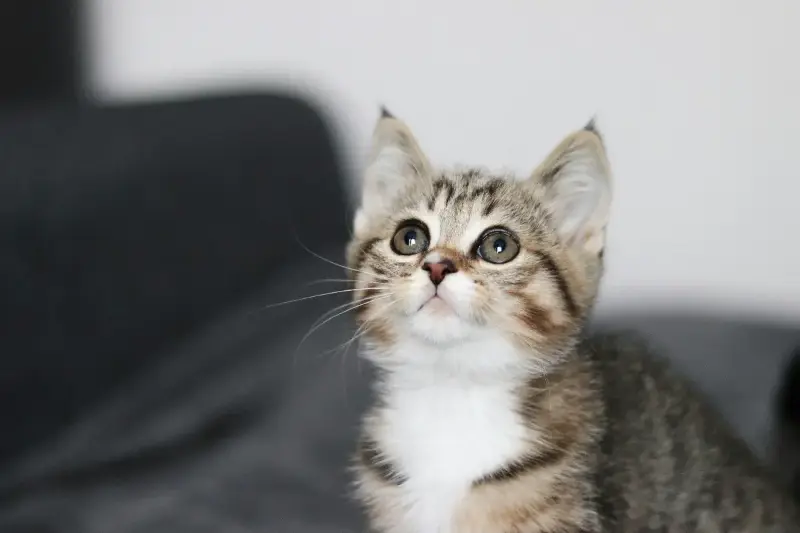
A cat sitting perfectly still and staring at an apparently empty wall can look eerie, especially when its ears swivel, its pupils widen, or it suddenly dashes away as if it has spotted a ghost. The usual explanation is far less supernatural: cats experience the world through superpowered senses that are tuned to details humans routinely miss.
Your cat may be tracking a tiny insect, following a faint sound behind a wall, or processing subtle environmental shifts. What looks like nothing to us is often a very busy scene to a feline.
A World Built for Motion
Cats are exceptionally skilled motion detectors, evolutionary designed to spot small, fast-moving prey. Even a pampered indoor cat retains this sharp hunting instinct.
- Micro-Movements: A speck of dust drifting through sunlight or a thread moving in an air current can capture instant focus.
- Reflected Light: The flicker of a phone screen or a shadow passing across the wall immediately draws their gaze.
- Night Vision: Their eyes are especially sensitive to subtle motion in dim conditions, explaining late-night staring sessions.
They may not see distant details as sharply as humans, but their eyes catch the slightest movement before we even notice it.
Hearing Beyond Human Limits
A cat's remarkable ears are often the true reason for a blank stare. While humans hear sounds up to roughly 20,000 hertz, cats can detect high frequencies reaching 64,000 hertz—perfect for hearing hidden rodents or insects.
Movable outer ears, called pinnae, can rotate independently to pinpoint a sound's location. If your cat stares at an empty corner while its ears turn like radar dishes, it is actively tracking an invisible sound, such as:
- Mice or insects moving behind drywall or insulation
- Electrical equipment emitting faint high-frequency hums
- Water pipes clicking as they cool down
Whiskers and Scents Map the Room
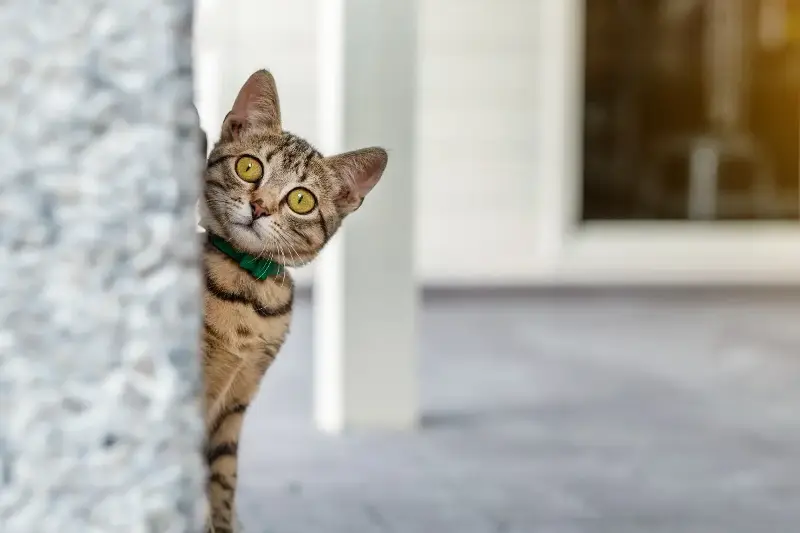
Cats do not rely solely on sight and sound. Their whiskers are extremely sensitive touch organs that detect minute shifts in air currents, helping them navigate and hunt in low light. A subtle draft from a doorway can immediately trigger a cat's attention.
Furthermore, a cat's nose contains roughly 40 million scent receptors (compared to human's 5 million). They also use a specialized scent-processing organ in the roof of their mouth called the vomeronasal organ.
When a cat stares intensely at a seemingly clean rug or doorway, it may actually be reading an invisible scent map left by another pet, an insect, or a recent visitor.
Daydreaming and Anticipation
Not every long stare is an mystery. Cats spend much of their day in a state of quiet wakefulness—appearing relaxed while quietly monitoring their surroundings for changes in routine.
A cat might also stare at a spot out of pure anticipation. If a bug previously disappeared behind a bookshelf or a toy rolled under the sofa, a cat will patiently watch that exact location, waiting for movement to resume.
When to Seek Veterinary Advice
While staring is usually completely normal, sudden behavioral shifts warrant attention. Consult a veterinarian if long stares occur alongside:
- Disorientation, stumbling, or pressing their head against walls
- Unusual vocalizing, muscle twitching, or seizures
- Sudden changes in appetite or sleep patterns
For a healthy cat, however, the mysterious wall-gaze is simply proof of their extraordinary sensory world. They are not seeing spirits; they are simply tuning into a vibrant world of sound, scent, and motion that we miss!