



A small bedroom does not have to feel like a compromise. The right paint colors can visually push back walls, lift a low ceiling, and maximize limited daylight. While white is often treated as the default solution, it is far from the only option. Carefully chosen darker, warmer, or cooler shades can transform a compact room into an inviting, surprisingly spacious retreat.
Paint works best when it creates continuity. Strong visual contrasts tend to chop a room into smaller sections, whereas related tones encourage the eye to travel smoothly across surfaces. The goal is to choose color combinations that reduce visual boundaries and reflect available light in a flattering way.
Soft White and Pale Blue
Soft white walls paired with a pale blue ceiling create an airy, open effect that suits bedrooms with limited natural light.
-
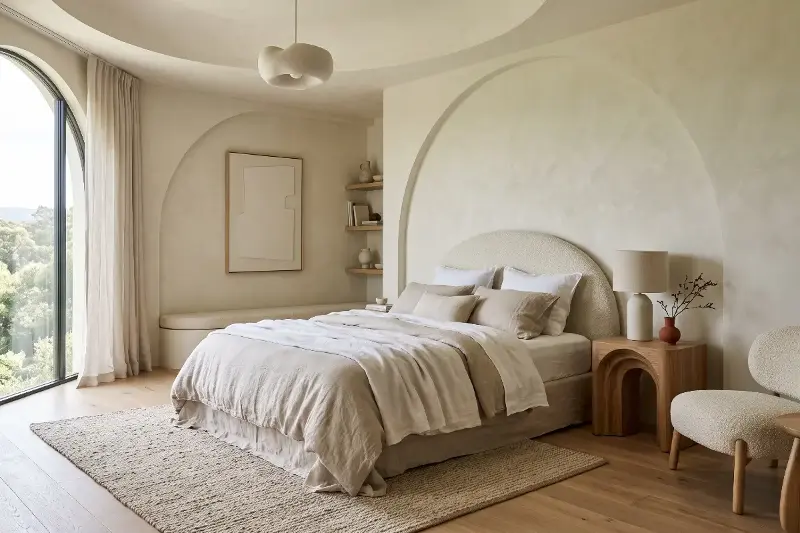
Warm White Walls: Choose an ivory, cream, or light greige over a stark, clinical white. These shades stop the space from feeling cold and pair beautifully with natural wood furniture and linen bedding.
-
Sky-Inspired Ceilings: A light blue ceiling mimics the feeling of an open sky. Because cool colors visually recede, this technique helps low ceilings appear significantly higher.
-
Muted Tones: Opt for subtle shades like misty blue, pale duck egg, or blue-gray, repeating the color in throw blankets or pillow trims for a cohesive look.
One Color from Wall to Woodwork
Painting walls, doors, baseboards, and window trim in the exact same shade is one of the most effective tricks for a small bedroom. It removes the hard outlines that define a room’s physical boundaries.
When every architectural detail is painted separately in contrasting white, the eye notices every interruption. When all surfaces share one unifying color, the room reads as a larger, calmer whole.
This approach looks stunning with warm neutrals such as light mushroom, soft taupe, muted sand, or pale stone. To maximize brightness, select paints with a Light Reflectance Value (LRV) above 60, which ensures maximum light reflection across the space.
Blush Pink and Warm Ivory
Pale blush and warm ivory can make a small bedroom feel gentle, glowing, and comfortably bright. This pairing is particularly effective in north-facing rooms, where natural light often feels cooler and bluish.
-
Warm Base: Apply warm ivory to the largest surfaces, including three main walls and the ceiling.
-
Soft Feature Wall: Introduce a powdery blush on the wall behind the bed. Choose a shade with beige or gray undertones rather than a sugary pink.
-
Complementary Accents: Incorporate brass lamps, oat-colored curtains, and walnut accents to elevate the palette into a sophisticated sanctuary.
Sage Green and Creamy White
Sage green offers a restful, nature-inspired feel with a unique optical quality. Its soft gray undertone allows it to behave like a neutral, while its green notes connect the room to the outdoors.
Paint the main walls a pale gray-green and use a creamy white on the ceiling, trim, and built-in storage. A cream with faint yellow or beige undertones creates a softer, more seamless transition than stark pure white.
For an even more expansive look, paint fitted wardrobes in the exact same sage green as the walls. This allows large storage pieces to recede visually instead of appearing as bulky blocks against the background.

Deep Blue and Matching Ceiling
A darker color can make a small bedroom feel visually larger when used with confidence.
Painting both the walls and ceiling in an inky navy, charcoal-blue, or midnight teal blurs the corners of the room. This makes it difficult to judge where one surface ends and another begins, creating a cocooning, elegant, and surprisingly expansive effect.
To execute this scheme successfully:
-
Ensure Good Lighting: Use warm white bulbs around 2700K and add bedside lamps on both sides.
-
Add Mirrors: Position a mirror strategically to bounce light around the room.
-
Contrast with Light Bedding: Choose pale bedding in soft white, flax, or light gray to give the eye a bright resting point.
Lavender Gray and Silver White
For a bedroom that needs brightness without feeling plain, consider a pale lavender gray paired with a silvery white. Lavender with a gray base is subtle, sophisticated, and makes daylight appear clearer.
Paint the walls lavender gray and select a soft silver-white for the ceiling and trim. Layer fabrics in dove gray, white, and muted plum to build depth without creating clutter. This color scheme excels in modern bedrooms with clean-lined furniture, offering distinct personality while maintaining a calm, open feel.