



For generations, students have been asked to memorize spelling lists, multiplication tables, historical dates, and scientific terms. Memorization certainly has a place in learning—children need basic facts readily available before they can read fluently, calculate efficiently, or discuss a topic with confidence. The problem begins when recalling information becomes the main measure of intelligence.
In many classrooms, success still means reproducing exactly what was taught. Students learn that the safest path is to remember the teacher’s wording, follow a formula, and avoid asking questions. While this can produce impressive short-term results, it leaves young people less prepared to solve unfamiliar problems, assess information, or develop original ideas.
What Rote Learning Really Does
Rote learning means acquiring information through repetition, often without fully exploring its meaning or context. A student may repeat that plants use photosynthesis to make food, for example, yet struggle to explain why a plant near a window grows differently from one kept in a dark cupboard.
The brain is remarkably good at storing repeated material, especially when an exam is approaching. However, memory alone does not guarantee understanding:
-
Mathematics: Students can memorize a formula but fail to recognize when to use it in a real-life situation.
-
History: They can recall the causes of a key historical event but remain unable to analyze its long-term impact or compare it to modern societal debates.
This highlights the gap between surface learning and deep learning. Surface learning focuses on remembering facts long enough to pass a test, whereas deep learning connects new knowledge to previous experience, asks why something happens, and applies ideas in practical settings.
Why Schools Lean on Memorization
Rote learning remains popular partly because it is easy to measure. A multiple-choice test can be marked quickly, scores can be compared across large groups, and schools can report clear numbers to education authorities. Measuring curiosity, reasoning, creativity, and collaboration is far more complex.
-
Large Class Sizes: When one teacher is responsible for 30 or more students, worksheets and recall-based tests feel manageable.
-
Limited Resources: Teachers may know that students need richer learning experiences but lack the time, training, or freedom within a tightly prescribed curriculum.
-
High-Stakes Testing: If a student’s future placement depends heavily on one exam, families and teachers naturally focus on memorizing likely answers rather than exploring open-ended questions.
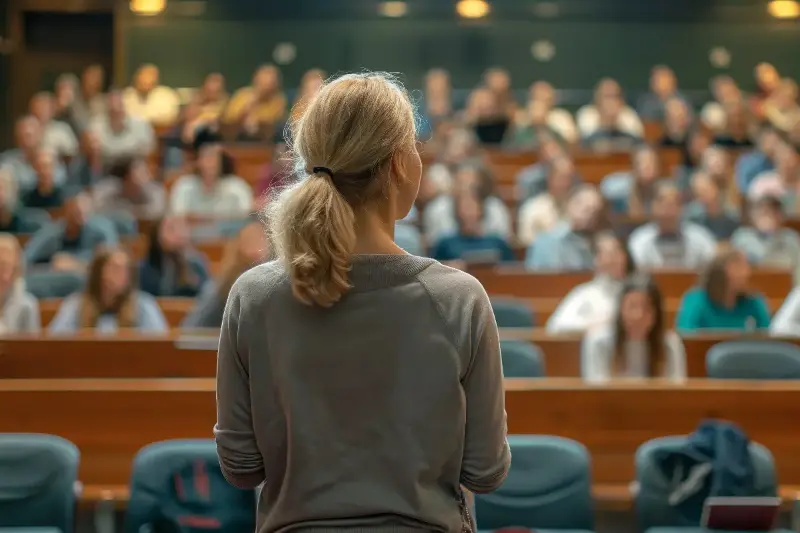
The Cost of Becoming a Memory Machine
When children are rewarded mainly for giving expected answers, they begin to see learning as a performance rather than an investigation. They become cautious, asking "Will this be on the test?" instead of "What would happen if we tried this?"
This mindset can erode confidence:
-
Distorted Self-Image: Students who forget a fact may believe they are not smart, even if they excel at designing, explaining, building, or recognizing patterns.
-
Unchallenged Potential: Students with strong short-term recall receive high marks without ever being challenged to analyze or create.
Research in cognitive science shows that information is retained far better when learners actively retrieve, explain, and connect it. Reading a definition ten times is far less effective than explaining it in your own words, teaching it to a classmate, or applying it to a practical problem.
Thinking Requires Productive Struggle
Real thinking involves uncertainty, mistakes, revision, and active engagement.
-
Mathematics: A student learning fractions benefits from basic facts, but deeper understanding grows when they physically divide objects, compare quantities, and explain why two different fractions represent the same amount.
-
Languages: Memorizing vocabulary is useful, but genuine communication develops when using new words to tell stories and express opinions.
-
Science: Knowing key terms matters, but scientific thinking emerges when students predict outcomes, test ideas, examine evidence, and refine conclusions.
This process can feel slower at first, but that struggle is productive. It teaches students that confusion is not a sign of failure—it is often the beginning of true understanding.

A Better Balance in the Classroom
The goal is not to eliminate memorization, but to achieve balance. Children still need number facts, phonics, and foundational knowledge. Teachers can introduce essential facts, then immediately invite students to use them:
-
Application: After learning about ecosystems, students might design a food web for a local habitat.
-
Analysis: After studying a historical speech, they can identify its persuasive techniques and draft their own response.
-
Problem Solving: After memorization drills, students can use number facts to plan a realistic budget or compare prices.
Parents can support this shift at home by asking open questions like "What surprised you today?" or "What question are you still thinking about?" Facts are the building blocks of education, but active thinking is what allows young people to build something meaningful with them.