


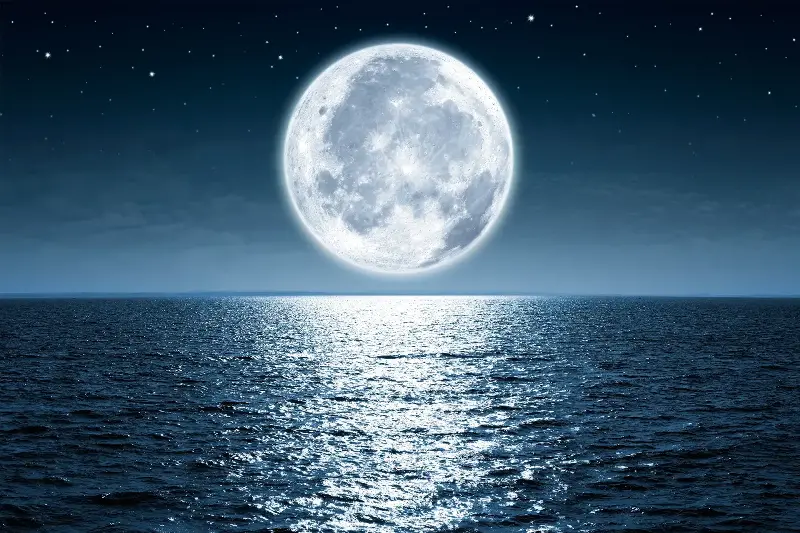
Since ancient times, humanity has gazed up at the moon and pondered its mysterious power over Earth’s waters. From early mariners relying on celestial charts to beachgoers timing their visits for the perfect swim, the regular rhythm of our coastal tides shapes daily life around the world. But what is truly at work behind this graceful dance of sea and satellite? The unseen forces driving our tides are a stunning example of the intersection between astronomy and geophysics, and their effects ripple from the depths of the ocean to the edge of human civilization.
Gravity and the Physics of the Lunar Tug
At its core, the science behind tides is entirely about gravitational attraction. The moon’s gravity pulls on Earth, and because water is fluid, it responds dynamically to this cosmic invitation.
- The tidal bulge: Whenever the moon is directly overhead or directly opposite to a specific part of the planet, it creates a bulge in the ocean surface. This fluid accumulation is what we experience as high tide.
- The low tide zone: Areas situated perpendicular to this gravitational alignment experience low tide, where the water level noticeably falls away.
- Solar amplification: Although the sun is significantly farther away, its massive gravity accounts for about half of the planetary tidal force. When the moon and sun align during new and full moons, their gravitational forces combine to create exceptionally high spring tides. Conversely, when they sit at right angles during quarter moons, we experience lower neap tides.
Earth’s rapid rotation also plays a key part, helping create two high tides and two low tides most days across the globe. This combination of lunar and solar gravity, paired with our ever-spinning planet, results in the reliable aquatic rise and fall.
Coastal Geography and Ocean Reactions
The exact impact the moon has on any specific coastline is shaped by more than just raw physics and astronomy; local geography plays a starring role. The positions of continents, the depth of ocean basins, and the unique contours of the underwater landscape can dramatically amplify or dampen tidal swings.
For instance, the world’s highest tides, which can reach more than 16 meters, are found at Canada’s Bay of Fundy. This extreme shift is the direct result of unique bay geography paired with resonant tidal patterns.
Every body of water reacts differently. Narrow bays and estuaries often experience exaggerated tidal ranges, while the world’s largest open bodies of water, like the deep Pacific, display more moderate, subtle shifts.

The Moon's Glacial Drift and Cosmic Evolution
A little-known astronomical fact is that the moon is not steadfastly locked in its current orbit. Instead, it is slowly drifting away from Earth at a rate of about 3.8 centimeters every year.
This glacial pace might sound unremarkable, but over millions of years, it alters the gravitational mechanics of our tides. As the moon moves farther out, global tidal forces will gradually weaken. This cosmic shift could eventually alter Earth’s rotation speed, slowly extending the length of a day and shifting long-term climate stability. This recession is a powerful reminder of how interconnected the cosmos is—what happens on the scale of planetary orbits has real, tangible consequences for life on Earth.
Environmental Impacts and Renewable Energy
Tides are much more than a daily curiosity for seaside dwellers; they are vital to planetary health. Their rhythmic motions circulate crucial nutrients through the water column, stir up essential sediments, and create vibrant, sheltered habitats for marine life in tidal pools, estuaries, and salt marshes. This constant mixing action helps maintain healthy, oxygen-rich water and assists in regulating global temperatures by encouraging the steady movement of deep ocean currents.
Furthermore, these predictable tidal forces are now being successfully harnessed as a clean source of renewable energy. In locations with dramatic tidal shifts, scientists have constructed advanced tidal power stations that seamlessly convert the predictable ebb and flow of seawater into clean electricity for thousands of homes, blending cosmic mechanics with sustainable human innovation.