


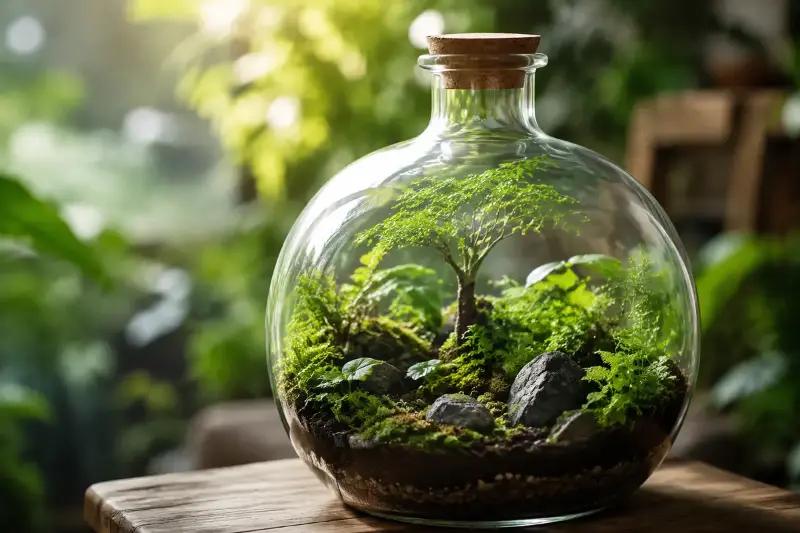
A glass bottle terrarium turns an ordinary container into a tiny, living landscape. With its curved walls, narrow opening, and changing layers of green, it feels like a miniature world captured in time. These small gardens are especially appealing for apartments, desks, shelves, and windowsills where space is limited but the desire for plants is not.
Terrariums became fashionable in the Victorian era after physician Nathaniel Bagshaw Ward discovered that plants could survive inside sealed glass cases. Today, bottle terrariums offer the same fascination on a smaller scale. They combine gardening, design, patience, and a touch of science.
Choosing the Right Bottle
Almost any clear glass bottle can become a terrarium—from a wide-mouthed jar to a sleek apothecary-style bottle. The most important consideration is accessibility:
-
Wide-mouthed bottles: Make planting, trimming, and cleaning much easier for beginners.
-
Narrow-necked bottles: Create a dramatic, intricate look but require long tools and a steady hand.
-
Rounded bottles: Soften the view and suit mossy woodland scenes.
-
Tall cylinders: Create a striking, modern vertical garden.
Preparation tip: Wash the container thoroughly with warm water and mild soap, then rinse it well and let it dry completely. Even a small amount of leftover residue or excess moisture can encourage unwanted mold.
Building Healthy Internal Layers
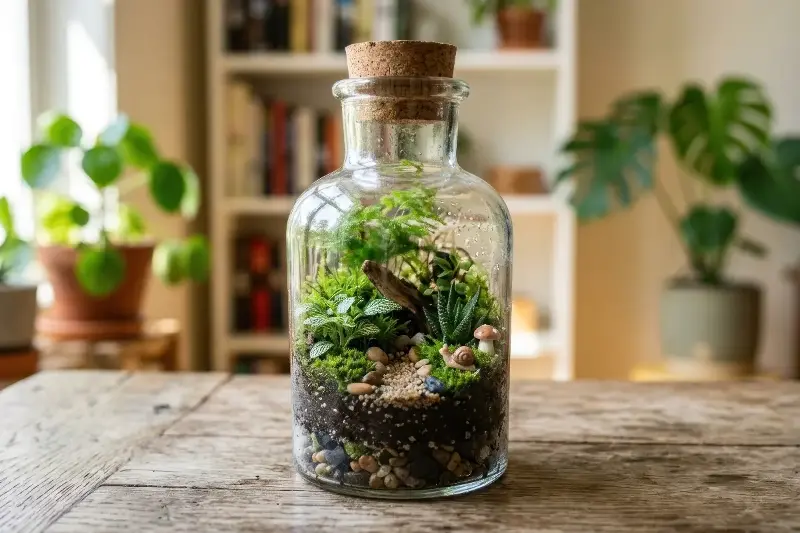
A terrarium needs proper drainage because excess water has nowhere to escape. Build your miniature ecosystem using four essential steps:
-
Drainage Base: Add a 1 to 2 centimeter layer of small pebbles, aquarium gravel, or washed stones at the bottom.
-
Charcoal Filter: Add a thin layer of activated charcoal above the stones to absorb odors and keep the environment fresh.
-
Protective Barrier: Place a light layer of sphagnum moss or fine mesh over the charcoal to keep soil from falling into the drainage stones.
-
Potting Soil: Add a well-draining indoor potting mix. Slope the soil higher toward the back to create visual depth, much like a real landscape.
Selecting Plants for a Tiny Climate
The best bottle terrarium plants stay compact and thrive in high humidity.
-
Top plant choices: Fittonia (nerve plant), miniature ferns, selaginella, pilea, and small peperomia varieties.
-
Lush mosses: Sheet moss creates a green carpet over soil, while cushion moss adds soft, natural mounds.
-
Plants to avoid: Succulents and cacti are poor choices for enclosed terrariums because they require dry air and direct sunlight; high humidity causes them to rot quickly.
Easy Planting With Simple Tools
Planting inside a bottle is easy when you use makeshift miniature tools:
-
Chopsticks & Long Tweezers: Perfect for positioning delicate stems.
-
Teaspoon Taped to a Stick: Ideal for digging small planting holes.
-
Small Paintbrush: Helps sweep stray soil off leaves and inner glass walls.
Keep each plant small so leaves have room to breathe. Trim damaged foliage before planting, and remove leaves that touch wet soil. You can add subtle decorative touches like a small piece of cork bark, a smooth stone boulder, or tiny pieces of driftwood to complete the scene.
Water, Light, and Daily Care
Care for your terrarium with gentle observation:
-
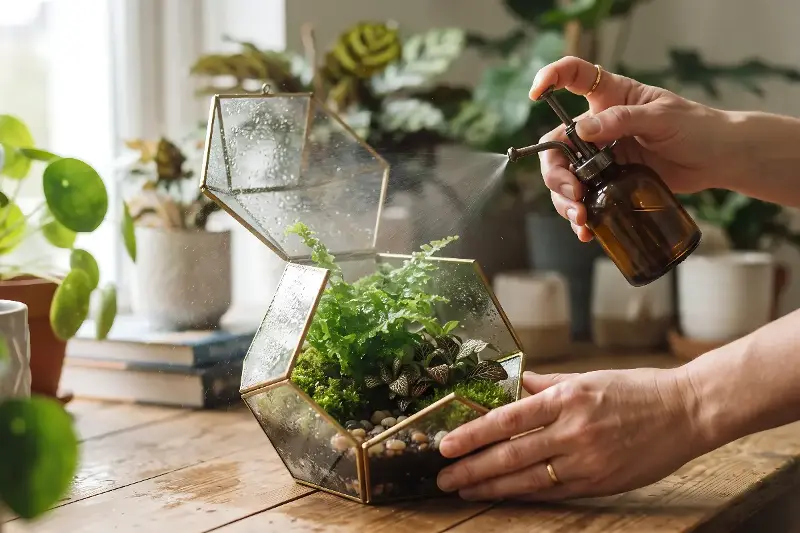
Watering: Begin with a light misting or a few teaspoons of water. In an enclosed terrarium, water evaporates, condenses on the glass, and returns to the soil in a self-sustaining cycle.
-
Condensation Control: Light morning mist on the glass is normal. Heavy water droplets all day mean too much moisture—simply open the lid for a few hours to air it out.
-
Lighting: Place the bottle in bright, indirect light. Direct sunlight acts like a magnifying glass and can quickly overheat the plants.
A healthy terrarium changes slowly. New leaves appear, moss spreads, and tiny roots become visible against the glass. Building a bottle terrarium is a rewarding craft that invites you to enjoy the quiet, remarkable beauty of nature up close.