



Intelligence is often imagined as a uniquely human trait—measured in written language, mathematics, monumental architecture, and recorded history. Yet beneath the ocean waves, soaring through the skies, and roaming ancient forests live creatures with radically different bodies, brains, and ways of experiencing reality. Nature has invented many distinct paths to complex thinking, proving that genius wears many forms across the animal kingdom.
A Brain Spread Through Eight Arms
Among all non-human thinkers, few creatures seem as alien as the octopus. Possessing three hearts, blue blood, and no bones, this soft-bodied invertebrate has existed for over 300 million years. Its intelligence evolved completely separate from mammals, offering a fascinating glimpse into an alternative design for complex cognition.
An octopus holds roughly 500 million neurons—a count comparable to that of a domestic dog. However, its nervous system is organized in a remarkably decentralized way:
- Central Command: Only about one-third of its neurons sit in the central brain.
- Distributed Network: Two-thirds of its nerve cells are spread throughout its eight arms.
- Autonomous Touch: Thousands of sensitive suckers detect texture and chemical signals, allowing each arm to sense, taste, and explore independently while the central brain focuses elsewhere.
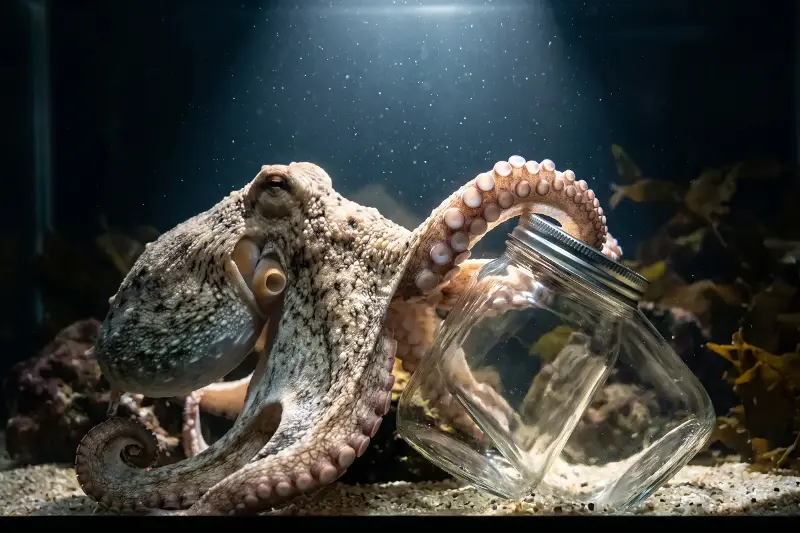
This unique anatomy makes octopuses masters of problem-solving. In laboratory settings, they quickly learn to unscrew childproof jars, solve complex mazes, and remember successful escape routes. In the wild, the veined octopus collects coconut shell halves, carrying them across the seafloor to assemble protective armor when predators approach—a clear display of prospective planning and tool use.
Feathered Philosophers and Avian Architects
While octopuses showcase decentralized intelligence in the deep, members of the avian world demonstrate that small brains can pack immense cognitive power. Corvids—the family of birds including crows, ravens, and jays—possess brain-to-body ratios rivaling those of chimpanzees.
Their cognitive capabilities challenge long-held assumptions about animal minds:
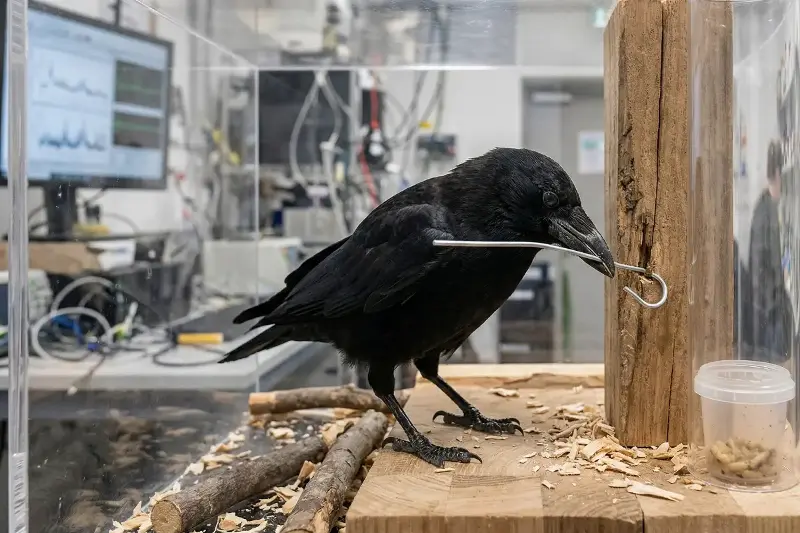
- Tool Construction: New Caledonian crows do not merely find tools; they manufacture them. They trim spiky leaves, bend wire into precise hooks, and combine multiple components to extract hidden insects from tree bark.
- Causal Reasoning: In experiments inspired by Aesop’s fables, crows understand water displacement, dropping heavy stones into tubes to raise water levels and reach floating food rewards.
- Episodic Memory: Western scrub-jays cache thousands of food items across vast landscapes. They remember not only where they hid specific meals, but also when—prioritizing perishable food before it spoils.
Beyond technical skill, corvids possess rich social awareness. Ravens can recognize individual human faces, holding grudges against people who treat them unfairly and passing that caution down to offspring through social learning.
Ocean Strategists and Cultural Communities
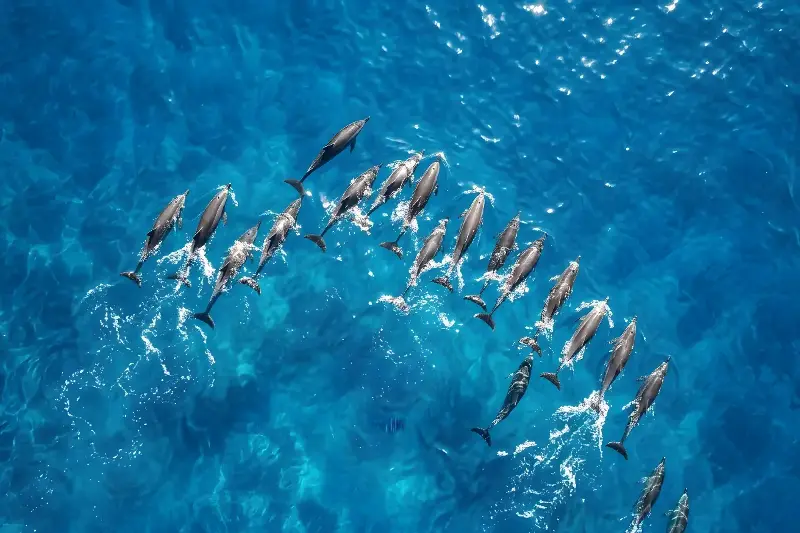
Deep within marine ecosystems, cetaceans—dolphins and whales—navigate their environment through sophisticated vocal communication, self-awareness, and learned traditions.
Their intelligence manifests through complex group dynamics and creative foraging strategies:
- Dynamic Tool Use: Bottlenose dolphins off the coast of Western Australia fit marine sponges over their beaks to protect themselves from sharp rocks while hunting along the seafloor.
- Cooperative Hunting: Humpback whales collaborate to blow precise "bubble nets" that herd fish into dense schools, requiring exact timing and synchronized swimming.
- Distinct Cultures: Orca pods pass down unique hunting techniques, vocal dialects, and social customs from generation to generation, demonstrating true animal culture.
Dolphins are also among the few species that recognize themselves in mirrors, demonstrating a clear sense of self-awareness. Their expansive brains contain specialized spindle neurons associated with high-level emotional processing, empathy, and social bonding.
The Deep Wisdom of Pachyderms
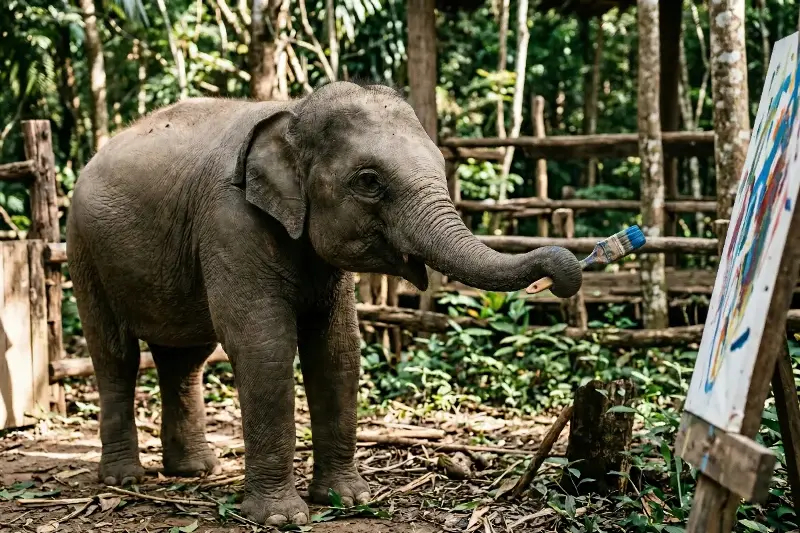
On land, African and Asian elephants demonstrate a form of intelligence defined by profound memory, spatial awareness, and deep emotional sensitivity. Navigating vast ecosystems, matriarchs maintain mental maps covering hundreds of square miles, remembering vital water sources during severe droughts decades apart.
Key aspects of elephant cognition include:
- Empathetic Responding: Elephants comfort distressed herd members through gentle vocalizations and reassuring trunk touches.
- Cooperative Problem-Solving: In team-based puzzle tests, elephants learn to pull two ends of a rope simultaneously to secure food, waiting patiently for a partner to arrive before taking action.
- Mourning and Reflection: Elephant herds demonstrate quiet reverence around the remains of deceased relatives, touching bones and standing silently in visible displays of grief.
Nature's Many Ways to Think
From an octopus unscrewing a jar to a raven crafting a hook, a dolphin hunting with sponges, or an elephant remembering an ancient path, complex cognition takes countless forms across our planet.
These animals remind us that intelligence does not require a human brain, a mammalian body, or a long lifespan. In the quiet complexity of oceans, forests, and skies, nature continues to demonstrate its endless capacity for brilliant innovation.