


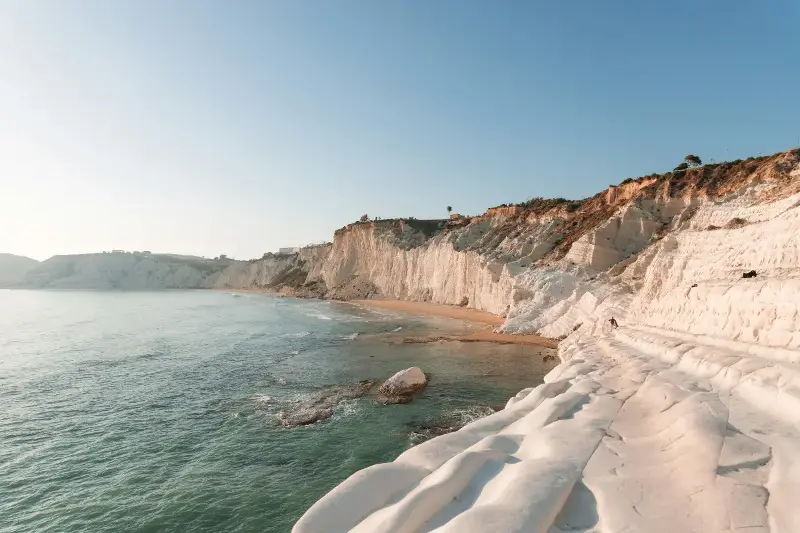
Few landscapes create a stronger first impression than white cliffs rising above intensely blue water. The contrast can look almost unreal: pale rock glowing in sunlight, waves shifting from turquoise to deep cobalt, and seabirds circling high above the shore. Yet these coastlines are not simply beautiful accidents. Their colors, shapes, caves, and beaches are the result of millions of years of geology, weather, and sea movement.
Chalk cliffs are especially striking because chalk reflects light efficiently. This soft, pale sedimentary rock is largely made from the microscopic shells of ancient marine organisms that settled on seabeds during the Late Cretaceous period, roughly 100 to 66 million years ago. When exposed along a coast, the cliffs become a bright, dramatic backdrop for the sea.
Why the Sea Looks So Blue
The sea does not have one fixed color. Its shade changes depending on several natural factors:
- Water depth and the contour of the seabed
- Sunlight angles and weather conditions
- Particles suspended within the water column
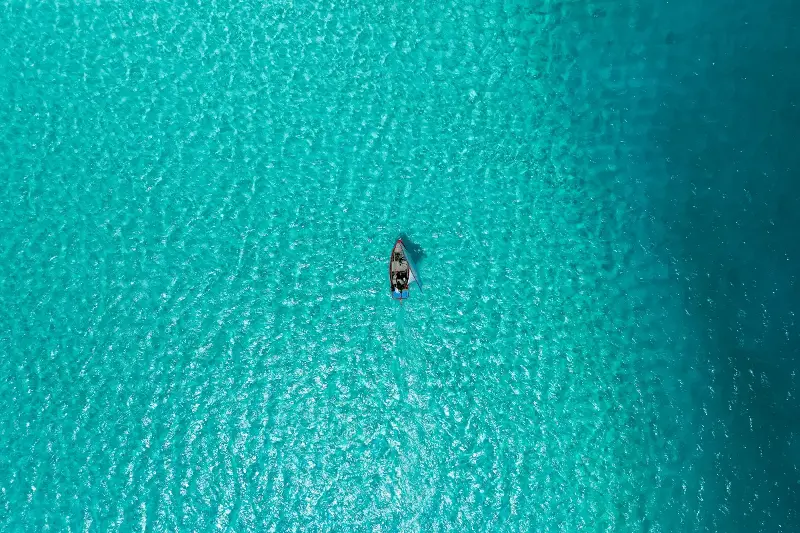
Clear, shallow water above white sand, limestone, or chalk often appears vivid turquoise because light reaches the bottom and reflects directly upward. Deeper water absorbs more red and yellow light, leaving richer blue tones visible to the eye.
On calm days, coastal waters may seem almost glassy, allowing visitors to see distinct bands of color stretching away from shore. Near a cliff base, the water often becomes darker quickly because the seabed drops away. This creates a striking gradient seen in many famous photographs: bright aqua near small coves, sapphire farther offshore, and deep navy blue on the horizon.
England's Iconic Chalk Horizons
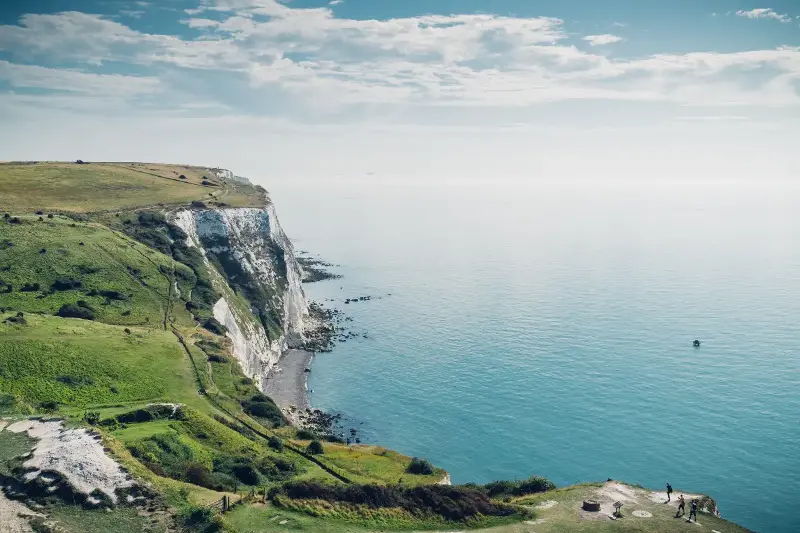
The White Cliffs of Dover are perhaps England’s best-known chalk landmark. Facing the English Channel, they have long been associated with journeys and impressive coastal views. At their highest point, the cliffs rise to about 110 meters above sea level.
For a more tranquil, nature-focused coastal experience, many travelers head west to the Seven Sisters in East Sussex:
- National Park Setting: Sits comfortably within the scenic South Downs National Park.
- Sweeping Trails: The walking route between Seaford and Eastbourne offers panoramic views across rolling grassland and open sea.
- Picturesque Spots: The peaceful beach at Cuckmere Haven provides one of the most photographed perspectives in the region.
These cliffs are constantly evolving. Rainwater enters small cracks in the chalk, winter frosts widen them, and gentle waves sculpt the base. Because natural shifts happen over time, visitors should always enjoy the views safely from designated paths away from the edges.
France's Sculpted Coast at Étretat
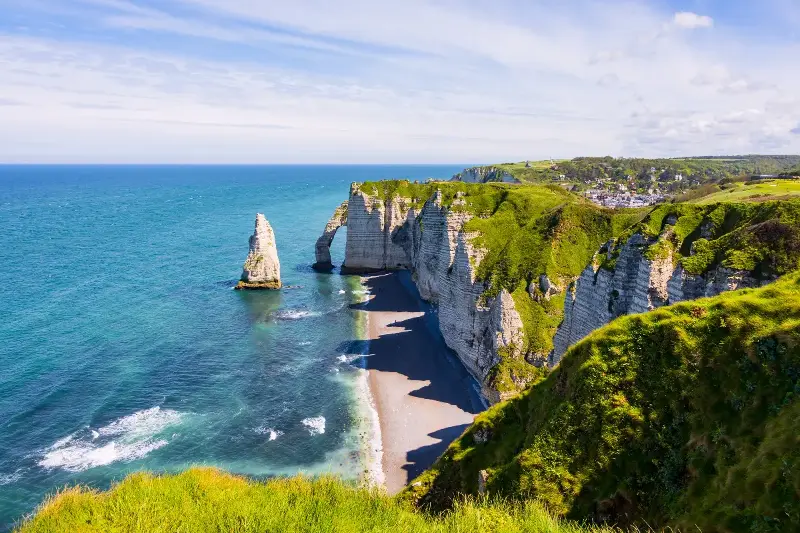
On the Normandy coast, Étretat is famous for chalk cliffs naturally carved into magnificent arches, pillars, and sweeping curves. The most celebrated formations include:
- Porte d’Aval: A massive, natural sea arch jutting into the water.
- L’Aiguille: A soaring, pointed needle of rock standing just offshore.
The beach at Étretat is made mostly of smooth, polished pebbles rather than sand. Waves gently roll and shape stone fragments over time, creating a unique soundscape as the tide moves in and out. Exploring at low tide reveals fascinating rock formations, making it a favorite for nature lovers and landscape artists alike.
Denmark's Soaring Møns Klint
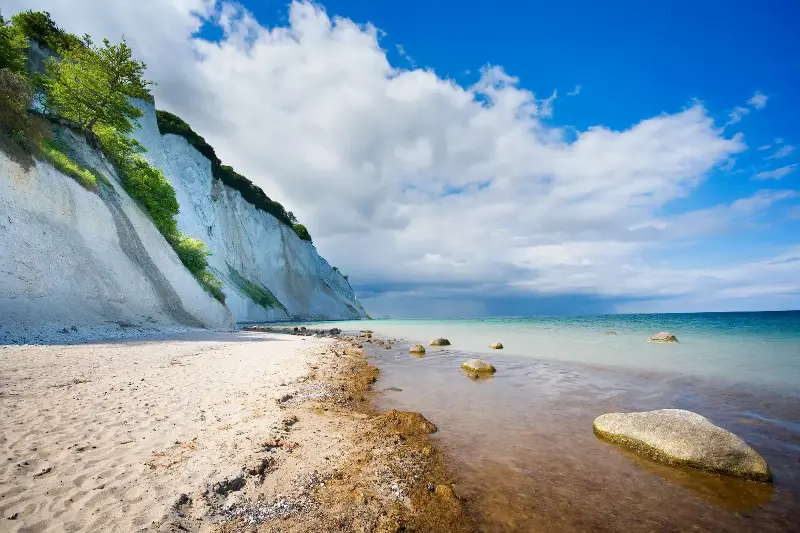
Møns Klint, located on the Danish island of Møn, offers an extraordinarily tranquil chalk landscape. The soaring cliffs extend for around six kilometers along the Baltic Sea and reach heights up to 128 meters. Their bright white faces rise above waters that turn a brilliant green-blue under clear summer skies.
The area is also celebrated for its pristine conditions:
- Ancient Fossils: The fallen chalk frequently reveals fossilized sea urchins and traces of ancient marine ecosystems.
- Rewarding Trails: A wooden staircase with hundreds of steps leads visitors through lush woodlands down to the shore.
- Stargazing Haven: Recognized for its dark skies, it is one of the premier locations in Northern Europe to view constellations after sunset.
Mediterranean Gems: Limestone and Luminous Waters
Not every dazzling white coastline is made of chalk—limestone cliffs create a remarkably similar visual magic, particularly around the sunny Mediterranean.
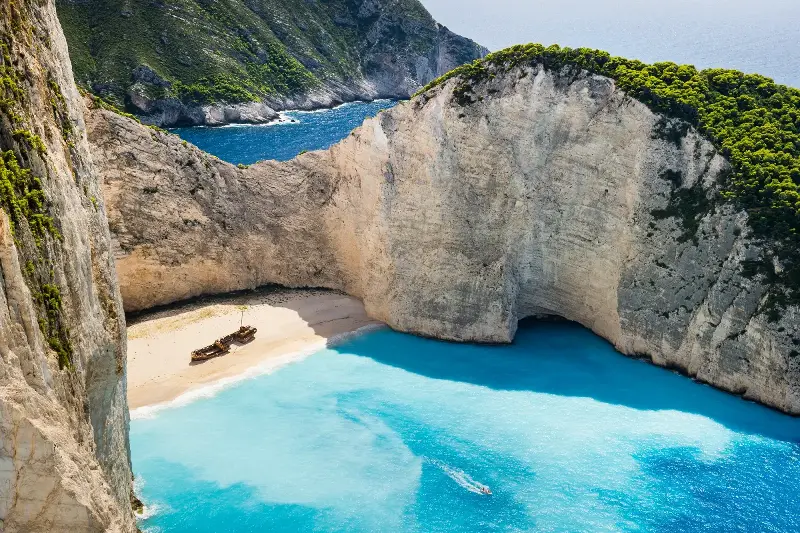
On the Greek island of Zakynthos, Navagio Beach became world-famous for its secluded bay, pale limestone walls, and dazzling electric-blue water. Further north, the island of Lefkada boasts steep, pale cliffs above popular shores like Porto Katsiki and Egremni. The Ionian Sea appears exceptionally vivid here thanks to its remarkable clarity and light-colored seabed.
In Southern France, the Calanques between Marseille and Cassis combine rugged limestone walls with narrow inlets of luminous, emerald-tinted water that draw hikers and kayakers year-round.
Traveling with Care Around Fragile Shores
The most stunning coastlines are also delicate ecosystems. Chalk and limestone shape unique habitats where specialized clifftop plants thrive and coastal birds—such as gulls and fulmars—build their nests. Staying on marked trails protects both the surrounding flora and wildlife while ensuring a safe, memorable trip.
The best time for photography is often early morning or late afternoon, when lower sunlight highlights texture in the rock and softens glare on the surface of the water. Yet the true charm of these places lies in their constant rhythm: cliffs gently age, waves redraw the shore, and every passing tide gives the sea a fresh new shade of blue.