



The Milky Way tree (Tabernaemontana litoralis, long known in cultivation as Stemmadenia litoralis) is a captivating small-to-medium tropical tree native to Central and South America. Known for its lush canopy, elegant architecture, and intoxicating fragrance, this member of the Apocynaceae (dogbane) family earns its romantic name not from variegated leaves, but from its abundant white blossoms and the rich, milky sap that flows through its stems.
With its smooth bark, deep green foliage, and unusual seed pods, the Milky Way tree is a spectacular ornamental species for tropical gardens, warm patio spaces, and greenhouse collections.
Lush Foliage and Fragrant Pinwheel Blooms
The aesthetic appeal of Tabernaemontana litoralis begins with its striking foliage. The leaves are large, glossy, and dark green, featuring pronounced veins that give the canopy a structured, polished look.
- The Blossoms: The tree produces heavily scented, creamy white flowers with a central yellow throat. Their petals curve into a delicate pinwheel or trumpet shape.
- The Fragrance: Opening in clusters throughout the warmer months, the flowers release a rich, sweet perfume often likened to vanilla, jasmine, and cinnamon.
- Pollination: The rich aroma attracts butterflies, moths, and other beneficial pollinators, making it a vibrant center for garden biodiversity.

The Curved Golden Fruit Twins
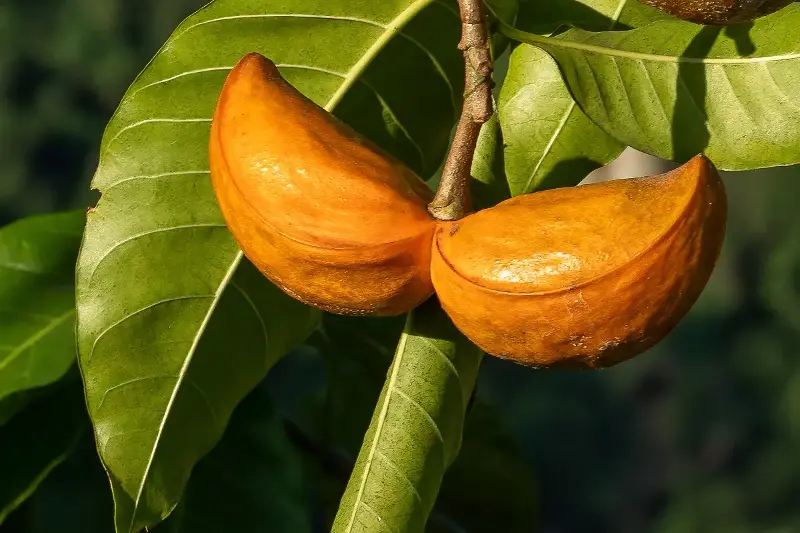
One of the most remarkable physical features of the Milky Way tree is its distinctive double fruit. As shown in the image above, the plant produces large, horn-shaped or crescent-like seed pods that hang in symmetrical pairs.
- Unique Geometry: These curved, paired follicles resemble smooth golden-orange horns or twin crescents attached at a central stem.
- Distinctive Skin: The outer rind is thick, leather-like, and smooth, maturing into a warm golden, amber, or yellowish-brown hue.
- The Reveal: When fully ripe, these pods split open down their inner seam to reveal a vibrant reddish-orange interior containing seeds embedded in a fleshy aril, attracting wild birds in its native habitat.
Architectural Growth and Native Roots
In its native habitats—ranging from coastal forests to tropical lowlands of Mexico and Central America—Tabernaemontana litoralis typically grows between 3 to 7 meters tall. It forms a naturally layered, spreading habit with branches growing in horizontal tiers.
- Sap Characteristics: True to its family, cutting any stem or leaf yields a thick, sticky white latex. This feature earned it the local Spanish nickname Lechoso (milky).
- Landscape Uses: Because of its compact scale and neat growth habit, it makes an ideal specimen tree for residential lawns, courtyard gardens, or sunny patio containers.

Care and Cultivation Guidelines
Growing a Milky Way tree requires providing conditions that mimic its warm, coastal, and humid origin:
- Sunlight: Thrives in full sun to bright, indirect light. Ample sunlight encourages maximum flower production and dense branching.
- Moisture & Drainage: Prefers well-draining, nutrient-rich soil. Water regularly while establishing, allowing the soil surface to dry slightly between waterings.
- Temperature Sensitivity: Being a tropical plant, it is cold-sensitive. Protect it from frost or temperatures dipping near freezing, as cold snaps can cause leaf drop.
- Pruning: Prune gently after blooming to maintain shape, clear low branches, and encourage fresh growth.
With its perfumed blossoms, glossy green leaves, and striking golden fruit pods, Tabernaemontana litoralis is a tropical botanical treasure that elevates any garden or landscape.