


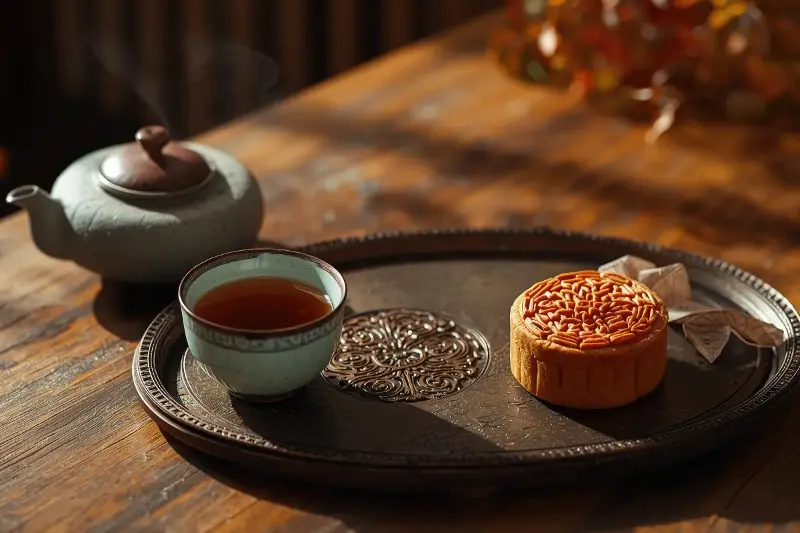
Mooncakes are more than a beautiful symbol of the Mid-Autumn Festival. Their rich fillings, fragrant pastry, and salted egg yolks create a complex tasting experience that becomes even more enjoyable with the right tea. A thoughtful pairing lightens sweetness, refreshes the palate, and reveals subtle flavors. From classic lotus seed paste to modern matcha and fruit-filled varieties, every mooncake has a tea companion waiting to be discovered.
The tradition has practical roots alongside its cultural charm. Mooncakes are typically dense, sweet, and rich, while tea provides tannins, aroma, and a cleansing finish. The result is perfect balance: tea prevents the dessert from feeling heavy, while the mooncake softens any natural bitterness in the brew.
Why Tea and Mooncakes Belong Together
A great pairing works through contrast and harmony. Strong, roasted teas cut through rich fillings like salted egg yolk and black sesame, while floral teas complement delicate flavors like white lotus seed and rose. Meanwhile, aged teas with earthy depth bring warmth to traditional baked mooncakes.
To maximize your tasting experience, consider these simple serving guidelines:
- Temperature: Serve tea warm rather than scalding hot (ideally 75°C to 90°C). Extremely hot tea dulls the tongue, making it harder to detect fine flavor notes.
- Portion Size: Use small cups to encourage slow sipping between bites.
- Preparation: Cut mooncakes into small wedges to share easily and allow guests to sample multiple varieties without feeling overwhelmed by sweetness.
Classic Lotus Seed Paste With Oolong Tea
Lotus seed paste is among the most recognized mooncake fillings. It is smooth, mildly nutty, and sweet, often paired with salted duck egg yolks. This richness calls for oolong tea, especially a roasted Tieguanyin or a Wuyi rock tea such as Da Hong Pao.
Oolong sits between green and black tea in oxidation, offering both freshness and toasted complexity:
- Its subtle roasted character mirrors the golden baked crust.
- Gentle tannins cleanse the mouth after the creamy lotus filling.
- For lotus mooncakes without salted yolk, choose a lighter floral oolong with an orchid-like aroma to add elegance without overpowering the paste.
Red Bean and Date Paste With Black Tea
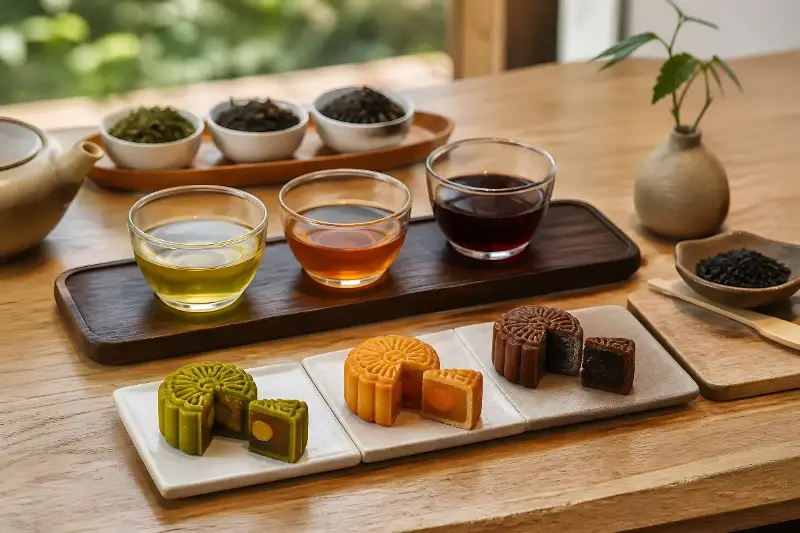
Red bean paste has a comforting sweetness that works beautifully with black tea. Varieties like Keemun, Dian Hong, and Darjeeling offer malt, cocoa, and gentle floral notes that stand up to dense bean pastes while keeping the palate smooth.
Jujube (red date) paste also suits black tea exceptionally well. Its honeyed, caramel-like taste is enhanced by a mellow Dian Hong with sweet potato and cocoa aromas. Serve red bean or date mooncakes with black tea in small porcelain cups for a warm, comforting combination.
Black Sesame and Nut Fillings With Pu-Erh
Black sesame mooncakes are intensely aromatic, with a deep roasted nuttiness and a slightly savory finish. They are among the best partners for ripe Pu-erh tea. This fermented tea is known for its dark color and earthy profile, which matches sesame’s richness without adding sweetness.
Pu-erh is also an excellent match for mixed nut mooncakes containing walnuts, melon seeds, almonds, or peanuts:
- The tea's robust character clears lingering oils from the palate.
- Each new bite tastes fresh and distinct.
- Low bitterness and a rounded texture make aged dark teas approachable for all guests.
Snow Skin Mooncakes With Green or White Tea
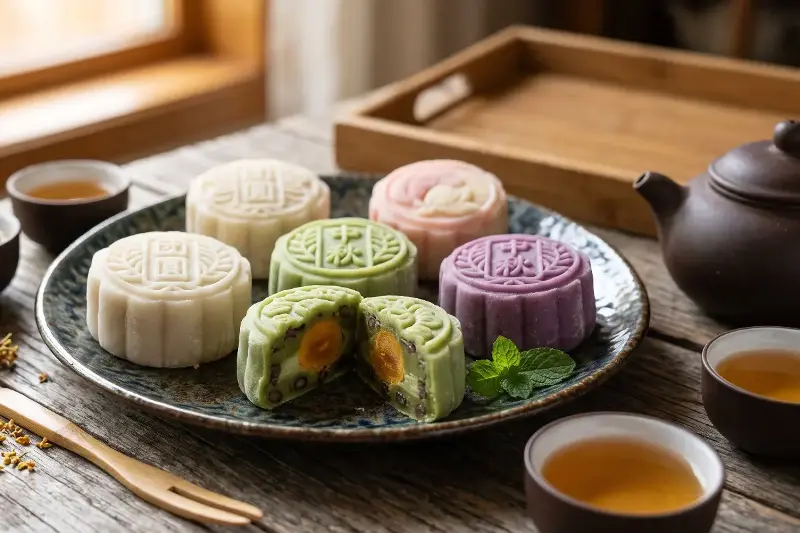
Snow skin mooncakes have a soft, chilled outer layer made from glutinous rice and are less oily than baked versions. Their modern fillings—custard, mango, strawberry, taro, or matcha—benefit from lighter teas that preserve fresh flavors.
- Green Teas (Sencha, Dragon Well): Pair well with citrus, mango, and melon fillings, providing a lively grassy contrast.
- White Teas (Silver Needle, White Peony): Ideal for floral or creamy mooncakes like rose, vanilla custard, or coconut, offering soft honey and blossom notes.
- Hojicha: Match matcha-filled mooncakes with lightly roasted hojicha rather than more matcha for a smooth, toasted contrast.
Choosing Tea for Modern Flavors
Contemporary mooncakes have expanded into exciting culinary directions:
- Chocolate Mooncakes: Pair surprisingly well with roasted oolong or malty black tea to create dessert-like harmony.
- Durian Mooncakes: Require a tea with structure, such as ripe Pu-erh or bold roasted oolong, to handle the powerful aroma.
- Cheese-Based Styles: Pair delightfully with jasmine or delicate white tea, whose floral lift prevents dairy richness from becoming heavy.
The most memorable mooncake and tea pairing is not about strict rules—it is about tasting with curiosity, sharing generously, and finding balance in every bite and sip.