


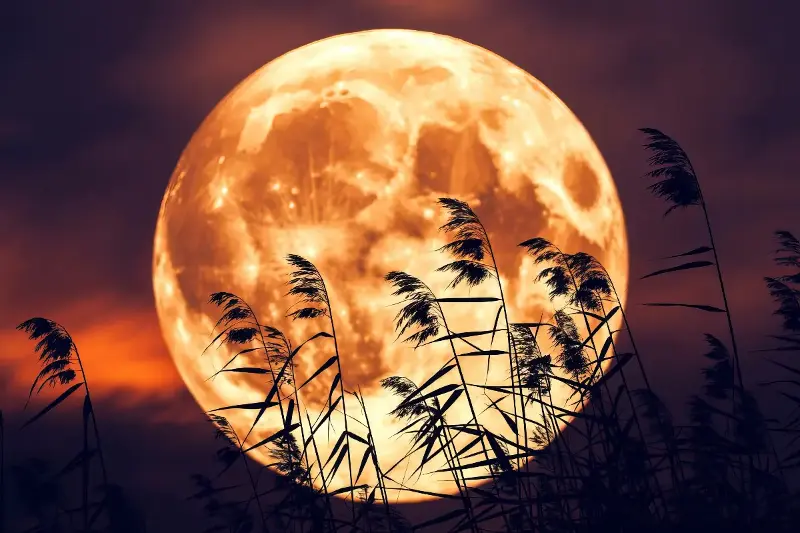
The harvest moon is one of the year’s most celebrated lunar sights, arriving close to the autumnal equinox in the northern hemisphere. It often appears large, golden, and unusually bright as it rises near sunset, creating a dramatic scene for people in cities, villages, and open countryside alike. Yet its special character is not caused by the moon becoming physically brighter. Instead, it is a beautiful meeting point of celestial mechanics, seasonal light, and centuries of human observation.
Unlike most full moons, which rise roughly 50 minutes later each night, the harvest moon seems to return soon after sunset for several evenings in a row. Before electric lighting, this dependable moonlight was especially valuable during the busy harvest season. Farmers could continue gathering crops after dusk, while communities could travel, trade, and celebrate beneath a naturally illuminated sky.
What Makes the Harvest Moon Different
The harvest moon is defined as the full moon occurring closest to the autumnal equinox. In the northern hemisphere, the equinox falls around September 22 or 23, marking the beginning of astronomical autumn. In the southern hemisphere, it occurs near the March equinox, when autumn begins there.
Its unusual timing comes from the angle of the moon’s orbit:
- The Ecliptic Path: The moon travels around Earth close to the same apparent path that the sun follows across the sky.
- A Shallow Angle: Near the northern autumn equinox, this path meets the eastern horizon at a relatively shallow angle during the evening.
- Minimal Shift: As a result, the moon’s position shifts less dramatically from night to night at moonrise.
At middle northern latitudes, the moon may rise only about 20 to 30 minutes later on consecutive evenings around the harvest moon. At other times of year, the difference can be closer to 50 minutes. This gives several evenings of early moonlight rather than only one bright full-moon night. This effect varies by location, being strongest at higher northern latitudes and less noticeable closer to the equator.
Why the Moon Looks Golden Near the Horizon
A harvest moon can seem huge and orange as it emerges above trees, buildings, or fields. Much of this impression is created by Earth’s atmosphere and the way human vision judges distant objects:
- Atmospheric Scattering: When the moon is low, its light travels through a thicker layer of air. Shorter blue wavelengths scatter strongly, leaving warmer yellow, orange, or reddish tones to reach our eyes. Dust, humidity, and atmospheric particles can deepen these colors.
- The Moon Illusion: The apparent increase in size is an optical illusion. When the moon appears beside familiar objects such as houses, hills, or trees, the brain interprets its scale differently.
- Supermoon Coincidence: The harvest moon can also coincide with a supermoon, when a full moon occurs near the closest point in its elliptical orbit around Earth, making it slightly larger and brighter than average.
A Seasonal Guide for Farmers and Communities
The name “harvest moon” reflects practical experience. In agricultural societies, the weeks around autumn were crucial for bringing in grain, vegetables, and fruit before colder weather arrived. Evening moonlight offered a useful extension of daylight long before widespread artificial illumination.
The term became widely known through English-language almanacs and folklore, but lunar naming traditions are far older and far more diverse:
- Indigenous Calendars: Many Indigenous peoples in North America developed seasonal calendars based on local weather, animal behavior, fishing cycles, and plant life. Names varied greatly among nations and regions.
- Timekeeping and Cycles: The moon's predictable cycles helped communities track time, plan gatherings, and recognize seasonal change.
Long before modern astronomy measured lunar motion with precision, careful observers understood that the moon’s timing could shape daily life.
Moon Festivals Across Cultures
In East Asia, the full moon near the autumn season holds deep cultural importance across several long-standing traditions:
- Mid-Autumn Festival (China): Traditionally held on the 15th day of the eighth month of the lunar calendar, families gather, share mooncakes, and admire the bright moon as a symbol of reunion, gratitude, and abundance.
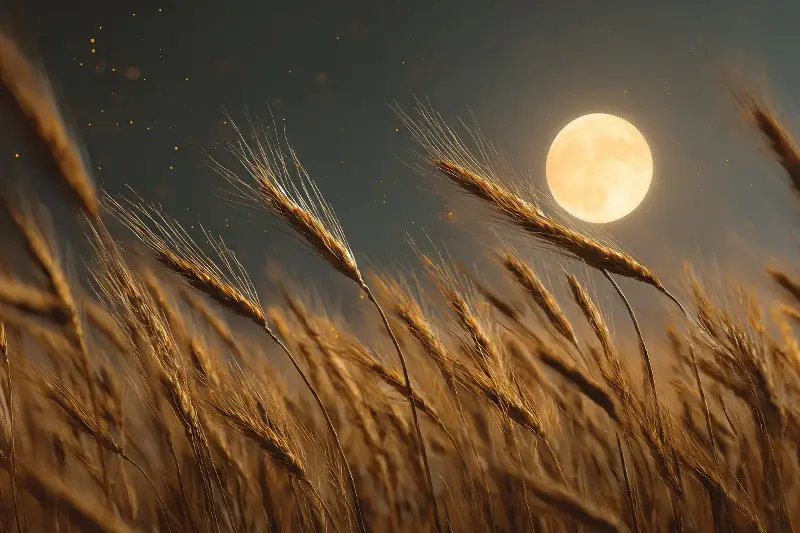
- Tsukimi (Japan): Meaning “moon viewing,” this tradition honors the autumn moon with seasonal foods, rice dumplings (tsukimi dango), and pampas grass that recalls the harvest season.
- Chuseok (Korea): A major harvest festival connected with family gatherings, ancestral remembrance, and traditional foods, with its timing closely tied to the full autumn moon.
- Sukkot (Jewish Tradition): Takes place shortly after the northern autumn equinox and is historically associated with the harvest, highlighting the enduring connection between agricultural cycles and the night sky.
The harvest moon remains a reminder that science and tradition can enrich one another. Astronomy explains why the moon rises when it does, while culture explains why people have looked up with such attention for so long. Whether viewed from a balcony, a field, or a crowded city street, its warm evening glow still offers a shared moment of wonder.