


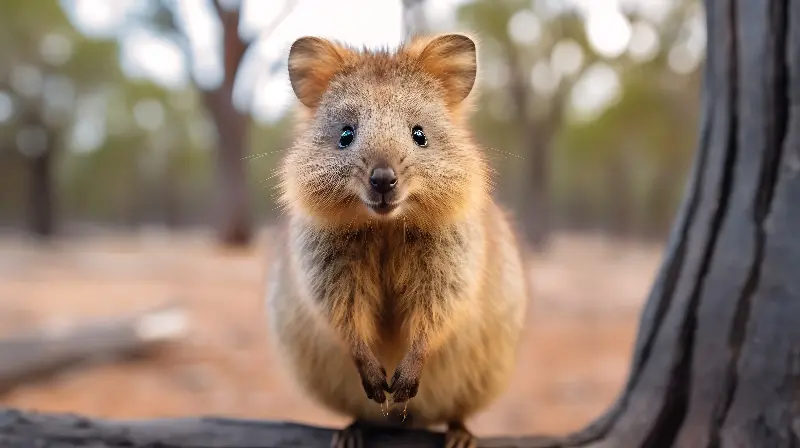
If you’ve spent any time on social media, you’ve likely stumbled across an adorable Australian animal flashing a beaming grin. With their bright eyes and cheerful expressions, quokkas have soared to internet stardom. But what is the real reason behind that joyful face? Delving into both science and myth, the charm of quokkas goes far beyond a simple camera-ready pose.
THE ENDEARING APPEARANCE OF QUOKKAS
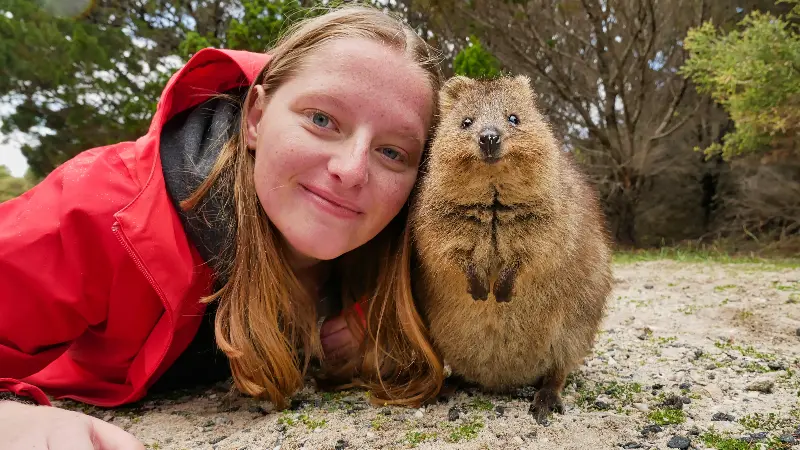
One of the quokka’s most charming features is its ever-present "smile". This is a fascinating trick of nature—part biology, part visual illusion. The quokka’s facial muscles are structured so that their mouths naturally curve upwards at the edges.
Beyond the grin, several physical traits contribute to their "teddy-bear" appeal:
- Compact Size: Roughly the size of a domestic cat.
- Plush Features: Thick grey-brown fur and rounded cheeks.
- Human-like Eyes: Large, dark, and highly expressive eyes that evoke an immediate emotional response.
This combination of traits has made them a natural fit for the #QuokkaSelfie trend, fueling a global fascination with their perpetual happiness.
WHERE THE QUOKKA CALLS HOME
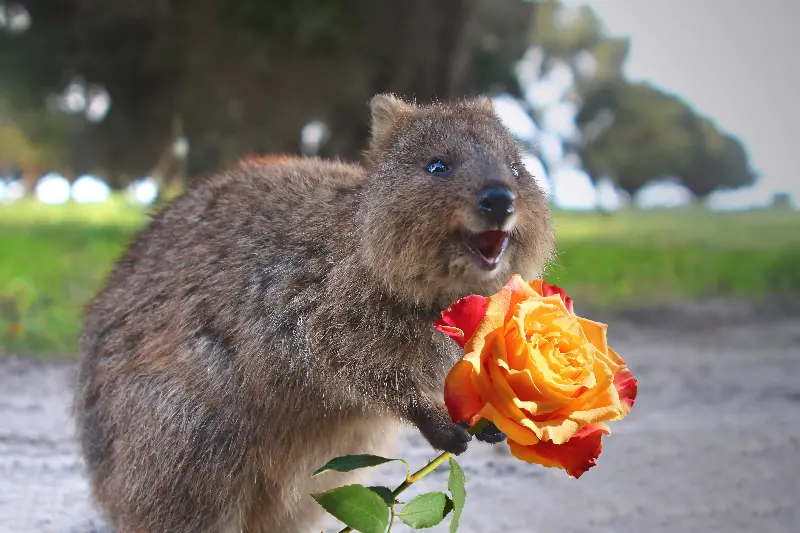
Quokkas are primarily found on Rottnest Island, a small landmass off the coast of Western Australia near Perth. This island serves as a vital natural sanctuary where quokkas thrive due to the absence of many mainland predators, such as foxes and cats.
While smaller populations exist on Bald Island and specific patches of the mainland, the Rottnest inhabitants are famously fearless and inquisitive. Years of protected status have resulted in a population that is surprisingly comfortable around humans. However, travelers must remember that feeding or touching them is strictly forbidden to protect their fragile health.
WHAT IS REALLY BEHIND THAT FAMOUS SMILE?
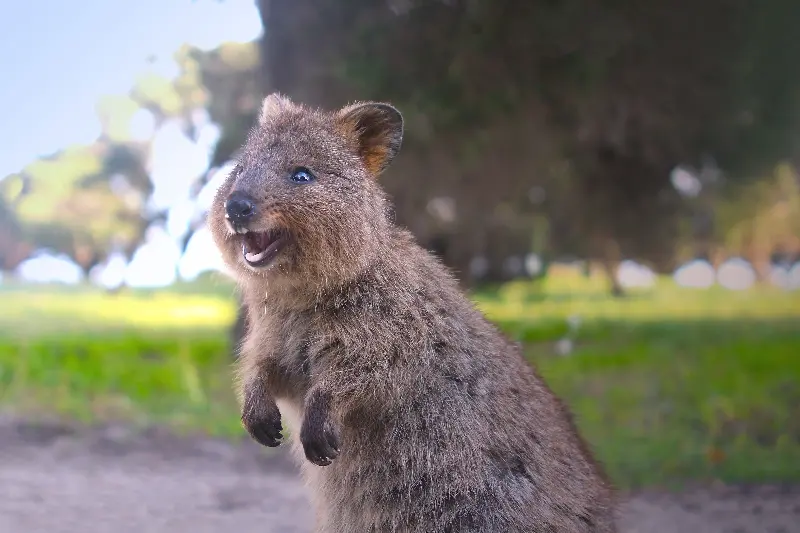
As much as we love to believe quokkas are smiling because they are genuinely amused, the truth is rooted in physiology rather than emotion.
- Thermoregulation: Like many animals, panting helps them stay cool. An open, upturned mouth assists in heat exchange.
- Anatomical Structure: The "smile" is a permanent fixture of their skull and muscle structure, visible even when the animal is resting.
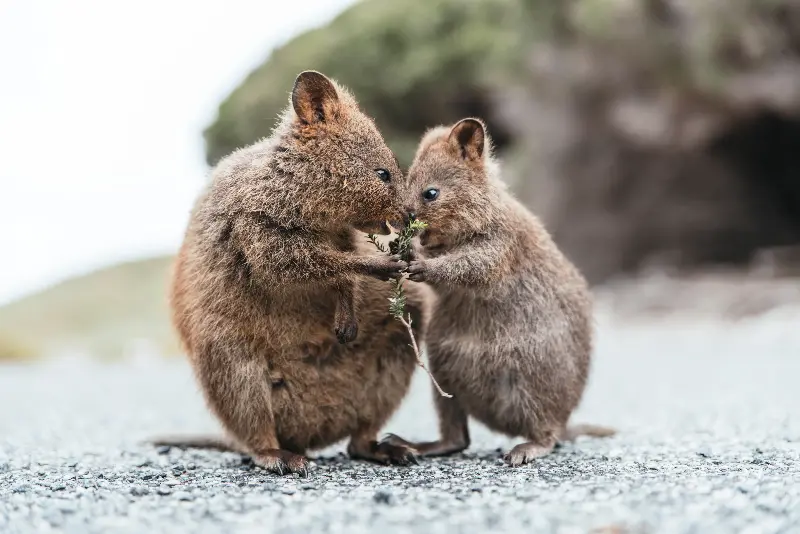
- Nocturnal Habits: As herbivores, they spend their nights nibbling on native grasses and succulent leaves. Their ability to survive with very little water is a key adaptation to their dry island home.
THE SCIENCE OF CUTENESS AND HUMAN CONNECTION
The irresistible urge to smile back at a quokka owes as much to human psychology as it does to biology. Humans are hardwired to respond to features that resemble our own expressions—a phenomenon known as the baby schema effect. Rounded faces and big eyes trigger affectionate, protective responses in our brains.
Social media has amplified this connection. Viral photos have not only boosted tourism to Western Australia but have also inspired global conservation efforts. In a sense, the quokka’s cuteness has become a powerful survival tool, raising much-needed awareness for unique Australian marsupials.
UNUSUAL BEHAVIORS AND SURVIVAL TACTICS
Beyond their photogenic looks, quokkas possess remarkable—and sometimes shocking—survival instincts. In instances of extreme predatory threat, a mother quokka may instinctively drop her joey (baby) from her pouch. This distraction allows the mother to escape and live to breed again. While this sounds harsh to human ears, it is a calculated evolutionary trade-off designed to ensure the survival of the species under immense stress.
In less dire circumstances, quokkas display a complex social life involving:
- Vocalizations: A range of grunts and snorts to communicate.
- Tail Wagging: Used during social interactions or to signal agitation.
- Scent Marking: Essential for defining territories within their small social groups.

GUARDIANS OF THEIR OWN HAPPINESS
Despite their worldwide popularity, quokkas remain a vulnerable species. Their limited distribution makes them highly susceptible to habitat loss, climate change, and disease. Current conservation programs focus on maintaining the ecological integrity of Rottnest Island and protecting the remaining mainland corridors.
The quokka’s fame rests not only on the curve of its lips, but also on a unique story of adaptation and resilience. Next time you see that infectious smile in a photo, remember: it is both a biological quirk and a symbol of an extraordinary little animal that has captured the world's heart.