


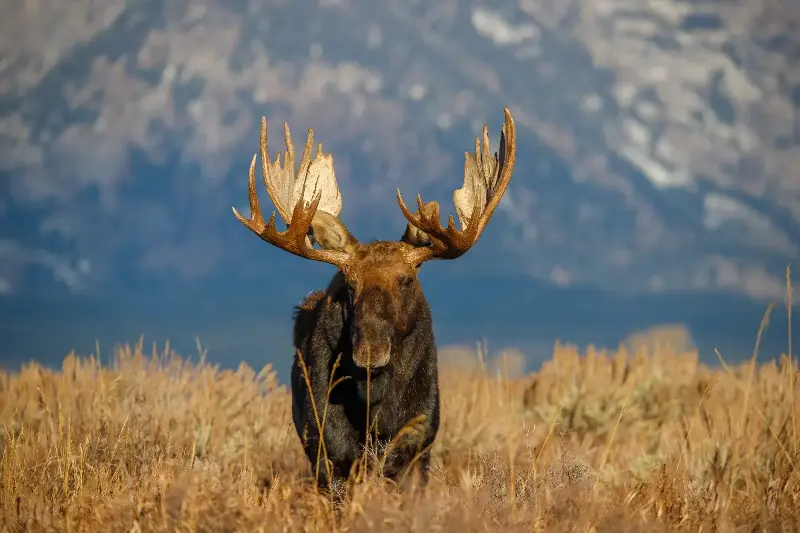
A bull moose’s antlers are among the most dramatic structures in the animal world. Spanning up to six feet from tip to tip and weighing as much as 40 pounds in exceptionally large males, these broad, branching bones are far more than impressive ornaments. They are temporary skeletal organs, rebuilt entirely from scratch every year through one of the fastest bone-growth processes known in mammals.
Unlike horns, which feature a permanent bony core covered by keratin, antlers are true bone. Moose shed them annually and grow a completely new pair before each breeding season. This remarkable cycle demands huge amounts of energy, minerals, blood flow, and biological precision.
A Seasonal Skeleton
Bull moose usually lose their antlers in winter, commonly between December and March. Older, dominant bulls often drop theirs earlier than younger males, partly because they have completed their breeding activity and experience greater physical strain after the autumn rut.
Soon after the old antlers fall, new growth begins from short, rounded bony bases on the skull called pedicles. These structures remain throughout the animal’s life and act as the perpetual foundation for every future set of antlers.
Antler growth is closely linked to changing daylight:
- Hormonal Triggers: As days lengthen in spring, shifts in testosterone stimulate the pedicles to produce new tissue.
- Rapid Velocity: Under favorable summer conditions, a bull moose can grow antlers at a rate approaching an inch per day.
- Massive Framework: In only a few months, the animal creates a complex structure that can outweigh many of the long bones in its legs.
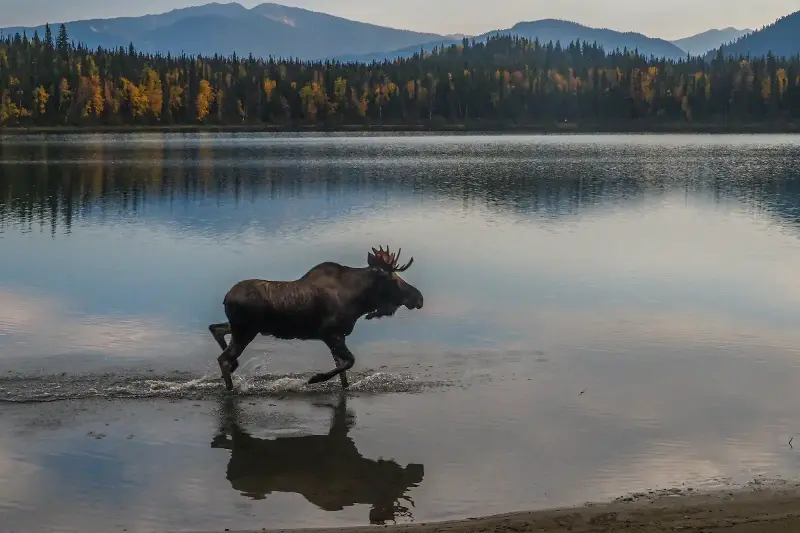
Velvet: The Living Skin of Growing Antlers
While antlers grow, they are wrapped in a soft, furry layer known as velvet. This is not simply a protective coating—velvet is living tissue filled with blood vessels, nerves, and rapidly dividing cells. It carries oxygen, nutrients, calcium, phosphorus, and proteins directly to the developing bone underneath.
The velvet creates a warm, sensitive surface. A bull with antlers in velvet must move carefully around trees and obstacles because damage can alter the final shape of the rack. The soft cover is also vulnerable to insects, which is why moose often submerge themselves in cool water or shake their heads for relief.
Inside the velvet, bone forms through a fascinating process:
- Early Stage: Tissue begins as a cartilage-like material within a porous framework.
- Mineralization: As growth continues, minerals harden the structure into dense bone.
- Interior Design: The outer surface becomes solid, while the interior retains a lighter, spongy arrangement to manage weight.
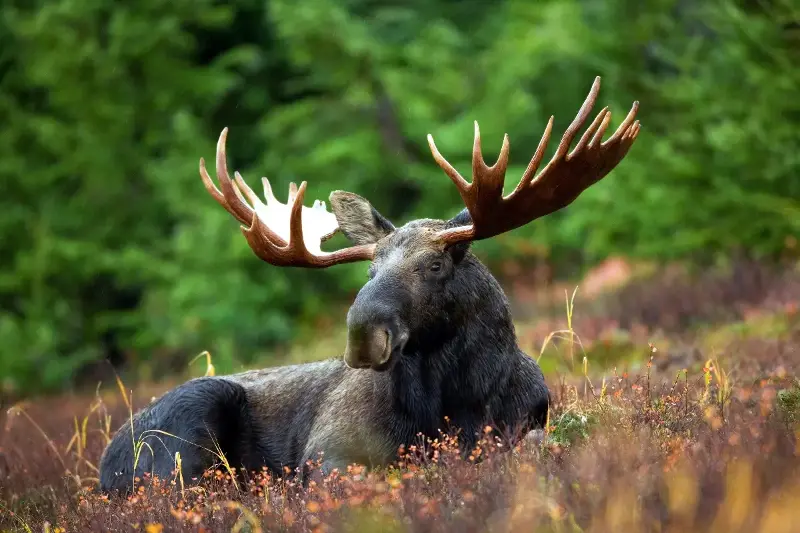
Why Moose Antlers Are Shaped Like Paddles
Moose antlers differ noticeably from those of deer or elk. Rather than forming only narrow branches, mature bull moose develop broad, flattened sections known as palms. These palms feature multiple pointed projections, called tines, around their edges.
The exact shape varies by population, age, nutrition, and health. Alaska-Yukon moose often display broad, wide palms, whereas European moose may show a different balance of palms and tines.
The large paddle shape is especially useful during the autumn breeding season. Antlers serve as visual signals, allowing bulls to assess one another before a confrontation becomes physical. A broad, symmetrical rack advertises age, strength, and access to good nutrition. In many cases, rivals avoid fighting altogether after judging an opponent's size, posture, and antlers.
When contests do occur, antlers act as both display structures and protective shields. Bulls push, twist, and lock antlers as they test an opponent’s strength. The broad palms help spread force across the head and neck, reducing the risk of severe injury.
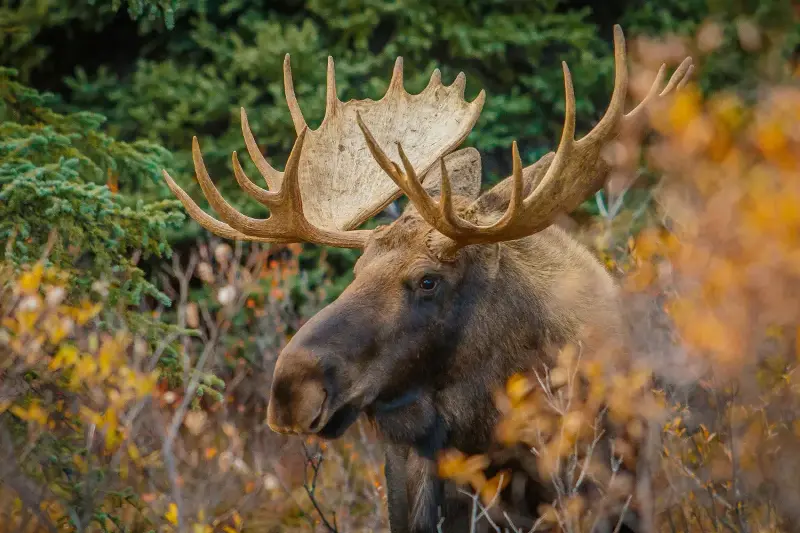
The Mineral Cost of Rapid Growth
Building antlers is energetically expensive. Bone requires vast amounts of calcium and phosphorus alongside protein. During spring and summer, bulls spend long hours feeding on nutrient-rich leaves, aquatic plants, shrubs, and young shoots. A healthy diet directly supports body condition and antler development.
Minerals are absorbed through two main channels:
- Direct Diet: Nutrients are absorbed directly from rich summer vegetation and aquatic plants.
- Skeletal Reserves: Minerals can be temporarily drawn from the moose’s existing skeleton, placing temporary stress on its body.
If food is scarce or a moose experiences a harsh winter, its antlers may grow smaller or less symmetrical. Researchers can learn about a bull’s past health by examining its antlers. Unusual bends, missing tines, or uneven palms often reflect past injury, illness, or velvet damage.
From Velvet to Hard Bone
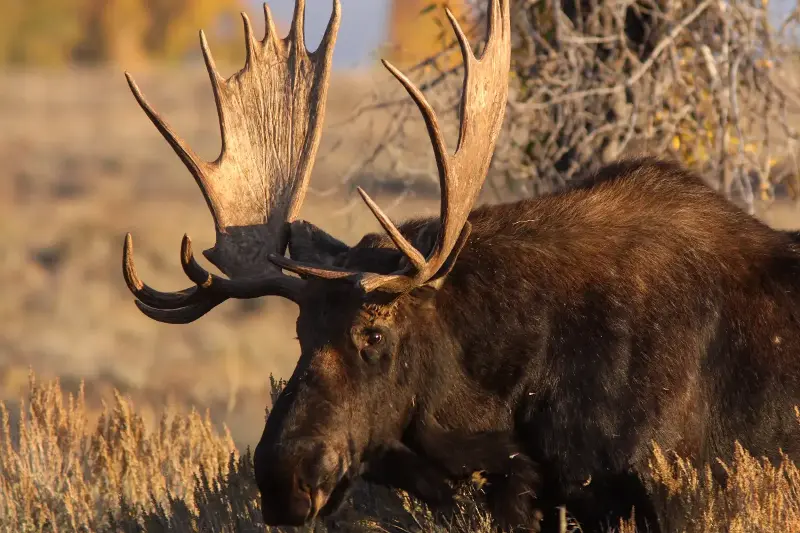
By late summer, the antlers reach their full size. As testosterone rises before the autumn rut, blood flow to the velvet decreases. The velvet dries, loosens, and sheds, revealing the hard bone beneath.
Bull moose rub their antlers against trees, shrubs, and branches to remove the dying velvet. This polishing behavior reveals the darker bone surface, which becomes stained brownish, reddish, or dark gray from plant sap, bark, and soil.
At this stage, the antlers are no longer living tissue. They contain no active nerves or blood supply, allowing the bull to use them in displays without sensitivity. The antlers remain firmly anchored to the skull until the breeding season ends, after which the cycle begins anew.