


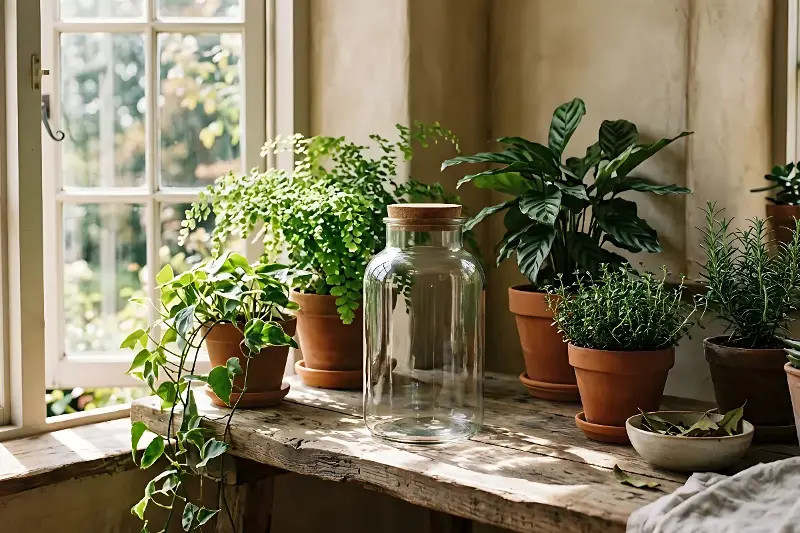
Fresh herbs turn ordinary home meals into something brighter, more fragrant, and more personal. A few clipped basil leaves lift a simple salad, while mint makes cool water feel special and rosemary brings warmth to roasted vegetables. Growing herbs indoors is practical, affordable, and deeply satisfying because fresh flavors are always within arm's reach on a sunny windowsill.
Choosing the Best Herbs for Indoor Growing
Selecting species that adapt easily to pots and indoor conditions ensures a resilient, productive kitchen garden.
-
Basil: Thrives on warmth and needs six to eight hours of direct sunlight daily. Keep it away from chilly glass during cold nights, and regularly pinch off the top leaves to encourage bushier growth and prevent early flowering.
-
Parsley: A dependable and attractive herb. Flat-leaf parsley is widely preferred for robust cooking, while curly parsley adds a bright decorative touch to dishes.
-
Chives: Extremely beginner-friendly, producing slender leaves with a subtle onion flavor that can be snipped repeatedly.
-
Mint: Vigorous and forgiving. Always plant mint in its own dedicated pot to prevent its spreading root system from crowding out other plants.
-
Mediterranean Herbs: Thyme, oregano, and rosemary prefer warmer, drier conditions and thrive on a bright, south-facing windowsill.
-
Cilantro: Grows rapidly but features a shorter indoor lifespan; sow a small pot every few weeks for a continuous harvest.
Providing the Right Light Conditions
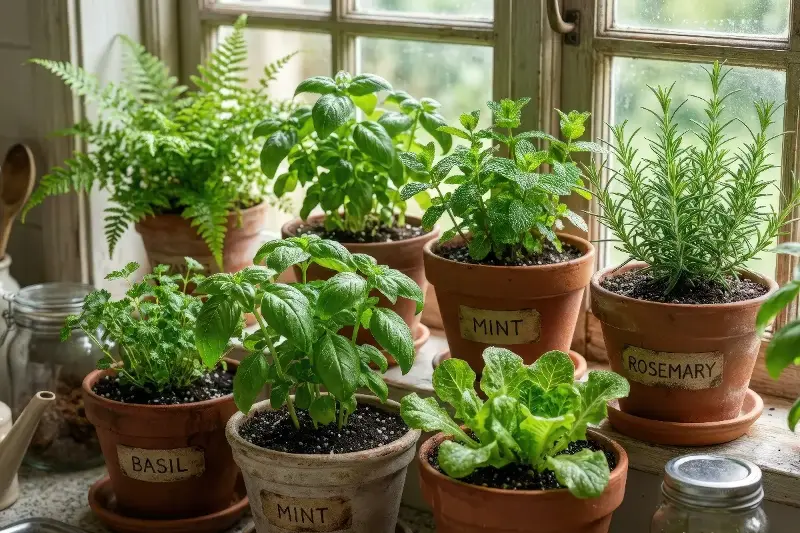
Culinary herbs generally require at least six hours of strong daily light. South-facing windows offer the most vibrant exposure, while east- or west-facing windows suit gentler-light herbs like parsley, mint, and chives.
When natural sunlight is limited, plants stretch toward the glass, becoming thin and pale. Installing a simple LED grow light positioned 15 to 30 centimeters above the foliage for 12 to 14 hours daily maintains rich color and full flavor. Rotate pots a quarter-turn every few days to ensure balanced, upright growth.
Pots, Soil, and Smart Watering
Preventing root issues depends on proper drainage and careful watering habits:
-
Proper Drainage: Use containers with base drainage holes to let excess water escape, preventing root decay.
-
Quality Soil Mix: Choose a lightweight indoor potting mix instead of garden soil. Add extra perlite or coarse sand for dry-loving Mediterranean herbs.
-
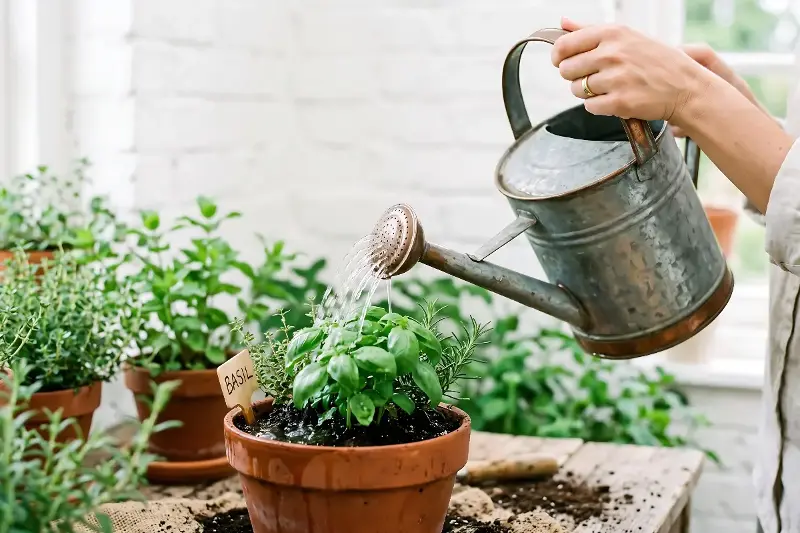
Mindful Watering: Test the top two to three centimeters of soil with a fingertip before watering. Basil and parsley prefer light moisture, while rosemary and thyme should dry out deeply between drinks. Always use room-temperature water.
Harvesting to Boost Productivity
Regular harvesting keeps indoor herbs compact, bushy, and thriving:
-
Basil: Cut stems directly above a pair of leaves to encourage new branches to form.
-
Chives: Snip leaves close to the base, leaving a few centimeters to allow quick regrowth.
-
Parsley: Harvest outer stems first, preserving the central core for ongoing growth.
-
Thyme and Oregano: Trim soft, young growing tips rather than cutting into old, woody stems.
For maximum taste, add delicate herbs like basil, chives, and cilantro near the end of cooking, while sturdy herbs such as rosemary and thyme can be added earlier to release their aromatic oils.
Solutions for Common Indoor Challenges
Yellowing leaves usually point to overwatering, inadequate light, or poor drainage. Brown leaf edges often indicate dry indoor air or inconsistent soil moisture. Inspect leaf undersides weekly for common household pests like aphids or spider mites; a gentle water rinse or mild insecticidal soap quickly addresses minor infestations.
Starting a windowsill garden with two or three reliable herbs creates an enjoyable routine. With just a little light and care, every meal can feature vibrant, homegrown flavor.