


Animals have long been viewed as creatures driven purely by instinct, but modern science tells a far more surprising story. From crows solving multi-step puzzles to elephants recognizing themselves in mirrors, many species demonstrate mental abilities once considered uniquely human.
They may not think exactly as people do, yet evidence shows that animals can remember, plan, learn from others, and respond to emotions in remarkable ways.
Animals Can Plan Ahead
Planning for the future was once thought to be a strictly human trait. Researchers believed animals lived entirely in the present moment, reacting only to immediate needs. Recent studies involving great apes and intelligent birds have completely transformed that assumption.
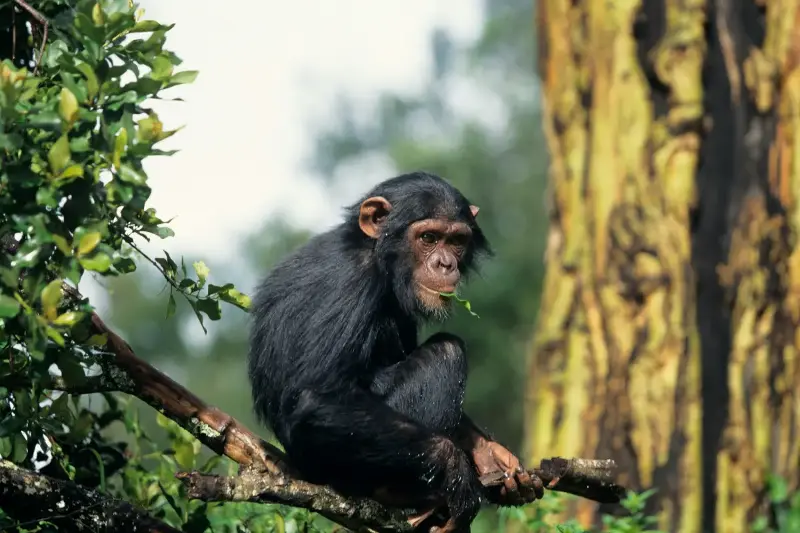
Chimpanzees, orangutans, and bonobos select and store tools for future tasks. In famous experiments, apes chose the correct tool for a complex device and carried it with them until the opportunity arrived hours later.
- Tool Customization: New Caledonian crows manufacture hooks from twigs and leaves to extract insects from deep crevices.
- Size Selection: They measure and modify tools to match specific tasks before starting a job.
- Child-Level Reasoning: Their problem-solving abilities often rival those of young children in comparable tasks.
The Brilliant Minds of Crows and Parrots
Crows, ravens, magpies, and parrots possess some of the most advanced minds in the animal kingdom. Their intelligence is especially striking because bird brains are organized differently from mammal brains, using dense networks of specialized neurons to process complex decisions.
Ravens frequently hide food from rivals, moving their stash if they notice another bird watching. This clever behavior suggests an ability to anticipate what another individual might do.
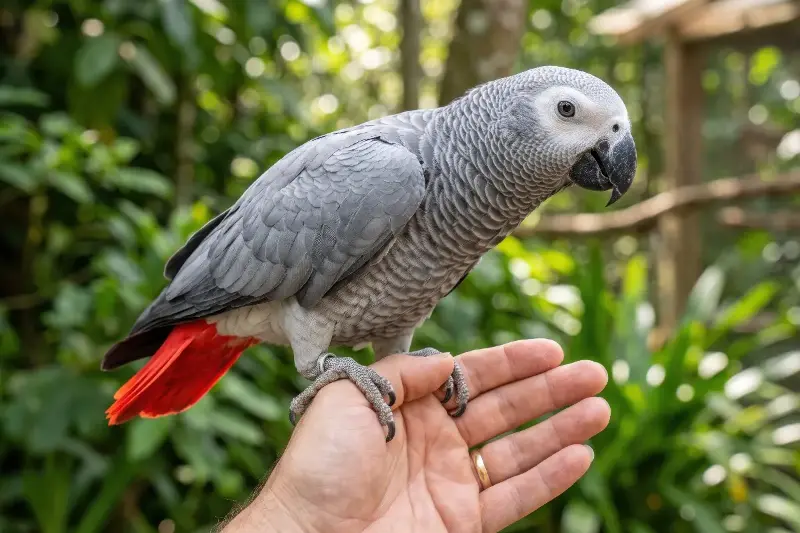
Equally remarkable are African grey parrots. The famous parrot Alex learned to identify colors, shapes, materials, and quantities. He could answer questions like "what color?" or "how many?" with meaningful responses rather than simple repetition, demonstrating genuine understanding.
Self-Awareness Across Different Species
Self-recognition is frequently measured using the mirror mark test, where an animal uses its reflection to inspect an unfamiliar mark on its body:
- Visual Thinkers: Great apes, Asian elephants, and bottlenose dolphins have all passed versions of the mirror test.
- Scent-Based Identity: Dogs may not pass visual mirror tests, but they easily distinguish their own unique scent from others.
- Tailored Intelligence: Failing a human visual test does not mean an animal lacks self-awareness; it simply means their mind relies on different primary senses.
Emotions, Empathy, and Social Bonds
Mammals and birds share ancient brain structures responsible for fear, affection, play, and stress. Behavioral research shows that emotional connections run deep across many species.
Rats have been observed freeing trapped companions, even when delicious treats are nearby, choosing to share their food once their partner is free. Elephants demonstrate profound empathy, gently touching distressed herd members and lingering respectfully near the remains of past companions.
Dogs excel at reading human body language, following pointing gestures, and responding to facial expressions better than almost any other animal, showcasing an extraordinary cross-species bond.

The Unique Mind of the Octopus
Octopuses represent an entirely different branch of intelligence. As invertebrates, their evolutionary path diverged from humans over 500 million years ago, yet they display astonishing problem-solving skills:
- Tool Use: Some octopuses carry coconut shells across the ocean floor to use as mobile protective armor.
- Distributed Brain: More than half of an octopus’s neurons are located within its arms rather than its head.
- Independent Action: Each arm can process information, sense its surroundings, and coordinate movement almost independently.
Science shows that thought itself is far more widespread than once imagined. Animals may not write books or build cities, but they solve problems, form deep bonds, and navigate their worlds with remarkable intelligence and rich inner lives!