


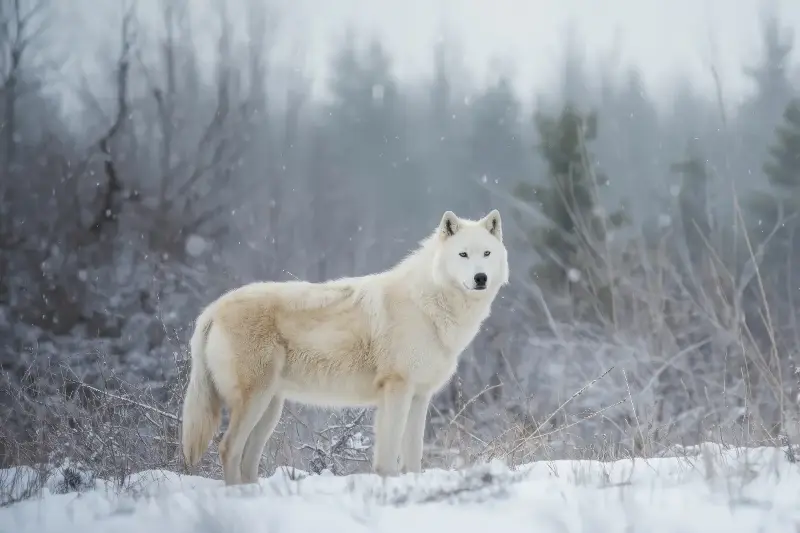
Nestled in the vast, unyielding whiteness of the Arctic, the northern snow wolf continues to mystify scientists and enthrall wildlife enthusiasts. Known for its ghostly silhouette against endless drifts, this creature is not only a master of survival but also a living emblem of the Arctic’s charm. Its presence, both commanding and elusive, invites us on a journey into a world shaped by ice, instinct, and incredible adaptation.
UNIQUE ADAPTATIONS FOR SURVIVAL
Life in the high Arctic demands resilience of the highest order, and the snow wolf is remarkably resourceful. Its physiological design serves as a masterclass in evolutionary engineering:
- Living Armor: A double-layered coat features coarse guard hairs that brush away snow, while a plush, dense undercoat traps vital body heat.
- Natural Snowshoes: Their toes are insulated by thick fur, spreading their weight evenly to move swiftly across powdery drifts.
- Precision Traction: Beneath their paws, rough pads provide essential grip on slick, frozen ground—a critical asset when stalking prey.
- Sensory Acuity: Their metabolic rates slow during the harshest months to conserve energy, while their olfactory senses are sharp enough to detect prey hidden deep beneath the ice.
These cunning predators are so attuned to their environment that they can often hear the faint rustle of rodents tunneling beneath meters of frozen snow—a feat nearly impossible for humans to perceive.
SOLITUDE AND SOCIAL BONDING
While wolves are famously pack-oriented, the northern snow wolf exhibits fascinating periods of independence. In the leanest months, individuals may temporarily venture out alone, ranging across hundreds of miles. This solitary wandering is both a testament to their adaptability and a strategic response to the scarcity of the Arctic landscape.
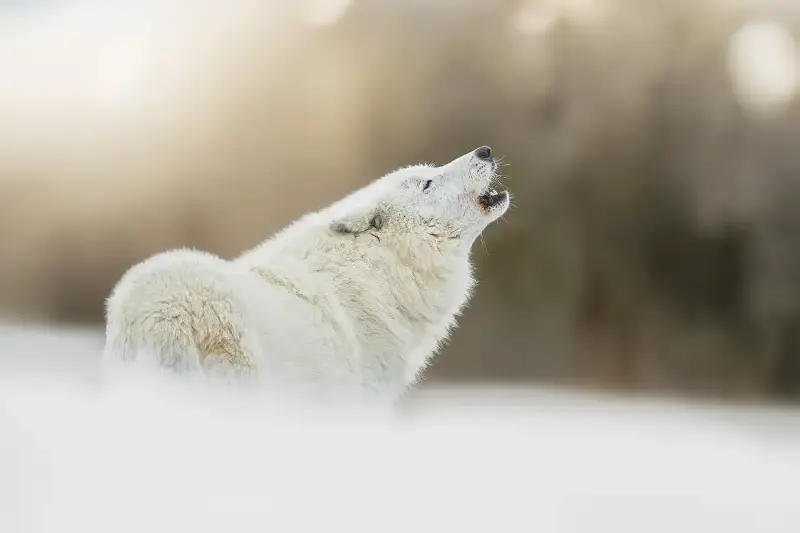
However, their hearts ultimately lie in kinship. Packs function as a close-knit family, usually consisting of an alpha pair and their offspring. In this frigid wilderness, cooperation is survival. Together, they coordinate hunts, protect their territory, and ensure the safety of the pack. Even the youngest members learn early on to participate in the complex, rhythmic ballet of survival. Vocalizations—ranging from haunting howls to subtle whimpers—echo across frosted valleys, signaling unity and maintaining strong social bonds during the long polar nights.
DIET AND HUNTING TECHNIQUES
The Arctic environment offers slim pickings, demanding extreme flexibility in hunting. The wolf’s primary diet includes:
- Arctic hares and lemmings
- Muskox
- Caribou
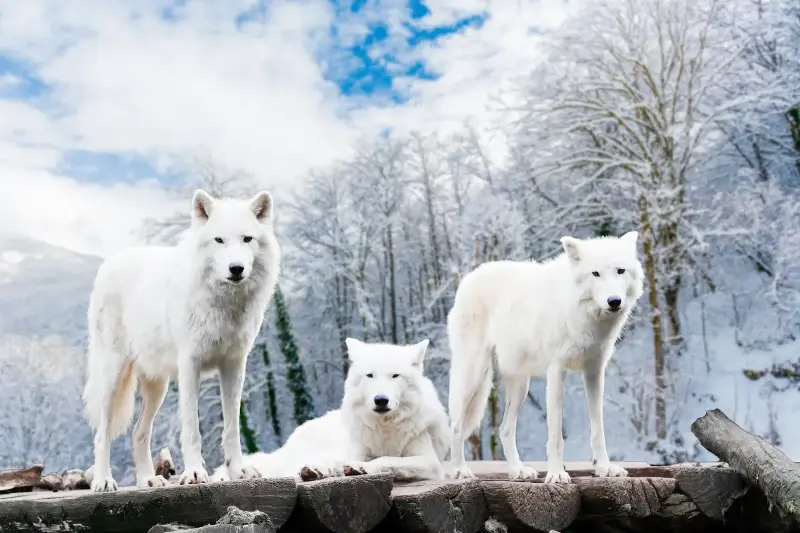
Success relies on a mix of patience and strategy. Wolves often shadow a herd for miles, meticulously testing the animals for signs of vulnerability. Once a target is chosen, the pack operates as a single, coordinated organism, driving prey toward hidden companions or utilizing the terrain to their advantage. They are master recyclers; they waste nothing, ensuring that every hunt sustains them through the most unforgiving stretches of the year.
ENDURING THE ARCTIC NIGHT
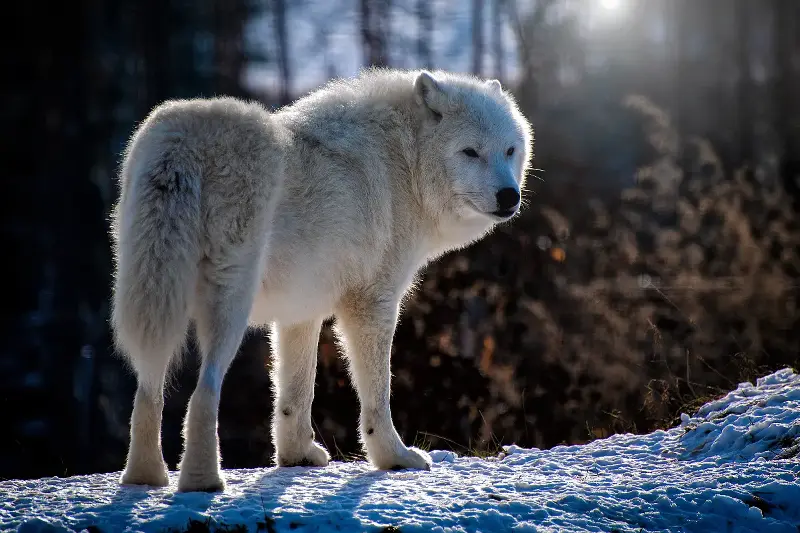
Perhaps the ultimate challenge is the long, sunless winter. When temperatures plummet, the landscape transforms into a world of blue-gray monotony. Yet, the snow wolf navigates these hardships with instinctual grace. They utilize communal dens to shield themselves from biting winds and minimize movement to conserve precious energy. This cycle of endurance has forged a creature with unmatched stamina, standing as a living testament to the raw, beautiful resilience of the natural world.
A LIVING SYMBOL OF THE ARCTIC WILD
The northern snow wolf embodies more than just survival; it is a symbol of mystery and fragile beauty. As climate shifts begin to reshape the Arctic, the wolf remains a vital barometer for the health of the north. For those fortunate enough to glimpse a snow wolf dissolving into the frozen haze, the experience is truly unforgettable. In their patience, tenacity, and silent strength, these creatures remind us to marvel at the enduring spirit of life in nature’s most challenging corners.