



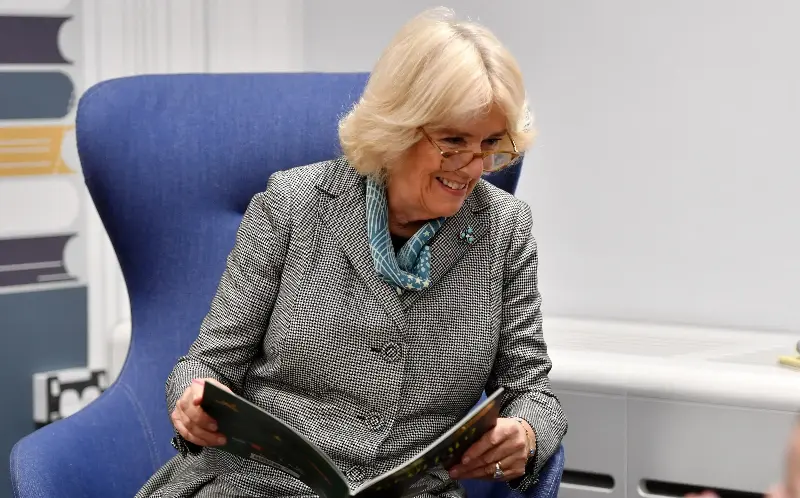
Being part of a book club is as beneficial for your brain as meditating, new research by The Queen’s Reading Room has found.
The Queen’s charity, which began as an online book club during the Covid-19 pandemic, set out to measure the brain’s electrical activity while discussing a book.
The preliminary study was carried out with the University of East London and the Bentley Foundation.
The researchers discovered the same patterns of calm and focused engagement in individuals talking about literature that were reported in studies of meditation.
Vicki Perrin, the charity’s chief executive, said the findings provided scientific backing to the belief that “books offer a powerful antidote to an increasingly divided and distracted world”.
She said: “What makes these findings so exciting is the suggestion that calm doesn’t always have to come from silence, and wellbeing doesn’t always have to be pursued alone.
“Sometimes, the answer may lie in doing exactly the opposite: coming together, sharing stories and connecting with one another.”
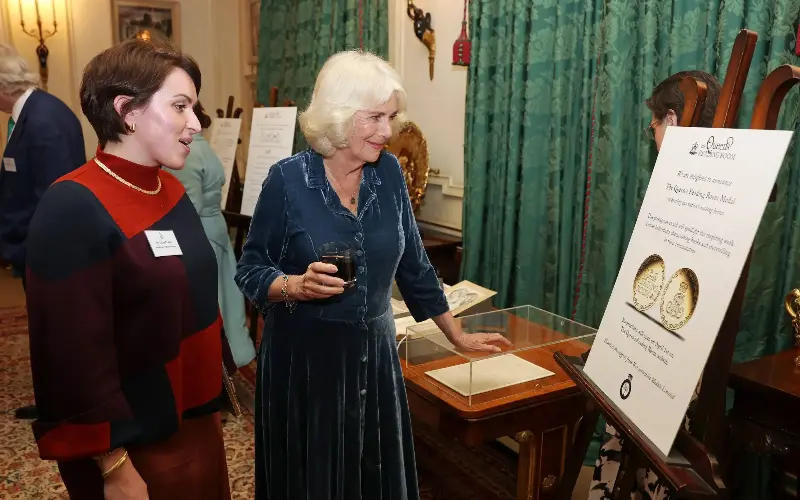
The study, led by neuroscientists Prof Sam Wass and Dr Katie Daubney, used electrophysiological measures of brain activity, speech analysis and participants’ feedback to measure the effects of reading aloud and discussing literature in groups.
Electroencephalograms were used to measure alpha and theta activity in the brain. They revealed patterns associated with calm and focused attention during shared reading.
The preliminary study’s results – unveiled at Bentley’s headquarters in Cheshire on Thursday with the help of bestselling authors Lee Child and Ann Cleeves – also showed that reading with others encouraged longer and deeper conversations. Participants made increasing references to their family and friends in comparison to the control groups.
‘Cultural renaissance’ of book clubs
The popularity of book clubs has grown in recent years, particularly among Gen Z, with a host of celebrities founding such clubs, including Dua Lipa, Kaia Gerber and Reese Witherspoon.
Book club listings on the events website Eventbrite were found to have increased by 350 per cent between 2019 and 2023 in the UK. Between 2022 and 2023 alone, those listings rose by 41 per cent.
Ms Perrin said: “Book clubs are enjoying a remarkable cultural renaissance, and we believe this is just the beginning.
“We want to use this research to help make reading together a bigger part of British life – creating more opportunities for people to discover not only the joy of books, but the extraordinary benefits of belonging.”

Prof Wass said: “We can often hear that wellbeing comes from disconnecting, and having some time alone.
“What these early findings suggest is that there may be another interesting route: coming together around a story and sharing it with other people could lead to beneficial outcomes.”
He added: “What makes these initial findings particularly interesting is how they suggest that reading together could create a unique combination of benefits: we observed brain activity that was associated with calm, focussed attention, similar to patterns seen in meditation research, alongside more sustained and emotionally and relationally focused conversation between participants.”
“As loneliness and anxiety are a growing social concern, understanding the benefits of something as accessible as reading together is a scientific area worth investigating further,” he said.
The Queen is a lifelong voracious reader, having even taken to reading Lady Chatterley’s Lover under her pillow by torchlight as a teenager.
She recently told the BBC that she and the King enjoyed reading before dinner.
Speaking in a documentary about the importance of books, she said: “We just like sitting quietly and reading. He loves biographies and PG Wodehouse.
“I occasionally, when I’m deep in a book, hear him roaring with laughter about something. It’s very off-putting. I can’t get back into my book, or I’ll suddenly start weeping, but it’s a lovely, quiet time.”
In the past 18 months, The Queen’s Reading Room has been piloting shared reading programmes in homeless shelters and domestic violence refuges – another cause that Her Majesty has championed.
The Queen’s charity’s first scientific study, released in 2024, found five minutes of reading a day was as valuable to mental wellbeing as walking 10,000 steps and eating five portions of fruit and vegetables.