



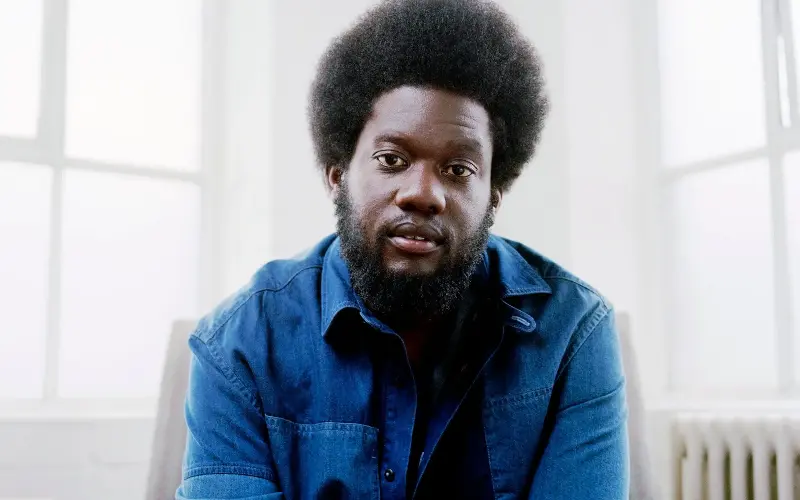
Michael Kiwanuka has revealed that he is recovering from a stroke and faces a “long, tough journey” to recovery.
The Mercury Award-winning singer-songwriter from Muswell Hill, north London, said the condition was caused by a history of high blood pressure.
In a post on Instagram, he wrote: “The brain injury I suffered was quite severe, so there is a lot of rehab to be done. It’s a long, tough journey ahead but I’m fighting to get better.”
Kiwanuka, 39, paid tribute to the members of NHS staff who cared for him and explained that his recovery was the reason he had missed shows in the US.
“This has definitely been one of the toughest challenges I’ve faced and I’ll be happy to be on the other side of it when the time comes,” he said, adding: “Until then, I wish you all well and look forward to seeing you further down the road.”
In the same message, Kiwanuka announced his new album, Fudge.
Olivia Dean, the singer, Lauren Laverne, the radio presenter and Miguel, the American R&B artist, were among those to wish him well.
“So sorry to read this, Michael,” said Laverne. “What a time you must have had. Really glad you have good care and wishing you a full recovery asap. One day at a time.”
Miguel added: “Man, take your time healing, you are needed brother.”
Ed O’Brien, the Radiohead guitarist, posted: “Sending love to you Michael.”
Kiwanuka was named the BBC’s Sound of 2012 and has since established himself as one of Britain’s most acclaimed artists.
His first three albums were nominated for the Mercury Prize for best British album of the year. He won the trophy in 2020 with his third record, Kiwanuka.
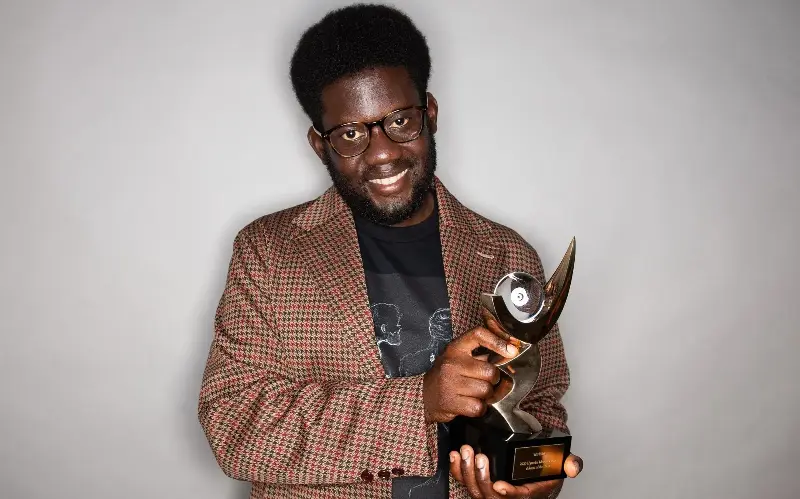
He was nominated for best male solo artist and album of the year at the Brits that year, and also for best rock album at the Grammy Awards.
The soul and indie-folk singer-songwriter found mainstream fame when Cold Little Heart, a song from his 2016 album Love & Hate, was used as the theme tune for Big Little Lies, an HBO TV series based on the novel by Liane Moriarty.
He has been nominated for five Brit awards in total.
A stroke recovery can take days, months or even years, according to the NHS. Some patients have to stop work temporarily, or for the long term.
Physiotherapy, cognitive behavioural therapy (CBT), mental activities and medicine are often recommended for those in recovery.
The Stroke Association, a British charity, says it is a common misconception that stroke affects only older people, adding that recent research points to an “increased incidence” of stroke in young people.