



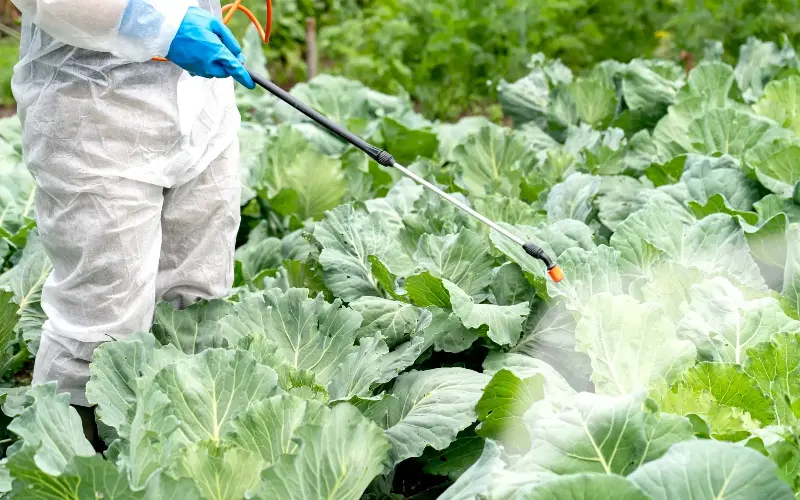
Weedkillers may be driving the emergence of dangerous superbugs capable of resisting antibiotics, according to research.
Scientists have found that glyphosate – the world’s most commonly used herbicide – can encourage the growth and spread of bacteria that are resistant to medical treatments, raising fresh concerns about the unintended consequences of modern farming.
The study, published in Frontiers in Microbiology, suggests exposure to glyphosate triggers natural selection among germs, allowing tougher, drug-resistant bacteria to thrive while more vulnerable strains die out.
If passed on to humans, either directly to farmers working in fields or through contaminated food and water, they can make common infections more difficult to treat, and increase the risk of serious illnesses that cannot easily be treated.
“These results suggest that weedkillers – which, unlike antibiotics, are widely applied in agricultural environments – may have the unintended side-effect of selecting for AMR (antimicrobial resistance) among bacterial communities within the soil,” said Dr Daniela Centrón, a researcher at the Institute of Medical Microbiology and Parasitology in Argentina, one of the authors of the study.
AMR is responsible for an estimated 1.1 to 1.4 million deaths worldwide every year.
According to the World Health Organisation, this “silent pandemic” is being driven by the overuse of antibiotics.
To assess whether weedkiller was also contributing to antibiotic resistance, researchers in Argentina and at the Karlsruhe Institute of Technology in Germany analysed more than 100 bacterial strains from soil samples and hospitals.
They found that the hospital strains already resistant to multiple antibiotics were also highly tolerant of weedkiller.
Threat from untreated wastewater
Crucially, they found that some bacteria in soil samples were closely related to those responsible for serious infections in hospitals, indicating that resistant bacteria are passing out of hospitals into the environment, possibly through wastewater.
“This means that if these bacteria enter the environment through untreated wastewater from hospitals, they could go on to thrive in agricultural areas where glyphosate is used,” said Dr Camila Knecht, one of the study’s authors.
Glyphosate works by blocking plants and microbes from producing proteins needed for growth, eventually killing them.
However, this mechanism also encourages bacteria to evolve defensive strategies such as so-called “efflux pumps”, which expel the toxic substance and can also filter out antibiotics.
The findings suggest that short of killing germs, the widespread use of herbicide in intensive agriculture is acting like a filter, allowing the toughest and most drug-resistant strains to survive and potentially spread.
“In the environment, the use of glyphosate leads to the evolution of resistant bacteria in impacted soils, whereas the use of antibiotics favors their evolution in hospitals,” said Dr Jochen A Müller, from Karlsruhe Institute of Technology.
“Bacteria carrying antibiotic resistance genes can spread and breed between those two niches in both directions and in multiple ways, with the water cycle playing a key role in transmission.”
France, Belgium and the Netherlands have banned glyphosate for household use, while Germany currently prohibits its use in public spaces. It remains legal in the UK.