


Difficult struggles for survival
Having worked as a ride-hailing driver for over 10 years, Le Huynh Hai (residing in Tan Tao ward, Ho Chi Minh City) understands better than anyone the worries about the risks of his chosen profession. Previously, when the number of drivers was small, Hai received work through various apps for passenger transport, delivery, and food delivery, earning around 20 million VND per month. Now, even working 14-15 hours a day, his income has dropped to about half. The amount drivers see on the app doesn't necessarily reflect their actual earnings.
According to Mr. Hai, in addition to the platform's commission of about 20%-30%, drivers also pay for fuel, phone calls, food, repairs, maintenance, and vehicle depreciation themselves.
From his net income, Mr. Hai has to cover rent, his children's tuition fees, and family living expenses. Besides his self-purchased health insurance card, he lacks any long-term security or significant savings to prepare for unforeseen circumstances. If he is no longer able to drive, he doesn't know what source of income he will rely on to support his family.
Ho Chi Minh City currently has approximately 400,000 ride-hailing and delivery drivers. According to Phung Thai Quang, Vice Chairman of the Ho Chi Minh City Federation of Labor, jobs through technology platforms are increasingly developing, and ride-hailing drivers are making significant contributions to the development of passenger transportation and the retail system. However, many drivers still lack adequate insurance coverage. This is a social security gap that needs to be studied and gradually addressed.
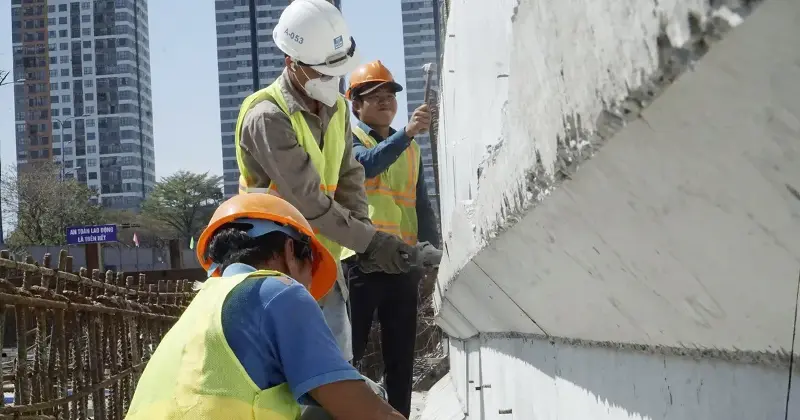
Construction workers work in a high-risk environment and therefore need to be covered by social security policies. Photo: HONG DAO