



The flavor of butter rice cakes isn't overly sweet and has subtle vanilla and buttery notes. But it's the combination of crispiness and chewiness that makes this dessert truly exceptional.
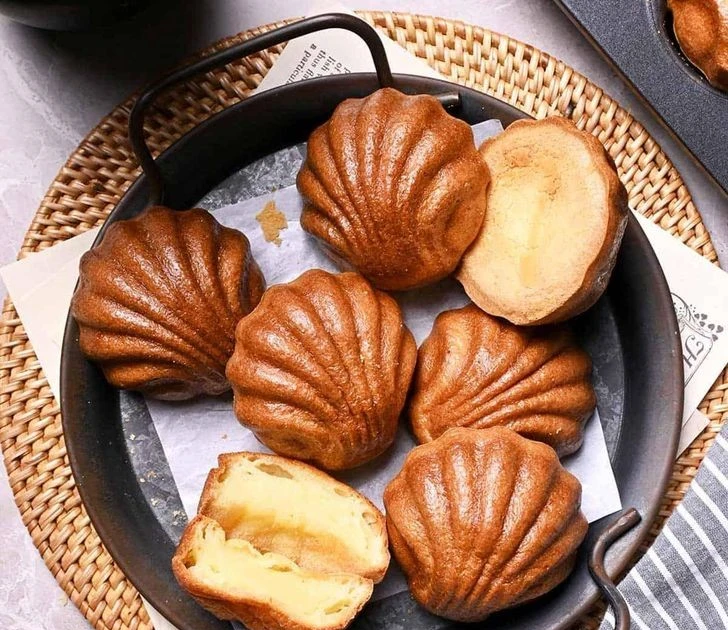
Butter rice cakes, also known as butter mochi and butter tteok, are emerging as the next trending dessert after Dubai mochi, with long lines of people queuing at bakeries across South Korea.
Although some sources claim it originated in Shanghai, this mochi is more similar to Hawaiian butter mochi and Filipino bibingka. Recently, it has garnered widespread attention on social media and is now becoming popular among young Koreans.
Shanghai butter rice cakes are called "Tteok," but they are a snack that is closer to a combination of butter cake and mochi than traditional rice cake.
Those who love this type of cake say they are captivated by the aroma of butter and sugar that fills the kitchen, especially when the rice cakes are freshly baked. These cakes are best eaten warm, crispy on the outside and soft and chewy on the inside.
The flavor of butter rice cakes isn't overly sweet and has subtle vanilla and buttery notes. But it's the combination of crispiness and chewiness that makes this dessert truly exceptional.
This type of cake is also very easy to make with just 7 simple ingredients. No mixer is needed. Moreover, because it is made from glutinous rice flour as the main ingredient, it is completely gluten-free.
Instead of wheat flour, rice flour (or glutinous rice flour) is used, along with butter, milk, sugar, and eggs, which are mixed together to form a dough and baked in the oven to create a crispy and chewy outer crust.
Some believe that Shanghai Butter Rice Cake is a Chinese-style dessert related to Tanghulu, but many others argue that it's a marketing nickname coined by Korean cafes.
This is an attempt to create a fresh impression by associating with foreign origins, such as the mochi cookies from Dubai.
As this trend spreads across platforms like TikTok and Instagram, many local bakeries are introducing their own unique variations of this dessert.
Butter rice cakes are made with basic baking ingredients like eggs, sugar, and butter. The recipe may vary slightly, with some shops adding tapioca starch to increase the chewiness. However, glutinous rice flour – the main ingredient – is what gives the cake its characteristic chewy texture.
Although the shapes and sizes vary between stores, the defining characteristic remains the same: a crispy crust combined with a chewy, tender interior.
What makes this dessert special is the butter, which balances the delicate flavor of the rice cake with a subtle yet rich salty note.
Like Dubai mochi, butter rice crackers are famous for their unique texture in just one bite. However, while Dubai mochi is considered "hot" due to the scarcity of ingredients, the ingredients for these Shanghai rice crackers are readily available and can be made at home.
Therefore, unlike Dubai's chewy rice cakes, these small sweets are usually more affordable. A butter rice cake costs between 2,000 won (US$1.30) and 3,000 won.
Small cafes in trendy neighborhoods like Seongsu and Hongdae are now selling these trending butter rice cakes. If you're curious about the trend, you might want to try one before the lines get long.
However, the food trends spreading in South Korea—from buttered rice cakes to frozen marshmallows—also reflect the country's "fast and short" trends, where snacks quickly become popular and just as quickly disappear.
This isn't a trend unique to South Korea. In Vietnam, many foreign-origin street food snacks, when they first appeared, attracted long lines of young customers, but they quickly disappeared after a short time, leaving only a few small shops behind, a prime example being the "coin-shaped cake" trend that once appeared on many street corners.
Many believe these dishes are often appealing to younger diners because of their novelty, but they will struggle to compete with other Vietnamese street foods, a country renowned for its distinctive cuisine recognized worldwide.