



Many people believe that fresh fish is always better than frozen fish. However, in reality, the nutritional value of fish depends on the time of catch, storage conditions, and storage time.
Fish is a high-quality source of protein, containing all the essential amino acids and being easily digestible. In addition, fish is rich in omega-3 fatty acids, which are beneficial for cardiovascular and brain health. Furthermore, fish meat contains important vitamins such as vitamin D and B12, and minerals such as iodine and selenium, according to the American website Eating Well.
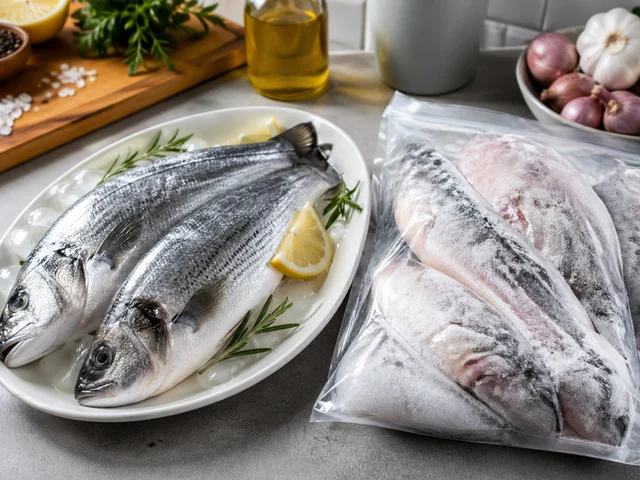
Fresh fish doesn't always retain more nutrients than frozen fish; it depends on how it's stored. PHOTO: Created by N. Quy from GM
Frozen fish retains its nutrients better than fresh fish that has been chilled
In many cases, fish that are frozen immediately after being caught can retain their nutritional value better than fresh fish that has been frozen, which often takes several days to freeze for transportation.
In principle, the freezing process does not immediately destroy important nutrients in fish meat. Protein in fish is quite stable when frozen. Most micronutrients are retained if the fish is handled and stored properly. This shows that the nutritional difference between fresh and frozen fish lies not only in the freezing method but also in the handling and storage time.
Rapid freezing is a commonly used method. Fish are chilled to very low temperatures immediately after being caught, helping to preserve almost all of their original nutritional value.
Specifically, this process significantly slows down biodegradation reactions, inhibits enzyme activity, and limits the oxidation of fats. As a result, the structure of fish meat and its nutritional components are preserved almost intact.
In fact, properly frozen fish can have the same nutritional value as fresh fish. Even if fresh fish is stored for several days before reaching consumers, its nutritional quality may be significantly reduced compared to fish that was frozen from the start.
The biggest difference between fresh and frozen fish is the shelf life
Besides, The biggest difference between fresh and frozen fish lies in the storage time. After being caught, fish begins a natural decomposition process. Enzymes and bacteria inside the fish gradually reduce the quality of the meat. At the same time, unsaturated fatty acids like omega-3 are easily oxidized over time.
With fresh fish, if not consumed quickly, its nutritional quality will significantly decrease after a few days, even if kept cold with ice. Meanwhile, frozen fish can be preserved for months because the decomposition processes are significantly slowed down.
Fresh fish is the best option, but...
In reality, if you can buy truly fresh fish, meaning fish caught on the same day, then this is the best option. However, in most cases, this is difficult, especially in areas far from the sea.
Therefore, fish that is frozen quickly and properly preserved is a reasonable and safe option. Especially if the storage time is not too long and the packaging is airtight, minimizing exposure to air, frozen fish can provide nutritional value equivalent to fresh fish, according to Eating Well.