


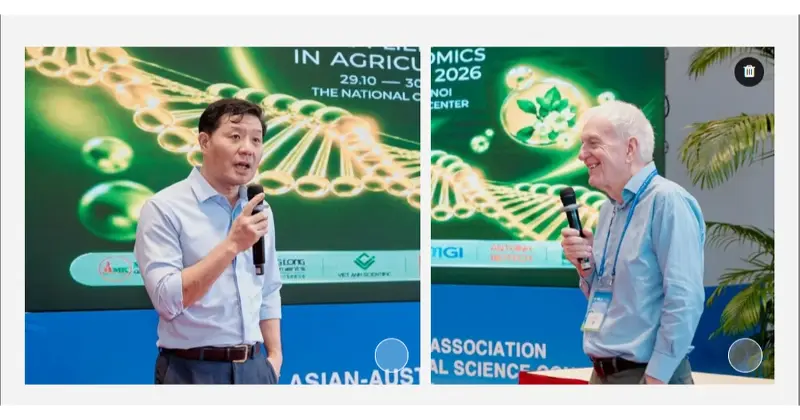
The Vietnam Institute for Big Data Research (VIBD) at VinUni University recently introduced a project to sequence the genomes of 1,000 Vietnamese rice varieties (VN1K-RICE). Professor Vu Ha Van, Director of Science at VIBD, and Professor Robert Henry, Founding Director of the Queensland Agricultural and Food Innovation Alliance (QAAFI) at the University of Queensland (Australia) and associate lecturer at VinUni, co-chaired the project.
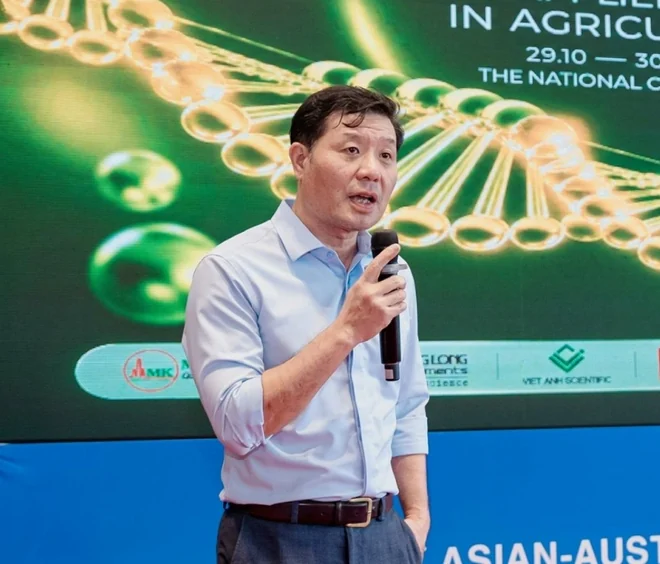
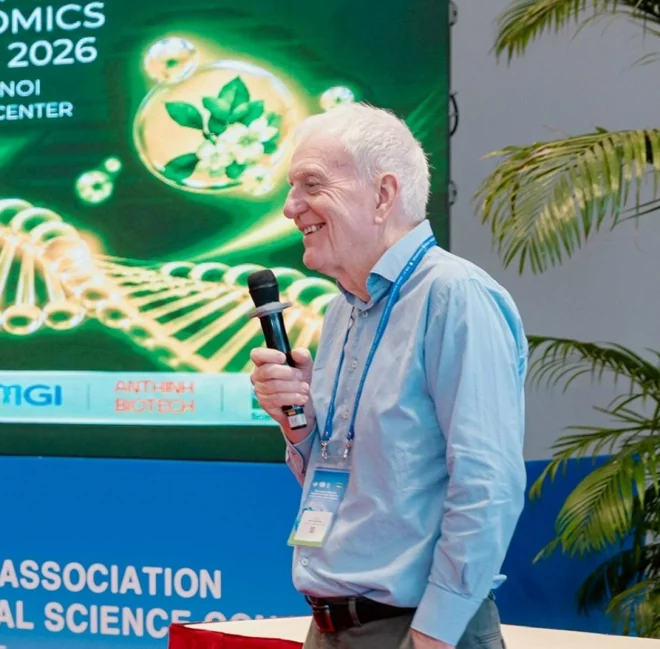
Professor Vu Ha Van (left) and Professor Robert Henry, co-chairs of the project, are presenting the project at a recent international conference on the application of genetic technology in agriculture.
PHOTO: THANH LAM
According to the research team, Vietnam currently possesses a rich source of traditional and wild rice varieties, which are preserved in gene banks such as the Plant Resources Center, the Mekong Delta Rice Institute, Can Tho University, and the Vietnam Academy of Agriculture.
However, the majority of these varieties have not yet been sequenced, and there is a lack of national genetic data infrastructure in the country, limiting the exploitation of valuable genetic traits to create new varieties that meet the Vietnam Rice Industry Development Strategy to 2030, with a vision to 2050.
To solve this problem, the VN1K-RICE project will decode the entire genome of 1,000 Vietnamese rice samples, starting with 150 core samples representing four ecosystems (wet rice, upland rice, saline coastal areas, and tidal wetlands) along with wild rice samples. From there, scientists will build a high-quality "reference genome" specifically for traditional domestic rice, serving as an accurate benchmark for identifying valuable genetic regions instead of relying on international standard genomes.