


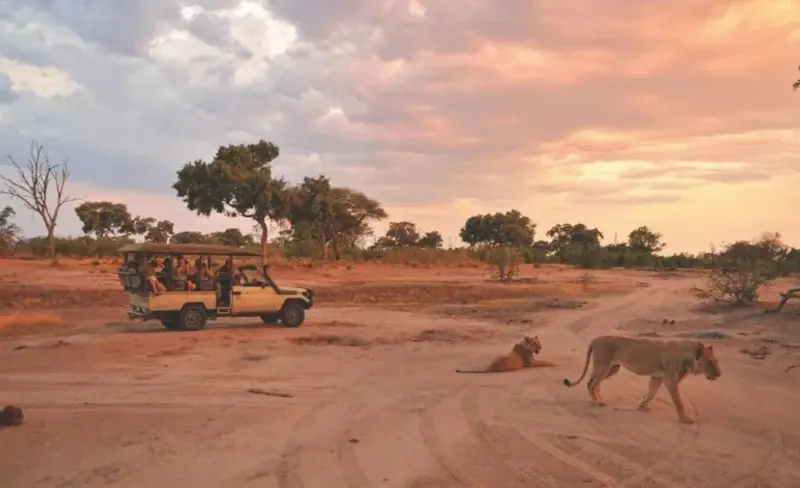
Habitat and food depletion, human-wildlife conflicts, and illegal trade are putting increasing pressure on lion populations across the continent.
In 2023, Africa had approximately 23,000 adult lions. The International Union for Conservation of Nature (IUCN) classifies this species as "vulnerable".
The lion's range in Africa is now only about 1.57 million km², equivalent to 7.4% of its historical range and a decrease of about 36% compared to 2002.
Researchers suggest that habitat loss is one of the indicators of declining lion populations, although accurately assessing the number remains difficult due to varying survey methods and a lack of up-to-date data in some areas.
The expansion of agricultural land, road construction, and urbanization are fragmenting many lion habitats. As wild prey resources decline, lions tend to hunt livestock, increasing conflict with herders.
This is one of the reasons why many local communities may view wildlife conservation as a burden if it does not receive commensurate economic benefits.
Furthermore, the illegal hunting and trafficking of lion parts, including bones, claws, teeth, and skins, is believed to be increasingly organized and linked to cross-border networks, with a market in Asia.
Protecting lions is not just about preserving an icon of African nature. As apex predators in many savanna ecosystems, lions contribute to maintaining the balance of prey populations. Meanwhile, wildlife tourism creates jobs, foreign exchange earnings, and livelihoods for many communities.
In this context, African countries are facing the need to strengthen the protection of protected areas, coordinate efforts to combat wildlife trafficking, and promote community-based conservation models. Linking the economic interests of people with nature conservation is considered a crucial factor in the long-term maintenance of lion populations and African ecosystems.