


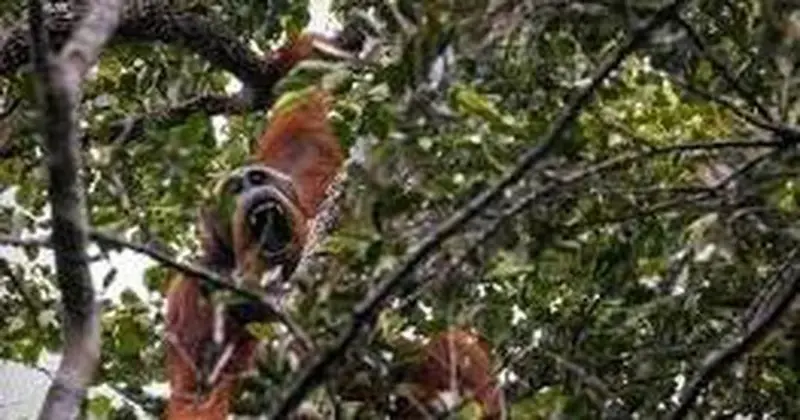
The Tapanuli orangutan (Pongo tapanuliensis) is considered the world's rarest large primate, with an estimated population of around 800 individuals or fewer.
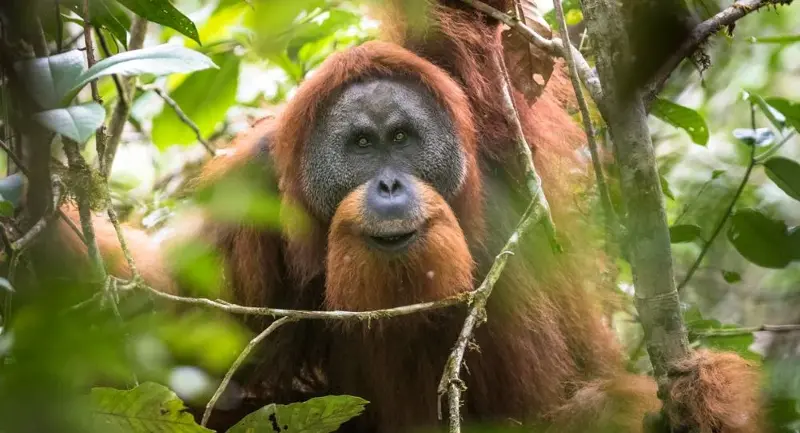
Although announced as a new species in 2017, the Tapanuli orangutan has the longest evolutionary history among orangutans, having diverged from a common ancestor 3.4 million years ago. They possess unique characteristics: curly head hair, flat cheeks, and a habit of eating rare plants – completely distinguishing them from their relatives in Sumatra and Borneo.
Habitat degradation, forest fragmentation, and illegal hunting have led to a sharp decline in the species' numbers in recent decades. This rarest ape species in the world is being protected by numerous international organizations and the Indonesian government, most notably WWF (World Wide Fund for Nature), the International Orangutan Foundation (OFI), and Borneo Nature Foundation.
Notably, last October, Indonesian researchers discovered the existence of a population of Tapanuli orangutans in the Lumut Maju peat bog, 32km from what was previously believed to be the species' sole habitat in the Batang Toru forest, North Sumatra province (Indonesia).
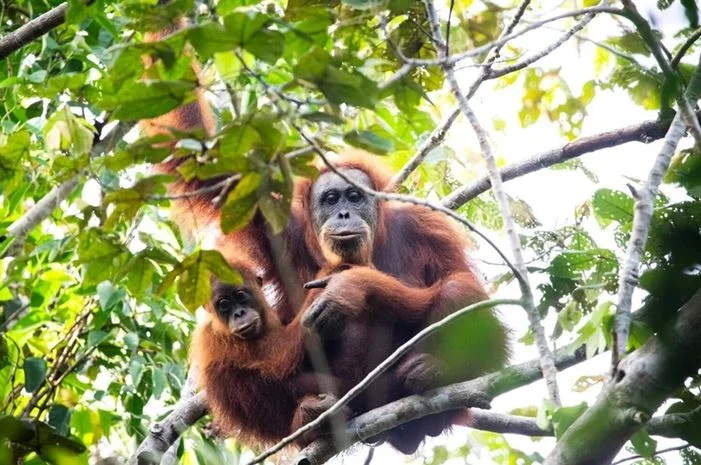
In late September 2025, a research team from the Sumatra Orangutan Conservation Organization (YOSL-OIC) spent hours hiking through dense vegetation to observe and film a mother orangutan and her calf in a secondary forest near the village of Lumut Maju in Central Tapanuli District, North Sumatra.
This marks the first recorded sighting of the Tapanuli orangutan in this area bordering the Indian Ocean.
Since 2022, Lumut Maju has attracted attention after residents reported the sighting of Tapanuli orangutans. Initially, the Human-Orangutan Conflict Response Unit (HOCRU) only recorded five orangutan nests, but no individuals were detected.
A year later, during a follow-up survey of 1,234 hectares of peat forest, the team discovered 17 new nests, including a "level 1" nest – meaning an active one. Rio Ardi, research manager at YOSL-OIC, said the research team identified it as a stable nest inhabited by orangutans.
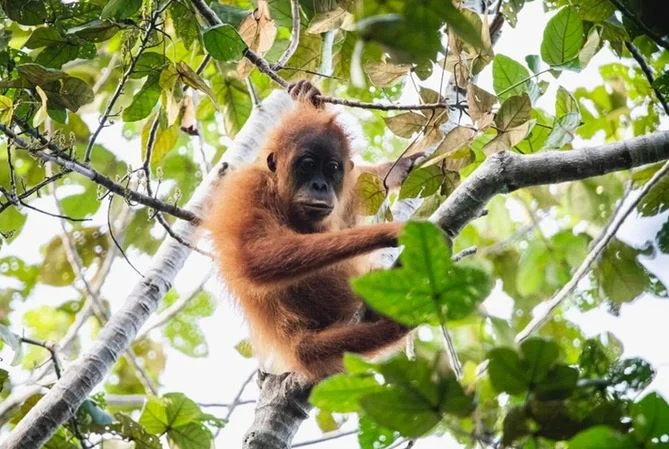
From 2023 to early 2025, survey teams from YOSL-OIC and the North Sumatra Nature Conservation Agency (BKSDA) continued to collect fecal samples, sending them for DNA analysis at a laboratory on the outskirts of Jakarta. The results showed that these samples belonged to the Tapanuli orangutan species, not the Sumatran orangutan (Pongo abelii) as previously predicted.
This discovery expands the known distribution range of this species, which was previously thought to be limited to the Batang Toru region.
According to YOSL-OIC, the findings provide crucial information for conservation strategies, highlighting the importance of peat swamp forests as potential habitats for this critically endangered orangutan species.
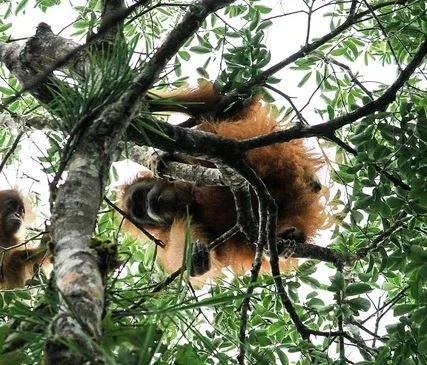
However, the habitat in Lumut Maju is not located within an Indonesian protected area and is rapidly shrinking due to land reclamation and the expansion of oil palm plantations.
By 2025, the forest area will be less than 1,000 hectares, seriously threatening the orangutan's habitat. Experts suggest that connecting or relocating individuals to Batang Toru – a larger and more protected forest – could be a long-term solution to maintain the species' genetic diversity.
According to researcher Wanda Kuswanda, working at Indonesia's National Research and Innovation Agency (BRIN), successful conservation of Tapanuli orangutans requires "sustainable coexistence" between humans and these primates – where the needs for survival and livelihood must be balanced within the same ecosystem.
According to the North Sumatra Provincial Land Use Plan with a vision to 2037, the Batang Toru forest covers approximately 241,000 hectares, of which more than 50% is protected forest. However, hydroelectric projects, gold mining, agriculture, road construction, and new settlements are continuing to fragment the habitat.
The discovery of the small orangutan population at Lumut Maju is considered a last glimmer of hope for expanding their range and provides valuable evidence for genetic and behavioral research. If this group of orangutans possesses distinct genetic traits, they could become a vital gene pool for the future of the species. However, this is only meaningful if the Lumut Maju peat forest remains. Rio Ardi warns that in just a few years, if deforestation does not stop, the Tapanuli orangutans' peat homes will only exist in scientific reports.
Minh Hoa (compiled)